
Philip Morris International: A Value Play Amid Insider Selling
Philip Morris International (PM) has become a paradoxical investment story: a company with robust fundamentals and a transformative strategy is being overshadowed by significant insider selling. Yet, beneath the surface of these transactions lies a compelling opportunity for investors focused on long-term value. Here's why PM merits consideration despite the skepticism.
The Fundamentals: Smoke-Free Growth and Margin Expansion
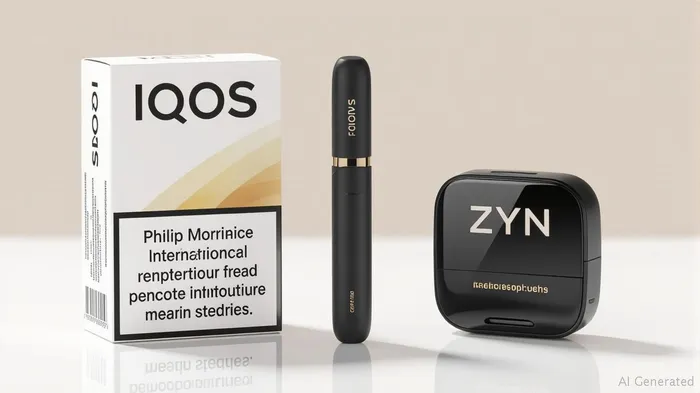
PM's first-quarter 2025 results underscore its transition to a smoke-free future. The smoke-free business (SFB), now accounting for 42% of total net revenues, delivered 15% net revenue growth and 28% gross profit growth, driven by IQOS, ZYN nicotine pouches, and VEEV vaping products. Key highlights:
- HTU (Heated Tobacco Units): Adjusted IMS volume grew 9.4% globally, with Japan's market share hitting 32.2%.
- ZYN Nicotine Pouches: U.S. shipments surged 53%, exceeding 200 million cans, while international markets like Pakistan and South Africa saw strong adoption.
- Margins: Adjusted operating income margins expanded to 40.7%, up 2.5 percentage points year-over-year, reflecting scale efficiencies.
PM's full-year 2025 guidance is equally robust: 12%–14% adjusted EPS growth, with 6%–8% organic revenue growth and $11 billion+ operating cash flow. These metrics align with a company executing its strategic pivot to healthier nicotine alternatives.
The Insider Selling: Context Matters
Between 2023 and 2025, PM insiders sold over $49 million of shares, with top executives like Andre Calantzopoulos (Chairman) and Jacek Olczak (CEO) making significant sales in early 2025. However, three points temper the alarm:
- Compensation Structures: Executives often receive shares as part of long-term incentives. Sales may reflect tax planning, diversification, or liquidity needs—not a lack of confidence.
- Offsetting Grants: In May 2025, directors received stock awards at $174.82/share, higher than recent sale prices, signaling ongoing alignment with shareholders.
- Market Timing: Sales in early 2025 occurred at prices below PM's current valuation ($176/share as of June 2025), suggesting personal decisions rather than a sell signal.
The lack of insider purchases in the past year is notable but not definitive. As PM's smoke-free business matures, executives may prioritize capitalizing on near-term gains while retaining long-term stakes.
Valuation: A Bargain at Current Levels?
PM trades at 16.5x 2025E EPS, below its five-year average of 18.2x, despite stronger growth and margin profiles. For comparison:
- Peer Valuations: British American TobaccoBTI-- (BTI) trades at 15.8x, while AltriaMO-- (MO) is at 12.1x—reflecting U.S. regulatory risks.
- Dividend Yield: PM's 3.1% yield offers stability in a volatile market, with a payout ratio of ~60% of earnings, leaving room for reinvestment.
The Investment Thesis
PM presents a compelling value proposition:
1. Structural Growth: The smoke-free business is displacing combustibles, with 38.6 million users globally and 95 markets served.
2. Margin Resilience: Pricing power and cost discipline allow PM to navigate currency headwinds and regulatory scrutiny.
3. Catalysts Ahead: FDA approvals for ZYN in the U.S., global market expansion (e.g., India, Indonesia), and a potential dividend hike in 2026 could re-rate the stock.
Risk Factors:
- Regulatory hurdles (e.g., EU flavor bans, litigation in Canada).
- Macroeconomic slowdowns affecting consumer spending.
Conclusion: A Contrarian Play for Patient Investors
PM's insider selling has created a temporary discount, but the fundamentals argue for a strategic long-term position. The transition to smoke-free products is irreversible, and PM's scale, innovation, and cash flow make it a survivor in a consolidating industry.
Investment Advice:
- Buy: For investors with a 3–5 year horizon, PM's valuation and dividend provide a solid foundation.
- Hold: If you already own PM, the recent underperformance (down 5% YTD vs. the S&P 500's 10% rise) offers a buying opportunity.
- Avoid: If you prioritize short-term momentum or are wary of regulatory risks.
In sum, PM is a classic value play: misunderstood in the near term but primed to reward those who focus on its long-term trajectory.





Comentarios
Aún no hay comentarios