
Phantom CASH: A Catalyst for Disruption in DeFi Lending and Cross-Chain Liquidity Markets
In 2025, the stablecoin landscape is witnessing a seismic shift as Phantom Wallet, the leading Solana-based crypto wallet, launches CASH, a U.S. dollar-pegged stablecoin designed to bridge the gap between decentralized finance (DeFi) and everyday spending. With $15 million monthly active users and a $3 billion valuation after a $150 million Series C announcement, Phantom is positioning itself as a formidable player in the global financial infrastructure. This article analyzes how Phantom CASH's strategic partnerships with DeFi lending platforms and cross-chain liquidity protocols could redefine the market, leveraging regulatory clarity and technological innovation to outmaneuver competitors like USDTUSDT-- and USDCUSDC--, as the CASH launch with Stripe shows.
Strategic Partnerships: DeFi Lending and Cross-Chain Liquidity
Phantom CASH's integration with Aave, one of the largest DeFi lending protocols, marks a pivotal step in its mission to disrupt traditional finance. Aave's V3 platform, which supports multi-chain operations and flash loans, now accommodates CASH as a collateral asset, enabling users to borrow against their stablecoin holdings while earning yield, according to an Aave 2025 report. As of September 2025, Aave's total value locked (TVL) exceeds $40 billion, with cumulative deposits surpassing $3 trillion. By tapping into this liquidity pool, Phantom CASH users gain access to a robust ecosystem of lending and borrowing tools, enhancing the utility of the stablecoin beyond mere transactional use.
Similarly, Phantom's collaboration with Liquidium-a cross-chain lending platform that allows users to collateralize native BitcoinBTC-- (BTC) to borrow stablecoins on Solana-further expands CASH's reach. Unlike traditional stablecoins that rely on centralized custodians, Liquidium's model eliminates the need for wrapped tokens, enabling true cross-chain interoperability, as described in Phantom's Series C announcement. This partnership aligns with Phantom's vision of creating a "neutral, open solution" for developers and users, reducing friction in asset management across blockchains.
Cross-Chain Liquidity: Stargate and SynapseSYN-- as Enablers
To address the growing demand for seamless asset transfers, Phantom CASH has integrated with Stargate and Synapse Protocol, two of 2025's most advanced cross-chain liquidity solutions. Stargate, built on LayerZeroZRO--, facilitates instant, low-cost transfers across 40+ blockchains using its Delta Algorithm, ensuring liquidity is preserved without token locking. For Phantom CASH, this means users can move their stablecoins between SolanaSOL--, EthereumETH--, and other chains in seconds, unlocking access to a broader array of DeFi services.
Synapse Protocol complements this by offering slippage-protected swaps and transparent fee structures across 20+ chains, including EVM and non-EVM networks, according to a USDT vs USDC guide. By leveraging Synapse's infrastructure, Phantom CASH users can execute cross-chain transactions with minimal slippage, a critical advantage in volatile markets. These integrations position Phantom CASH as a versatile stablecoin capable of competing with legacy solutions while adhering to the GENIUS Act of 2025's regulatory requirements.
Regulatory Clarity and Competitive Edge
The GENIUS Act of 2025, which mandates full reserve backing and monthly transparency reports for stablecoin issuers, has created a compliance-driven playing field. Phantom CASH, built on Bridge's institutional-grade custody framework, meets these standards by maintaining 1:1 USD reserves and publishing real-time audits. This contrasts sharply with USDT and USDC, which face scrutiny over reserve transparency and centralized control. For instance, USDT's parent company, TetherUSDT--, has seen its market share erode due to regulatory uncertainties, while USDC's compliance with the GENIUS Act has come at the cost of reduced flexibility for developers.
Phantom's approach-combining regulatory compliance with developer-friendly tools-has attracted businesses and creators to its ecosystem. The integration with Stripe's global merchant network, for example, allows CASH to be used in Apple Pay, Google Pay, and Visa transactions, as detailed in the Stripe stablecoin tool, further blurring the lines between crypto and traditional finance.
Investment Implications and Market Outlook
Phantom CASH's strategic positioning in DeFi lending and cross-chain liquidity markets suggests significant upside potential. By 2025, the stablecoin market is projected to exceed $300 billion, with cross-chain solutions accounting for over 20% of total volume. Phantom's partnerships with AaveAAVE--, Liquidium, Stargate, and Synapse not only diversify its revenue streams but also create network effects that could accelerate adoption.
For investors, Phantom CASH represents a unique opportunity to capitalize on the convergence of DeFi and mainstream finance. Its ability to integrate with both lending platforms and cross-chain protocols, coupled with regulatory compliance, positions it as a long-term contender in the stablecoin wars. However, risks remain, including potential regulatory shifts and competition from established players.
Conclusion
Phantom CASH is more than a stablecoin-it is a strategic lever for disrupting DeFi lending and cross-chain liquidity markets. By leveraging partnerships with Aave, Liquidium, Stargate, and Synapse, Phantom is building a financial infrastructure that bridges the gap between crypto and everyday use. As the GENIUS Act solidifies regulatory clarity, Phantom's emphasis on neutrality, compliance, and developer empowerment could redefine the stablecoin landscape. For investors, the key takeaway is clear: Phantom CASH is not just a product of the stablecoin supercycle-it is a potential catalyst for its next phase.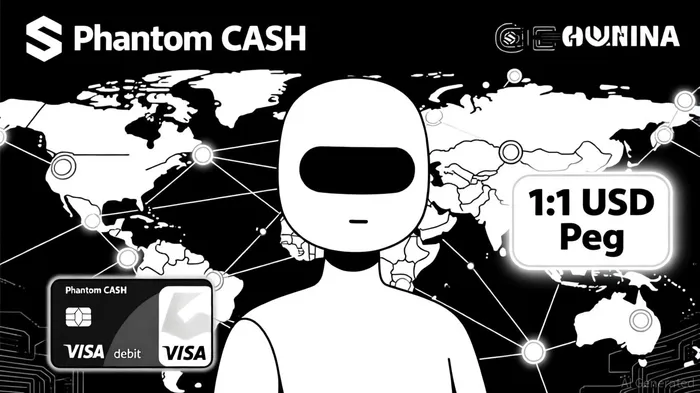







Comentarios
Aún no hay comentarios