
Pfizer's Strategic Move into Weight Management: A $7.3B Bet on Long-Term Growth?
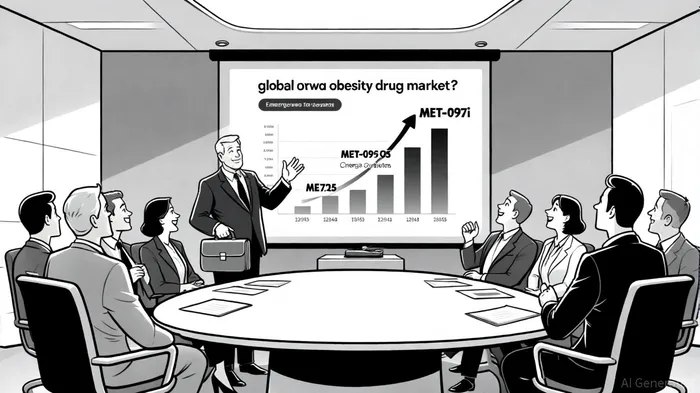
The pharmaceutical industry is witnessing a seismic shift as Pfizer Inc.PFE-- (PFE) commits to a $7.3 billion acquisition of MetseraMTSR--, a biotech firm pioneering next-generation obesity treatments. This move, described as a “bold but strategic bet” by analysts[5], underscores the growing urgency to address the obesity crisis and highlights Pfizer's ambition to reclaim a leadership role in a market dominated by rivals like Eli LillyLLY-- and Novo NordiskNVO--. For investors, the acquisition raises critical questions: Does this represent a calculated risk, or a transformative opportunity in a sector poised for explosive growth?
Market Dynamics: A $150 Billion Opportunity by 2030
The global obesity drug market is projected to surpass $150 billion by 2030[2], driven by rising obesity prevalence, regulatory approvals for GLP-1 receptor agonists (GLP-1 RAs), and a growing recognition of obesity as a chronic disease. According to a report by DevDiscourse, the demand for long-acting, patient-friendly therapies is intensifying, with once-monthly dosing regimens like Metsera's MET-097i offering a distinct advantage over weekly injections[3]. This aligns with Pfizer's strategic pivot: after discontinuing its own obesity drug candidate, danuglipron, the company is now betting on Metsera's pipeline to fill a critical gap in its metabolic health portfolio[4].
Metsera's Pipeline: Innovation with a Dosing Edge
Metsera's lead candidate, MET-097i, is a fully-biased, ultra-long-acting GLP-1 RA that demonstrated 11.3% mean placebo-adjusted weight loss after 12 weeks in mid-stage trials[1]. Its potential for once-monthly administration could disrupt the market, where current leaders like Wegovy (semaglutide) and Zepbound (buprenorphine/naloxone) require weekly injections. Additionally, Metsera's MET-233i, an amylin analog, and oral GLP-1 candidates like MET-224o offer complementary therapies that could enhance metabolic outcomes[1]. These innovations position Metsera as a rare player with both injectable and oral options in development, a dual capability that could broaden market access.
Strategic Rationale: Risk Mitigation and Competitive Positioning
Pfizer's acquisition structure—$47.50 per share upfront, plus $22.50 contingent on performance milestones—reflects a risk-averse approach[3]. By tying a significant portion of the payment to clinical and commercial success, PfizerPFE-- ensures its investment is aligned with Metsera's ability to deliver results. This contrasts with the high-stakes, all-cash deals typical in the sector, where acquirers assume full upfront costs regardless of outcomes.
The deal also signals a broader industry trend: large pharma companies are increasingly acquiring biotechs to fast-track innovation. As Bloomberg notes, the obesity drug market's rapid evolution has made standalone R&D efforts less viable, pushing firms like Pfizer to “buy their way into growth”[5]. By acquiring Metsera, Pfizer not only gains access to cutting-edge science but also positions itself to challenge Novo Nordisk and Eli Lilly, whose GLP-1 drugs currently dominate global sales.
Investment Implications: Balancing Hype and Realism
While the acquisition's strategic logic is compelling, investors must weigh several factors:
1. Regulatory Risks: MET-097i is still in clinical trials, and approval hinges on demonstrating long-term safety and efficacy.
2. Market Competition: Even with once-monthly dosing, MET-097i will face fierce competition from established GLP-1 therapies and emerging rivals like Novo Nordisk's semaglutide variants.
3. Valuation Concerns: At $7.3 billion, the deal's premium (42% over Metsera's recent share price) reflects high expectations. If Metsera misses milestones, the acquisition could be viewed as overpriced.
However, the obesity market's scale and growth trajectory suggest that even a modest market share could yield substantial returns. According to Reuters, the acquisition could generate billions in revenue if MET-097i achieves just 5% penetration in the U.S. alone[3].
Conclusion: A Calculated Leap into the Future
Pfizer's $7.3 billion acquisition of Metsera is more than a financial transaction—it's a strategic repositioning in a market that is redefining chronic disease management. By securing access to Metsera's pipeline, Pfizer is betting on the long-term value of obesity treatments, a sector that is increasingly viewed as a cornerstone of metabolic health. For investors, the key question is whether this bet will pay off: can MET-097i and its counterparts deliver on their promise in a crowded and rapidly evolving landscape?





Comentarios
Aún no hay comentarios