
Pfizer's Acquisition of Metsera: A Strategic Bet on Long-Acting Obesity Therapies and Market Differentiation
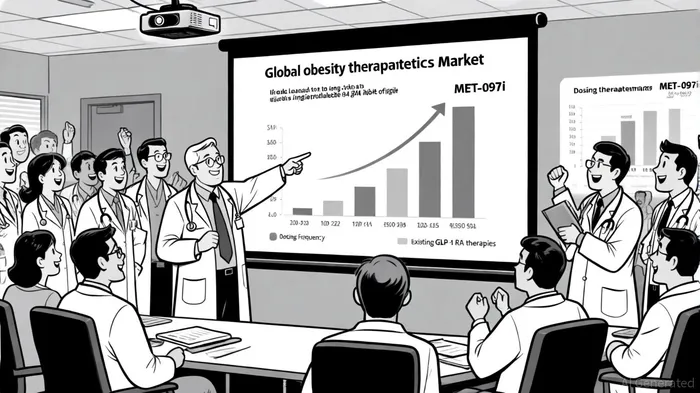
The obesity and overweight treatment market has emerged as one of the most dynamic sectors in biopharma, driven by rising prevalence of cardiometabolic diseases and the success of GLP-1 receptor agonists (GLP-1 RAs). Pfizer's $4.9 billion acquisition of MetseraMTSR-- in late 2025[1] underscores a strategic pivot toward long-acting, differentiated therapies in this space. At the heart of this deal is MET-097i, an ultra-long-acting GLP-1 RA in Phase 2b trials, which has demonstrated exceptional weight loss efficacy and a favorable safety profile. This analysis evaluates Metsera's strategic value, the rationale behind Pfizer's acquisition, and the competitive advantages of MET-097i in a rapidly evolving market.
MET-097i: A Next-Generation GLP-1 RA with Clinical and Commercial Promise
MET-097i, developed by Metsera, is a fully-biased GLP-1 RA designed for subcutaneous administration with an ultra-long half-life of 15–16 days[2]. In a 12-week Phase 2a trial, the 1.2 mg dose achieved a 11.3% placebo-adjusted weight loss, with some patients losing up to 20% of their body weight[1]. Notably, the drug showed no signs of a weight loss plateau, suggesting sustained efficacy over extended treatment periods. These results position MET-097i as a potential best-in-class candidate in the GLP-1 RA class, which already includes market leaders like Novo Nordisk's semaglutide (Ozempic/Rybelsus) and Eli Lilly's tirzepatide (Mounjaro).
The drug's once-monthly dosing is a critical differentiator. While current GLP-1 RAs require weekly injections or daily oral formulations, MET-097i's extended half-life reduces patient burden and improves adherence—a key factor in chronic disease management. According to a report by DelveInsight[2], patient adherence to long-acting injectables is 20–30% higher than daily oral therapies, a metric that could translate into significant market share for MET-097i.
Strategic Rationale for Pfizer's Acquisition: Filling a High-Value Niche
Pfizer's acquisition of Metsera is not merely a bet on obesity therapeutics but a calculated move to secure a leadership position in long-acting, combination-ready treatments. The $4.9 billion upfront payment, coupled with a contingent value right (CVR) of up to $22.50 per share[1], reflects confidence in MET-097i's potential to meet Phase 3 endpoints and gain FDA approval. This structure aligns with Pfizer's broader strategy to expand its portfolio in cardiometabolic diseases, a sector projected to grow at a compound annual rate of 12% through 2030[3].
The acquisition also provides access to MET-233i, a monthly amylin analog in Phase 1 trials, which could be combined with MET-097i to create a dual-hormone therapy. Such combinations are increasingly seen as the next frontier in obesity treatment, as they mimic the body's natural hormonal response to food intake more comprehensively than single-agonist therapies. As stated by a PfizerPFE-- executive in a press release[1], “Combining MET-097i with MET-233i could offer a once-monthly, dual-hormone regimen that addresses both appetite suppression and postprandial glucose control.”
Market Differentiation: Long-Acting Formulations as a Competitive Edge
The obesity therapeutics market is highly competitive, with GLP-1 RAs dominating sales. However, long-acting formulations like MET-097i offer a unique value proposition. Data from a 2025 ADA conference[2] highlights that MET-097i's dosing frequency and metabolic benefits (e.g., LDL cholesterol reduction) could carve out a niche for non-diabetic patients, a segment currently underserved by existing therapies.
Moreover, the ultra-long half-life of MET-097i reduces the need for frequent dose adjustments, a common challenge with current GLP-1 RAs. This feature is particularly appealing to healthcare providers managing large patient populations, as it simplifies treatment protocols and reduces clinic visits. According to a Bloomberg Intelligence report[3], the long-acting injectable segment is expected to capture 40% of the obesity therapeutics market by 2030, driven by patient and provider demand for convenience.
Risks and Considerations
While the acquisition is strategically sound, investors must consider potential risks. MET-097i's Phase 2b trial, expected to report topline data in mid-2025[1], will be a critical inflection point. Failure to replicate Phase 2a results could delay regulatory timelines or reduce the drug's commercial potential. Additionally, the CVR structure introduces volatility, as its value depends on achieving specific milestones, including Phase 3 initiation and FDA approvals.
Conclusion: A Win-Win for Pfizer and the Obesity Market
Pfizer's acquisition of Metsera represents a masterstroke in the race to dominate the long-acting obesity therapeutics market. By securing MET-097i—a drug with best-in-class potential, a favorable safety profile, and a once-monthly dosing regimen—Pfizer is positioning itself to compete with Novo Nordisk and Eli Lilly while addressing unmet needs in non-diabetic weight management. As the obesity market evolves toward combination therapies and extended-release formulations, MET-097i's strategic value is likely to grow, making this acquisition a pivotal move in Pfizer's long-term portfolio strategy.





Comentarios
Aún no hay comentarios