
Petrochemicals Set to Outpace Transport as Oil Demand's New Engine—What This Means for Producers and the Energy Transition
The engine of global oil demand is changing. After a sharp post-pandemic rebound, growth has lost momentum, with consumption rising just 0.8% in 2024. That rate is below the pre-pandemic average, signaling a structural shift. The story of where that demand is coming from reveals a stark contrast: the traditional powerhouse, road transport, is now a minor contributor, while petrochemicals are emerging as the dominant, sustained driver.
Road transport demand, once the core of oil consumption, has plateaued. Since 2022, it has accounted for a mere 5% of growth in global oil demand. This slowdown is driven by the rapid adoption of electric vehicles, efficiency gains, and shifts to other fuels. In 2024, non-feedstock uses of oil-dominated by transport-were virtually unchanged from 2019 levels, despite a 14% rise in global GDP over that period. The sector is effectively hitting a wall.
By contrast, the demand for oil as a chemical feedstock has surged. In 2024, chemical feedstocks and aviation each accounted for around half of oil demand growth. This growth is highly concentrated, with feedstock use in China alone exceeding the total net increase in world oil demand. The petrochemical sector is not just a growth contributor; it is becoming the primary one. According to a major IEA study, petrochemicals are set to account for more than a third of the growth in world oil demand to 2030, and nearly half the growth to 2050. This long-term projection means the sector will add nearly 7 million barrels of oil a day by then.
The bottom line is a clear pivot. The era of transport-driven demand expansion is fading. The future of oil demand is increasingly tied to the production of everyday materials-from packaging and clothing to components for clean energy technologies. This shift has profound implications for producers, refiners, and the entire energy system.
Petrochemicals: The Sustained Growth Engine
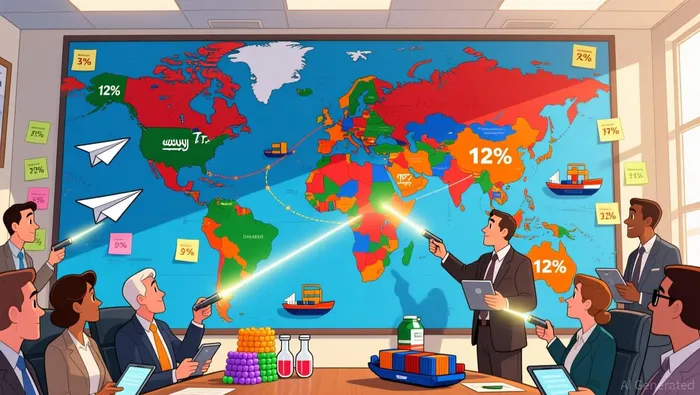
Petrochemicals are no longer just a niche segment; they are the central pillar of future oil demand. The sector currently accounts for 12% of global oil demand and is recognized as one of the fastest-growing global energy demand drivers. This growth is fundamentally different from the volatile, often declining path of transport fuels. While road vehicle miles may plateau, the need for the building blocks of modern life continues to climb.
The scale of this shift is immense. In the United States, demand for petroleum liquid feedstocks-crude derivatives used to make plastics and chemicals-is forecast to grow at a 4.1% compound annual rate through 2035. This steady expansion, projected to increase the market value from $117.7 billion in 2025 to $175.7 billion by 2035, is driven by persistent industrial and consumer needs. The growth is not a short-term surge but a structural ramp-up, with production capacity for key chemicals like ethylene set to expand by nearly half by 2030.
A critical source of this durable demand is plastic packaging. It represents more than 17% of global petrochemical production, and most of these items are used once and discarded. This single application has been a primary engine for oil demand growth over the past decade, and its projected increase ensures a long runway for feedstock consumption. Unlike transportation, where efficiency gains and electrification can permanently reduce usage, the demand for packaging materials is deeply embedded in global commerce and consumer habits.
Viewed another way, the petrochemical sector is becoming a more stable and predictable demand source. Its growth is tied to population, urbanization, and the production of goods rather than the fluctuating economics of vehicle ownership. For the oil industry, this means a future where demand is less sensitive to fuel price swings and more aligned with the expansion of manufacturing and consumer markets. The engine is shifting from moving people to making things.
Supply and Investment Realities
The shift to petrochemical-driven demand creates a new set of supply challenges. The critical risk is that without sustained investment, the world's oil production base will rapidly deteriorate. In a scenario where no new capital is deployed today, production would decline at a rate of about 15% per year. This isn't a distant theoretical risk; it's the natural consequence of a global oil mix that is increasingly dominated by fast-declining unconventional sources like shale. By 2030, such a freeze in investment would leave the world undersupplied by about 70 million barrels per day, a shortfall that would trigger severe market instability.
Meeting future demand, therefore, requires a significant and sustained capital commitment. The OPEC+ group is a key part of the supply response. Its decision to start unwinding production curbs in May 2025 is a major reset for the market. The anticipated output increase from the group is substantial, with the largest single-country rise coming from Saudi Arabia, which is set to add 1 million barrels per day. This move is designed to bolster supply and stabilize prices after a period of turbulence.
Yet the supply picture is not uniform. While OPEC+ is expanding, the dynamics in the United States are different. The U.S. tight oil sector has demonstrated remarkable resilience and growth, driven by technological improvements. Over the past decade, production projections for this sector have increased by nearly 50%. This growth, which reversed a decades-long decline in U.S. oil output, shows the power of innovation in extending the life and productivity of existing fields. However, even this robust sector is now facing headwinds, as oil companies scale back investments in response to recent market volatility and price pressures.
The bottom line is a market in transition. The world needs investment to counteract the natural decline in production, but the pace and direction of that investment are uncertain. The supply response is a patchwork: a major expansion from OPEC+, a technological success story in the U.S., and a global industry recalibrating its capital plans. The risk of a supply crunch remains real if investment falters, but the path to meeting petrochemical-driven demand is paved with both promise and peril.
Catalysts and Risks
The current balance between oil demand and supply is not static. It is shaped by a mix of immediate shocks, evolving policy landscapes, and long-term structural pressures. Understanding these catalysts and risks is crucial for gauging the sustainability of the petrochemical-driven demand story.
The immediate risk is geopolitical instability. The recent closure of the Strait of Hormuz-a critical chokepoint for 20% of the world's oil and gas-serves as a stark reminder of the vulnerability in global supply. Such disruptions can trigger sudden price spikes and create acute supply concerns, as seen when the event caused stock markets to fall and analysts warned of inflation. While the market may eventually adjust, these events introduce volatility that can disrupt investment planning and consumer spending, directly impacting near-term demand.
A major uncertainty lies in the realm of policy and trade. Recent shifts and tensions have already cut global GDP growth forecasts, which in turn affects the outlook for oil demand. The energy transition is a key driver of these policy changes, with governments implementing regulations aimed at curbing emissions. This creates a dual pressure: on one hand, policies to accelerate electrification are slowing demand for transport fuels; on the other, the push for sustainability is beginning to target the petrochemical sector itself. The demand for plastic packaging, which alone accounts for more than 17% of petrochemical production, is a primary target for reduction efforts. Initiatives to curb packaging demand are seen as critical to halting investments in new oil supplies and reversing oil demand growth. This creates a complex, evolving risk where policy can simultaneously support and threaten the very demand growth that oil producers are banking on.
Looking further ahead, the long-term pressure on petrochemical demand comes from technological competition and the circular economy. The sector faces growing pressure to justify its use of oil as a feedstock in a carbon-constrained world. This is driving research and investment into alternative feedstocks, such as bio-based materials, and advanced recycling technologies. While these alternatives are not yet poised to displace oil-based feedstocks at scale, their development and policy support represent a persistent, long-term headwind. The industry's ability to innovate and adapt will be key to maintaining its dominant position in the coming decades.
The bottom line is a market navigating multiple vectors. Geopolitical shocks can cause sudden, disruptive price moves. Policy shifts, particularly around sustainability, are introducing a new layer of uncertainty that could reshape demand for key applications like packaging. And over the longer term, competition from alternative materials poses a structural challenge. For now, petrochemicals provide a durable demand floor, but the path is not without significant catalysts that could accelerate change or risks that could disrupt the established trajectory.







Comentarios
Aún no hay comentarios