
Petrobras' Fertilizer Reclamation: A Strategic Pivot to Energy and Agricultural Security
The recent arbitral ruling enabling PetrobrasPBR-- to reclaim operational control of its FAFEN-BA/SE fertilizer plants marks a pivotal moment in Brazil's industrial and energy landscape. This decision, finalized in May 2025, is far more than a legal resolution—it signals a bold strategic reentry into high-potential markets, positioning Petrobras at the intersection of Brazil's energy transition and geopolitical shifts. For investors, this move offers a compelling entry point to capitalize on a company poised to leverage its gas assets, reduce fertilizer imports, and solidify its role as a pillar of national agro-economic stability.
A Catalyst for Operational Revival and Strategic Synergies
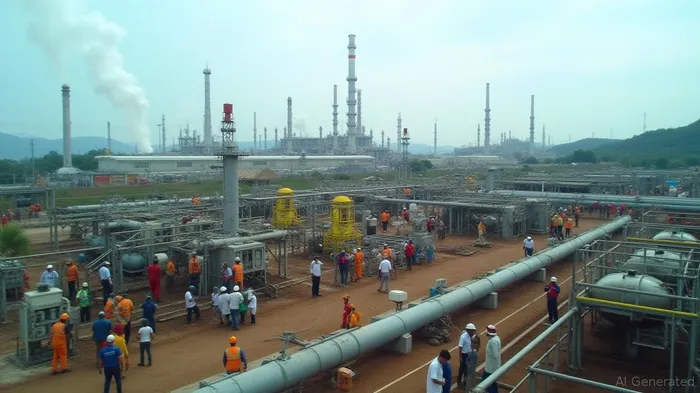
The FAFEN plants, critical for producing urea, ammonia, and carbon dioxide, had lain dormant since Proquigel's shutdown in March 2024. Their reactivation, now enabled by Petrobras' agreement with Unigel, represents a turning point. By reabsorbing these assets, Petrobras can align them with its 2025–2029 Strategic Plan, which prioritizes nitrogen-based fertilizer production—a sector vital to Brazil's agricultural powerhouse.
The synergy with Petrobras' natural gas reserves is central to this strategy. With Brazil transitioning to a free natural gas market, the company can secure lower input costs for fertilizer production, reducing its reliance on volatile global fertilizer prices and shielding domestic farmers from external shocks. This alignment with energy transition goals—lowering emissions while boosting self-sufficiency—creates a virtuous cycle: cheaper, domestically produced fertilizers enhance agricultural output, while Petrobras' gas-driven operations reduce carbon intensity.
Economic Multipliers and Long-Term Value Creation
The operational revival of FAFEN-BA/SE will generate immediate and lasting economic benefits. By 2026, Petrobras aims to fully reactivate both plants, creating jobs in Bahia and Sergipe while boosting local tax revenues. For Brazil's farmers, the reduction in fertilizer imports—currently a drain on trade balances—will lower input costs, enhancing competitiveness in global markets.
Critically, this move insulates Brazil's agro-economy from geopolitical risks. Fertilizer imports have surged in recent years, exacerbated by supply chain disruptions and sanctions-driven market volatility. Petrobras' control over domestic production now offers a hedge against these risks, securing food security and stabilizing rural livelihoods.
Risks, but a Compelling Risk-Adjusted Opportunity
Skeptics will point to execution risks: the plants' revival hinges on timely tender processes, regulatory approvals, and maintenance investments. Meanwhile, global fertilizer demand could soften if agricultural commodity prices decline. Additionally, natural gas price fluctuations might squeeze margins.
Yet these risks are outweighed by the strategic upside. Petrobras' track record in managing large-scale projects, its gas cost advantages, and Brazil's urgent need for fertilizer self-sufficiency create a resilient investment thesis. The arbitral ruling itself mitigates legal overhang, while the 2026 operational target provides a clear milestone for investors to monitor.
Buy Petrobras: A Long-Term Play on Brazil's Growth Story
Petrobras (PBR) is now a structural beneficiary of Brazil's push for energy and food security. Its reclamation of FAFEN-BA/SE is not just about fertilizer—it's about reclaiming strategic control over a sector critical to national sovereignty.
Investors should view dips in PBR's stock price as buying opportunities. With a dividend yield above 5% and a balance sheet strengthened by higher oil prices, Petrobras offers both income and growth. The fertilizer play alone could add $1–2 billion in annual EBITDA by 2027, assuming full utilization of the plants.
Conclusion: Petrobras' Moment to Lead
The reclamation of FAFEN-BA/SE is more than a corporate turnaround—it's a national strategic move. Petrobras now stands to leverage its gas assets, support Brazil's farmers, and reduce geopolitical vulnerabilities. For investors seeking exposure to a company at the heart of Brazil's energy transition and agro-economic growth, Petrobras is a buy. The risks are manageable, the catalysts clear, and the long-term rewards substantial.
Act now—this is a story of value creation in motion.





Comentarios
Aún no hay comentarios