
Perpetua Resources' Strategic Milestone in U.S. Forest Service Approval: A Catalyst for Clean Energy Infrastructure
The recent conditional approval of PerpetuaPPTA-- Resources' Stibnite Gold Project by the U.S. Forest Service marks a pivotal moment in the intersection of critical mineral supply chains and clean energy infrastructure development. This milestone, achieved after eight years of regulatory scrutiny and over $400 million in investment, underscores the growing urgency to secure domestic sources of antimony—a mineral indispensable to both national defense and renewable energy technologies[1]. For investors, the project's alignment with strategic national priorities and its potential to reduce U.S. reliance on foreign supply chains present a compelling case for its role in accelerating the clean energy transition.
Antimony: The Overlooked Pillar of Renewable Energy
Antimony, while less celebrated than lithium or cobalt, is a linchpin in emerging clean energy technologies. Its applications in perovskite solar cells and liquid-metal batteries—key innovations for grid-scale energy storage—position it as a critical enabler of decarbonization efforts[2]. Perpetua's Stibnite Gold Project, the only identified antimony reserve in the United States, is projected to meet 35% of domestic demand by 2028[3]. This is not merely a supply-side story; it is a strategic response to the fragility of global antimony markets, where China, Russia, and Tajikistan currently dominate production[4].
The project's collaboration with Ambri, a leader in calcium-antimony liquid-metal batteries, further illustrates its direct contribution to energy storage infrastructure. These batteries, capable of operating at high temperatures without complex cooling systems, are poised to become a cornerstone of renewable grid stability[5]. By supplying antimony for 13 gigawatt-hours of storage capacity, Perpetua's output could directly support the U.S. Department of Energy's goal of achieving a net-zero grid by 2035[6].
Environmental and Economic Synergies
Perpetua's project is not without its challenges, but its environmental commitments—such as a 13% reduction in land footprint, restoration of fish migration routes, and on-site solar generation—demonstrate a nuanced approach to sustainable mining[7]. These measures align with the Inflation Reduction Act's (IRA) emphasis on green infrastructure, which has already spurred $2 billion in rural manufacturing investments and 67,000 jobs[8]. For investors, the company's ability to balance resource extraction with ecological stewardship reduces regulatory headwinds and enhances long-term viability.
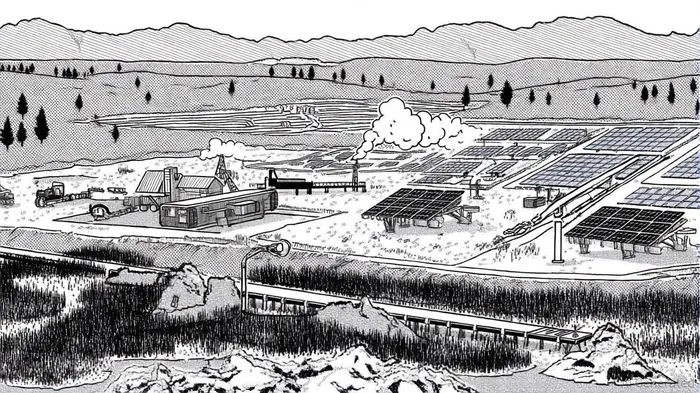
The economic implications are equally significant. The Stibnite project is expected to create 450 jobs in Idaho, a state where rural communities have historically lagged in clean energy adoption. By integrating solar power into its operations—generating 4,129 kWh of on-site energy in 2023 alone—Perpetua exemplifies how critical mineral projects can serve as catalysts for localized clean energy ecosystems[9]. This dual focus on mineral production and renewable energy infrastructure positions the company to benefit from IRA-driven tax incentives and federal grants, such as the $6.9 million in additional funding it recently secured from the U.S. Army[10].
Implications for Renewable Energy Equities
For the broader market, Perpetua's approval signals a shift in how critical minerals are valued within the clean energy sector. Antimony's role in energy storage and solar efficiency means that its domestic production could indirectly boost equities in grid modernization and battery technology. Companies like Ambri, which rely on stable antimony supplies, stand to gain from Perpetua's commercialization timeline, while solar panel manufacturers may see cost reductions as supply chain bottlenecks ease.
However, risks remain. The low global recycling rate of antimony (8.5%) and the project's 2028 commercial production date mean that near-term supply gaps could persist[11]. Investors must also weigh the environmental sensitivities of mining operations, even with Perpetua's mitigation efforts. Yet, the project's broad public support—evidenced by 23,000 letters of endorsement—suggests a degree of social license that could insulate it from activist opposition[12].
Conclusion: A Strategic Inflection Point
Perpetua Resources' Stibnite Gold Project is more than a mining venture; it is a strategic asset in the U.S. clean energy transition. By securing a domestic antimony supply chain, the company addresses both national security concerns and the technical demands of renewable infrastructure. For investors, the project's alignment with policy tailwinds, its environmental safeguards, and its partnerships with energy storage innovators make it a unique play on the intersection of critical minerals and decarbonization. As the clean energy economy scales, Perpetua's ability to deliver antimony at scale—while navigating regulatory and ecological complexities—will be a litmus test for the viability of resource-driven climate solutions.





Comentarios
Aún no hay comentarios