
Perpetua Resources' Stibinite Project: A Timely Entry into a Strategic Critical Minerals Market
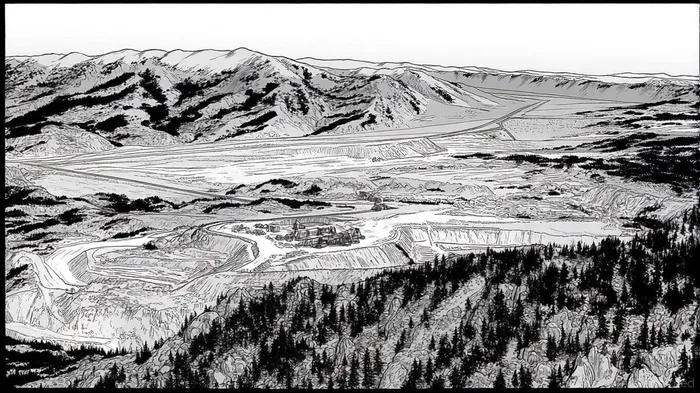
The U.S. critical minerals supply chain is undergoing a transformative phase, driven by national security imperatives and the accelerating transition to clean energy technologies. At the forefront of this shift is Perpetua Resources' Stibnite Gold Project, a development that has recently cleared its final regulatory hurdles and now stands poised to deliver both economic and strategic value. With its unique combination of gold and antimony resources, the project aligns closely with U.S. policy priorities, positioning it as a compelling investment opportunity in the post-permitting phase.
Regulatory Milestones and Strategic Alignment
Perpetua Resources has navigated an eight-year permitting process under the National Environmental Policy Act (NEPA), culminating in a conditional Notice to Proceed issued by the U.S. Forest Service on September 19, 2025[1]. This milestone confirms compliance with the January 2025 Record of Decision, which outlined stringent environmental and operational requirements. Complementing this, the U.S. Army Corps of Engineers recently approved a Clean Water Act Section 404 permit, resolving the last major federal regulatory barrier[3].
The project's alignment with the Trump administration's transparency initiative—added to the Permitting Council's FAST-41 dashboard—underscores its strategic importance[3]. This designation expedites interagency coordination, a critical factor in an era where supply chain resilience is a national priority. Furthermore, the project has secured a $59.2 million Defense Production Act (DPA) grant, a testament to its role in addressing U.S. antimony shortages. Antimony, a key component in fire retardants, solar panels, and battery technologies, is projected to see heightened demand as the clean energy sector expands.
Antimony's Strategic Role and Market Dynamics
Antimony's dual utility in national defense and renewable energy infrastructure positions the Stibnite Project as a linchpin in U.S. critical minerals security. Perpetua's resource base is estimated to meet 35% of U.S. antimony demand in its initial production phase[3], a significant contribution given the country's reliance on imports for over 90% of its antimony needs. This scarcity-driven dynamic creates a favorable market environment, particularly as the Biden administration's Critical Minerals Strategy emphasizes domestic production to reduce geopolitical vulnerabilities.
The project's environmental restoration plan further enhances its strategic appeal. By reprocessing legacy waste, restoring wetlands, and reopening salmon habitats, Perpetua addresses long-standing ecological concerns while aligning with ESG (Environmental, Social, and Governance) investment trends. These efforts not only mitigate regulatory risks but also foster community support in rural Idaho, where the project is expected to generate 550 jobs.
Financial Considerations and Investment Risks
Despite its regulatory clarity, the project faces a critical financial hurdle: securing a joint financial assurance bond required by the U.S. Forest Service[1]. Perpetua anticipates finalizing this arrangement in the coming weeks, but delays could disrupt the projected early 2025 construction timeline[1]. Investors must weigh this risk against the project's long-term potential, including its DPA funding and the growing premium on antimony in strategic sectors.
The $59.2 million DPA grant provides a buffer against inflationary pressures and operational costs, but the project's profitability will ultimately depend on gold and antimony price trajectories. Gold, currently trading at ~$2,500/oz, offers a stable revenue stream, while antimony's price volatility—driven by Chinese export policies and recycling rates—introduces uncertainty. However, the project's dual-commodity model reduces exposure to single-market fluctuations, enhancing its resilience.
Investment Outlook and Strategic Positioning
The Stibnite Project's post-permitting phase represents a timely entry into a market where U.S. policy and industrial demand are converging. With construction slated to begin in late 2025, investors are presented with a window to capitalize on the project's infrastructure development and production ramp-up. The project's alignment with the DPA and NEPA frameworks also insulates it from regulatory headwinds, a critical advantage in an industry prone to environmental litigation.
However, the bonding requirement remains a wildcard. If Perpetua secures the bond on favorable terms, the project could achieve first production by 2027, aligning with peak U.S. critical minerals strategy implementation. Conversely, delays could push timelines into 2026, potentially dampening short-term returns.
Conclusion
Perpetua Resources' Stibnite Project embodies the intersection of strategic resource development and regulatory innovation. Its post-permitting progress, coupled with its role in addressing antimony shortages and environmental restoration, positions it as a cornerstone of U.S. critical minerals self-sufficiency. For investors, the project offers a high-conviction opportunity in a sector where policy tailwinds and industrial demand are set to amplify value creation.





Comentarios
Aún no hay comentarios