
Pernod Ricard's 2027-2029 Earnings Guidance: A Strategic Window for Long-Term Alcohol Investors
The global spirits industry is navigating a complex landscape of macroeconomic headwinds, shifting consumer preferences, and sustainability imperatives. For long-term investors, Pernod Ricard's 2027-2029 earnings guidance-projecting organic net sales growth of 3% to 6% annually-presents a compelling case for strategic investment, particularly in its premium spirits portfolio. This analysis examines how the company's dual focus on premiumization and sustainability positions it to outperform industry peers while addressing systemic risks.
Strategic Rebalancing: Premiumization as a Growth Engine
Pernod Ricard's pivot toward premium spirits is not merely a response to market trends but a calculated strategy to future-proof its business. In 2025, despite a 3% organic sales decline overall, the company's premium brands-such as Jameson, Absolut, and Chivas Regal-demonstrated resilience, outperforming lower-tier offerings that faced challenges in markets like Russia and China, according to a Drinks Business report. This shift aligns with broader industry dynamics: the global premium spirits market is projected to grow at a 9.7% CAGR through 2030, driven by urbanization, rising disposable incomes, and a cultural shift toward quality over quantity, per a Grand View Research forecast.
The company's restructuring of its U.S. operations further underscores this focus. By creating dedicated divisions for ready-to-drink (RTD) beverages and high-potential emerging brands like Rabbit Hole and Avión, Pernod Ricard is aligning its portfolio with evolving consumer demand for convenience and premiumization, as noted in a Vinetur report. In India, a key growth market, the launch of L770 single malt whisky and a €10 million distillery project reflect a long-term bet on premiumisation in emerging economies, according to a Canvas post.
Sustainability as a Competitive Advantage
Pernod Ricard's sustainability roadmap, "Good Times from a Good Place," is not a peripheral initiative but a core component of its growth strategy. The company's four-pillar framework-Nurturing Terroir, Valuing People, Circular Making, and Responsible Hosting-directly addresses material risks such as climate change, resource scarcity, and regulatory pressures, as outlined in its integrated annual report.
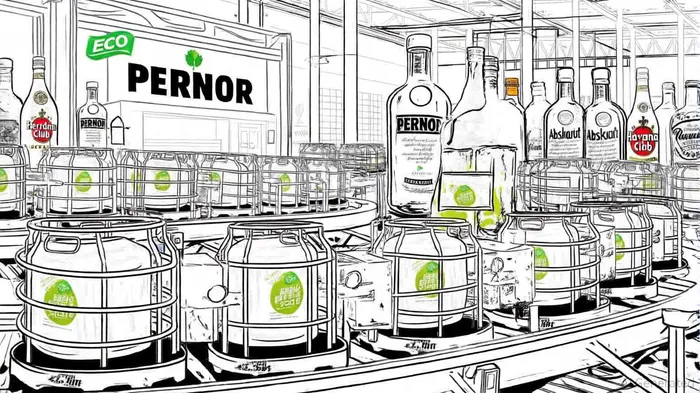
A standout example is its partnership with ecoSPIRITS to implement circular packaging solutions. By distributing spirits in bulk via reusable 4.5-liter ecoTOTE™ containers, Pernod Ricard has reduced carbon emissions by 88% and glass waste by 99% in pilot markets like Cuba, as reported in a Sustainable Brands article. This initiative, which will expand globally, not only aligns with its 2030 net-zero target but also enhances operational efficiency-a critical factor in an industry where packaging and logistics account for significant costs.
Moreover, Pernod Ricard's science-based targets-validated by the Science Based Targets initiative (SBTi)-include a 54% reduction in Scope 1 and 2 emissions by 2030 (from a 2022 baseline) and a 90% reduction by 2050. These metrics, combined with regenerative agriculture practices and renewable energy adoption, position the company to meet evolving ESG standards while mitigating climate-related risks to its supply chain, a trend also noted in a Mordor Intelligence report.
Navigating Short-Term Challenges
While Pernod Ricard's long-term outlook is robust, near-term headwinds cannot be ignored. The company faces a 200 million euro annual impact from tariffs in the U.S. and China, according to a Global Banking & Finance article, while its Global Travel Retail segment saw a 31% Q3 FY25 decline due to China's suspended duty-free Cognac imports, as reported in The Spirits Business. However, these challenges are being offset by cost discipline-a €1 billion efficiency plan-and geographic diversification. For instance, India's premium spirits market grew 5% year-to-date in 2025, driven by brands like Jameson and Royal Stag, according to the company's FY25 sales report.
The company's margin expansion strategy-supported by a 16% A&P spend and a focus on high-margin premium brands-also provides a buffer against volatility. In Q3 FY25, Pernod Ricard achieved a 64-basis-point organic operating margin expansion, even amid a 3% sales decline, as shown in the Q3 FY25 results.
A Strategic Window for Investors
For investors, Pernod Ricard's 2027-2029 guidance represents a strategic window to capitalize on a business model that balances growth and sustainability. The company's premium portfolio is well-positioned to benefit from the 9.76% CAGR of the global premium alcohol market, according to a GlobeNewswire report, while its sustainability initiatives reduce regulatory and reputational risks.
Conclusion
Pernod Ricard's ability to harmonize premiumization with sustainability is a testament to its strategic agility. While short-term macroeconomic pressures persist, the company's long-term vision-rooted in premium brand strength, operational efficiency, and environmental stewardship-offers a resilient framework for growth. For investors seeking exposure to a sector poised for transformation, Pernod Ricard's 2027-2029 guidance is not just a forecast but a blueprint for navigating the future of global spirits.







Comentarios
Aún no hay comentarios