
The Perils of Patience: Assessing the Fed's Rate-Cutting Dilemma in a Stalling Labor Market
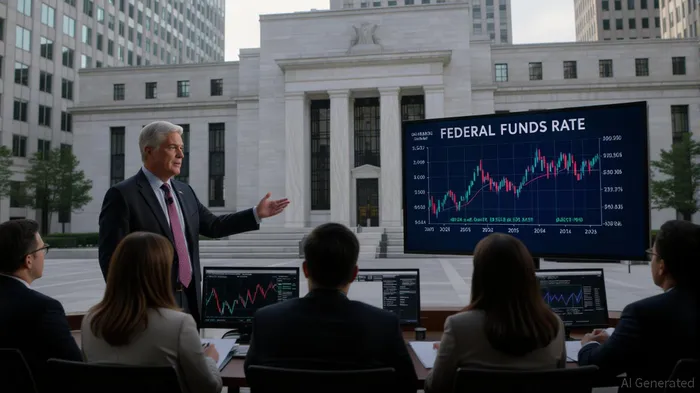
The Federal Reserve's struggle to balance inflation control with labor market stability has reached a critical juncture. As of July 2025, the U.S. labor market remains in a fragile equilibrium: unemployment hovers at 4.1%, wage growth has kept pace with inflation, and job gains in sectors like healthcare and education offset losses in federal employment. Yet, beneath this veneer of stability lies a simmering tension. The Fed's delayed rate cuts since 2022—intended to curb inflation—have created a precarious scenario where prolonged high rates risk amplifying downside risks to growth, elevating market volatility, and forcing investors to recalibrate their strategies.
The Cost of Waiting: A Labor Market in Limbo
The Fed's 2022-2024 tightening cycle, which raised the federal funds rate by 5 percentage points, initially succeeded in slowing inflation from 6.6% to 2.7% by mid-2025. However, this came at a cost. High borrowing costs have weighed on credit-dependent sectors like housing and infrastructure. For example, 30-year mortgage rates averaged 6.7% in 2024, suppressing home construction and exacerbating affordability crises. Meanwhile, industries requiring large upfront capital—such as green energy and manufacturing—have seen delayed investments, hampering supply chain resilience and climate progress.
The labor market's resilience has been a buffer. Unemployment rose modestly to 4.3% by July 2024 but stabilized at 4.1% by June 2025. Yet, wage growth has decelerated, with real average hourly earnings rising by just 0.1% in July 2024. This signals a cooling labor market, where employers are less willing to raise pay amid higher borrowing costs and weaker demand. If the Fed continues to delay cuts, these trends could accelerate, leading to a sharper slowdown and higher unemployment.
Historical Precedents and Modern Parallels
History offers cautionary tales. In 2008, the Fed's swift rate cuts and quantitative easing (QE) averted a deeper recession, but prolonged low rates later fueled asset bubbles. Conversely, the 2020 pandemic response prioritized labor market support over inflation risks, leading to a rapid recovery but uncontrolled inflation. The current situation mirrors these dilemmas: the Fed must choose between risking a recession by maintaining high rates or reigniting inflation by cutting too soon.
The 2022-2024 period illustrates the dangers of delayed action. By waiting until September 2024 to begin rate cuts, the Fed allowed the housing market to stagnate, infrastructure projects to stall, and businesses to reduce hiring. This delay also contributed to an inverted yield curve, which initially cushioned the economy but later flattened, reducing the stimulative effect of eventual cuts.
Investor Strategies in a High-Risk Environment
Investors have adapted to the Fed's uncertainty by shifting their asset allocations. During the 2022-2024 tightening cycle, portfolios leaned heavily into short-duration fixed income and cash to mitigate reinvestment risk. By 2024, as rate-cut expectations grew, allocations to intermediate- and long-duration bonds increased, and equity portfolios tilted toward U.S. large-cap stocks, particularly in technology and consumer discretionary sectors.
However, this approach carries risks. Overexposure to rate-sensitive sectors like housing and infrastructure could lead to losses if the Fed delays cuts further. Conversely, premature bets on growth-oriented assets may backfire if inflation resurfaces. Investors must also contend with global spillovers: emerging markets, already strained by high U.S. rates, face higher debt-servicing costs and capital outflows.
Balancing Act: Inflation vs. Growth
The Fed's dual mandate—price stability and maximum employment—demands a delicate balance. While inflation has eased, it remains above the 2% target. Delayed cuts risk reigniting inflation through two channels:
1. Tariff Pass-Through: Rising trade tensions and tariffs could push up input costs, particularly in manufacturing and energy, eroding the progress made in disinflation.
2. Wage-Price Spiral: If unemployment rises due to delayed cuts, workers may push for higher wages to offset inflation, creating a self-reinforcing cycle of price increases.
Strategic Recommendations for Investors
- Diversify Duration Exposure: Maintain a mix of short- and intermediate-duration bonds to hedge against rate volatility. Consider active fixed income strategies to exploit high-yield opportunities while managing reinvestment risk.
- Sector Rotation: Overweight sectors poised to benefit from rate cuts, such as housing, infrastructure, and financials. Underweight sectors sensitive to inflation, like energy and materials.
- Geographic Hedging: Reduce U.S. home bias by allocating to international and emerging markets, particularly those with more accommodative monetary policies.
- Defensive Positioning: Keep a portion of the portfolio in defensive assets like utilities and healthcare, which offer stability during economic downturns.
Conclusion: Timing is Everything
The Fed's rate-cutting decisions in 2025 will be a defining factor for the labor market and financial markets. A well-timed cut could stabilize growth, support employment, and restore confidence. However, waiting too long risks a sharper slowdown, higher volatility, and a protracted economic adjustment. Investors must stay agile, balancing growth opportunities with downside protection as the Fed navigates this high-stakes balancing act.
In the end, the Fed's actions—and inactions—will shape not only macroeconomic outcomes but also the winners and losers in the investment landscape. For those prepared to adapt, the coming months may offer both challenges and opportunities.







Comentarios
Aún no hay comentarios