
The Perfect Storm for European Equities: Geopolitical Uncertainty, AI Valuation Fears, and Tightening Monetary Policy
Geopolitical Uncertainty: A Catalyst for Volatility
Geopolitical tensions have emerged as a primary driver of market instability in 2025. Escalating trade conflicts and regional conflicts have amplified liquidity strains and sudden corrections in equity valuations. For instance, U.S. tariff announcements in April 2025 triggered sharp declines and rapid recoveries in EU markets, underscoring the fragility of investor sentiment according to ESMA. Heightened risks have also widened corporate bond spreads, particularly in high-yield segments, as credit quality deteriorates.
The ripple effects of geopolitical uncertainty extend beyond trade. Cyber warfare and energy supply disruptions have introduced new vulnerabilities, particularly in critical infrastructure and energy sectors. These risks are compounded by the EU's ongoing efforts to balance national security priorities with economic resilience, leading to policy interventions that further complicate market dynamics.
AI Valuation Fears: A Bubble in the Making?
The AI sector, once a beacon of growth, has become a focal point of concern. European markets experienced a broad sell-off in Q3-Q4 2025 as investors questioned the sustainability of AI-driven valuations. Tech-related stocks and miners were particularly hard hit, with premarket declines exceeding 1% in key indices. The U.S. Federal Reserve's cautious stance on rate cuts-despite signals from the Bank of England that rates may have peaked-further dampened optimism.
While companies like Palantir Technologies have demonstrated resilience, with a 62.8% year-over-year revenue surge and a 40.3% net margin, the sector as a whole faces valuation challenges. Palantir's forward P/E ratio of 228.5x and a price-to-sales ratio above 100x highlight the premium investors are willing to pay for AI infrastructure providers. However, such metrics contrast sharply with struggling firms like C3.ai, which has seen declining revenue and operational challenges. This divergence underscores the need for selective exposure to AI equities. 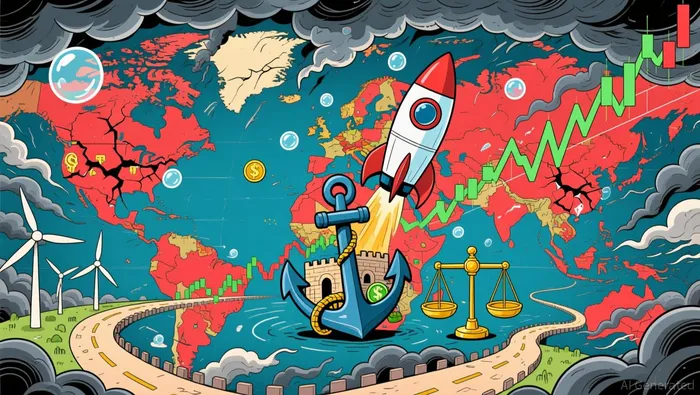
Monetary Policy Tightening: A Double-Edged Sword
Monetary policy remains a critical variable. The European Central Bank (ECB) has initiated easing measures to manage inflation, while the U.S. Federal Reserve has adopted a gradualist approach. This divergence creates a complex landscape for European equities, as investors weigh the benefits of rate cuts against the risks of prolonged tightness.
The tightening cycle has also amplified sectoral disparities. Value stocks and sectors less sensitive to interest rates-such as utilities and infrastructure-have outperformed growth-oriented peers. This trend aligns with broader shifts toward domestically focused industries, including defense and energy transition, which are receiving fiscal and policy support.
Tactical Positioning: Navigating the Storm
Amid these headwinds, tactical positioning strategies emphasize resilience and diversification. Experts recommend a shift toward value stocks and sectors aligned with the green transition and digitalization. Defense and energy infrastructure, for example, offer both policy-driven growth and insulation from geopolitical shocks.
For AI-specific investments, Palantir's strategic partnerships-such as its collaboration with NVIDIA-position it as a safer bet compared to overvalued peers. The company's 6.44 billion in cash reserves and expanding margins provide a buffer against macroeconomic volatility. Investors are also advised to prioritize firms with long-term contracts, such as Palantir's $10 billion Army contract.
Hedging strategies include diversifying across asset classes and leveraging fiscal stimulus in Germany and the EU. The EU's EUR 200 billion AI investment initiative and increased defense spending aim to reduce strategic dependencies and bolster domestic capabilities. Additionally, investors should monitor central bank signals, as the Bank of England's potential rate cuts could provide relief for equity valuations in the near term.
Conclusion: Balancing Risk and Opportunity
The European equity market in 2025 is at a crossroads. While geopolitical risks, AI valuation concerns, and monetary tightening pose significant challenges, they also create opportunities for investors who adopt a disciplined, sector-specific approach. By prioritizing resilience, leveraging policy-driven growth, and selectively targeting AI infrastructure providers, investors can navigate the perfect storm and position for long-term gains.







Comentarios
Aún no hay comentarios