
PepsiCo's Q3 Earnings Outperformance: A Strategic Edge in the Evolving Beverage and Snack Landscape
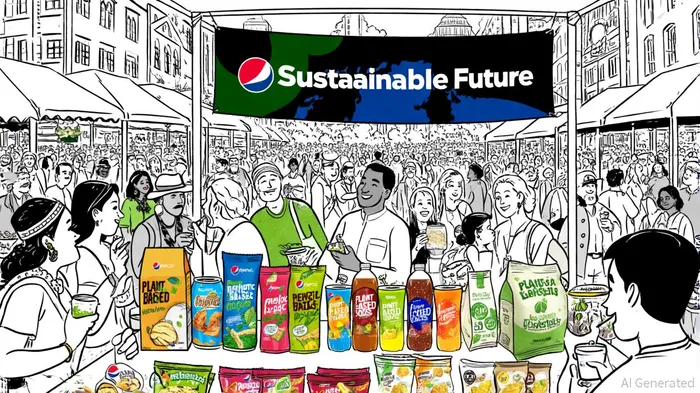
PepsiCo's Q3 2025 earnings report, released on October 9, 2025, underscored the company's ability to navigate a challenging market environment while reinforcing its long-term competitive positioning in the global beverage and snack industries. The company reported adjusted earnings per share (EPS) of $2.29 and revenue of $23.94 billion, surpassing Wall Street's expectations of $2.20 and $23.83 billion, respectively, according to CNBC. This outperformance, despite a 1% global volume decline in both food and beverage segments, highlights PepsiCo's strategic agility in addressing shifting consumer preferences and operational headwinds.
Health-Driven Innovation and Market Trends
The global beverage and snack industries in 2025 are defined by a clear pivot toward health-conscious consumption. Functional beverages-such as adaptogen-infused drinks, prebiotic sodas, and vitamin-enhanced products-have surged in popularity, with the segment growing 54% since 2020, according to Innova Market Insights. PepsiCoPEP-- has positioned itself at the forefront of this trend through strategic acquisitions and product innovations. The $1.95 billion acquisition of Poppi, a leader in prebiotic sodas, has already secured PepsiCo a 19% market share in this niche, outpacing competitors like Coca-Cola's Simply Pop, according to Nasdaq. Additionally, the company is expanding into the liquid protein market in late 2025, with clean-label, high-protein beverages designed to meet demand for functional hydration without compromising taste, as Nasdaq also reports.
In the snack category, PepsiCo's Frito-Lay division is leveraging plant-based and grain-free innovations to capture health-conscious consumers. The acquisition of Siete Foods for $1.2 billion in 2025 has bolstered its portfolio with gluten-free and paleo-friendly products, while new lentil, chickpea, and quinoa-based snacks are being rolled out nationwide, according to The Entrepreneur Times. These moves align with broader industry trends: the global snack market grew 4.8% in 2025, with 68% of manufacturers adopting eco-friendly packaging to meet sustainability demands, per SNAC Intl.
Sustainability as a Competitive Advantage
PepsiCo's sustainability initiatives under its pep+ strategy have evolved to reflect both environmental and operational priorities. The company has refined its packaging goals to focus on high-impact markets, reducing virgin plastic use by 5% between 2023 and 2024 while increasing recycled plastic content to 15%, according to a PepsiCo press release. It has also expanded its regenerative agriculture goals to cover 10 million acres by 2030, up from 7 million, and achieved a 25% improvement in water-use efficiency in high-risk areas-surpassing its 2030 target two years early, the release adds. These efforts not only align with global ESG standards but also enhance operational resilience, particularly in water-stressed regions.
Navigating Volume Challenges and Cost Pressures
Despite its revenue growth, PepsiCo faced a 1% global volume decline in Q3 2025, with North America's food and beverage segments down 4% and 3%, respectively, as CNBC reported. This reflects broader industry challenges, including inflationary pressures and shifting consumer spending habits. However, the company is countering these trends through cost-cutting measures and innovation. For example, its focus on "value-conscious" product lines-such as affordable luxury beverages and single-serve healthier snacks-addresses both price sensitivity and wellness demands, as the SNAC Intl report notes. Additionally, digital transformation initiatives, including AI-driven forecasting and direct-to-consumer subscriptions, are optimizing supply chains and enhancing customer engagement, per CNBC coverage.
Long-Term Positioning and Investment Outlook
PepsiCo's strategic focus on health, sustainability, and digital innovation positions it to outperform in a market increasingly defined by consumer demand for functional and eco-friendly products. While short-term volume declines in North America remain a concern, the company's investments in emerging markets-particularly in Asia-Pacific and Latin America-offer growth tailwinds as disposable incomes rise, according to CNBC.
Historical data from past earnings beats further supports this outlook. A backtest of PepsiCo's stock performance following earnings surprises since 2022 reveals that a simple buy-and-hold strategy-holding shares for approximately four weeks after a beat-has historically yielded a cumulative average return of +1.1% by day 30, with a 65% win rate. This outperforms the S&P 500 benchmark, which shows slightly negative returns over the same period. The results suggest that PepsiCo's earnings surprises are followed by a modest but persistent price drift, reinforcing the case for patience in capturing long-term value.
Conclusion
PepsiCo's Q3 2025 results demonstrate its ability to balance short-term profitability with long-term strategic execution. By aligning with global trends in health, sustainability, and digital transformation, the company is not only mitigating current challenges but also securing its position as a leader in the evolving beverage and snack landscape. For investors, this dual focus on innovation and operational efficiency suggests a compelling long-term outlook, even amid macroeconomic uncertainties.





Comentarios
Aún no hay comentarios