
PepsiCo Double-Downs on Sports: A Strategic Pivot to Fuel Growth?
PepsiCo’s recent restructuring of its marketing unit and partnerships signal a bold bet on sports and functional beverages as a growth engine. Amid rising macroeconomic headwinds, the company has reorganized leadership, deepened key alliances, and prioritized innovation to capture a slice of the $3.5 trillion global beverage market. But can this pivot offset slowing sales and investor skepticism?
Leadership Reboot: Regional Autonomy Meets Global Ambition
PepsiCo’s 2025 leadership reshuffle consolidates control over key markets while sharpening its focus on sports marketing. Steven Williams, now CEO of PepsiCoPEP-- North America, unifies beverage and snack operations under a single leader, streamlining compliance and supply chain strategies. Meanwhile, Silviu Popovici oversees Europe, the Middle East, and Africa, integrating production networks to support distribution of sports drinks like Gatorade and Propel. This regional autonomy, paired with centralized innovation efforts (e.g., AI-driven supply chains led by new Chief Commercial Officer Roberto Martinez), aims to cut costs while accelerating product launches.
The restructuring also reflects a strategic shift toward emerging markets: 42% of 2024 capital expenditures targeted these regions, where demand for functional hydration is surging.
The MSG Partnership: A Linchpin for Sports Marketing
PepsiCo’s expanded, multi-year deal with the MSG Family of Companies marks a cornerstone of its sports strategy. The partnership, effective March 2025, positions PepsiCo as an official partner across venues like Madison Square Garden and Sphere in Las Vegas, with exclusive product placements for Gatorade, Pepsi Zero Sugar, and snack brands like Lay’s.
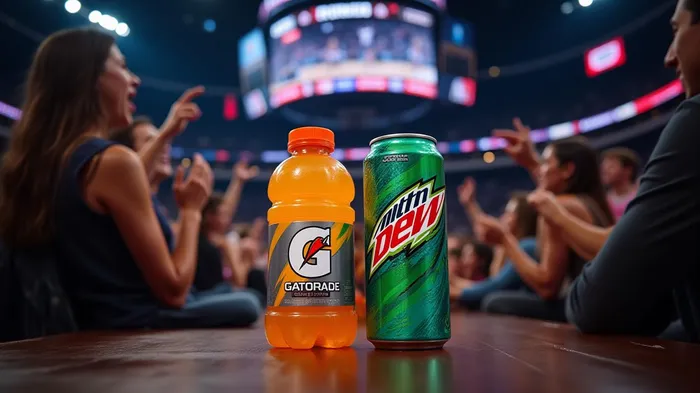
The deal amplifies PepsiCo’s visibility in live entertainment, leveraging high-profile events like the Knicks-Rangers broadcasts and the Christmas Spectacular. This aligns with a $2 billion acquisition of Poppi, a prebiotic soda brand targeting health-conscious millennials and Gen Z—a demographic critical to long-term growth.
Betting on Beverage Innovation
PepsiCo’s product portfolio is undergoing a health-focused overhaul:
- Gatorade Zero and Propel have driven category leadership, capitalizing on the $47 billion global hydration market.
- The Pepsi Zero Sugar rebrand, led by new CMO Mark Kirkham, aims to attract value-conscious consumers through bold flavors and affordability.
- Acquisitions like Siete Foods and Obela diversify the portfolio, reducing reliance on traditional snacks and sodas while addressing trends toward culturally relevant, “better-for-you” products.
The stock has fallen to a 52-week low, but the dividend yield of 4.1%—its highest in decades—suggests investor patience.
Navigating Headwinds: Cost Pressures and Slowing Demand
Despite these moves, PepsiCo faces significant hurdles. Its Q1 2025 earnings showed a 4% drop in constant currency EPS and flat beverage volume growth, as tariffs and inflationary pressures dented sales. The company cut its 2025 EPS guidance to flat growth, a 3% reduction from prior targets.
To counter this, PepsiCo is prioritizing value-driven pricing, including smaller multi-packs under $2 and entry-level snacks, to retain budget-conscious buyers. Yet, this risks diluting margins in a category where gross margins already trail peers like Coca-Cola.
The Bottom Line: A Risky Gamble, But One Worth Watching
PepsiCo’s sports pivot is both ambitious and necessary. Its leadership reshuffle and MSG partnership aim to capitalize on $12 billion in annual sports beverage sales, while acquisitions like Poppi target fast-growing health trends. The stock’s current valuation—16.8x 2025 EPS forecasts—offers a discount to its 10-year average of 21x, suggesting it’s priced for pessimism.
However, the path to growth is littered with obstacles:
- Execution Risk: Integrating Poppi and other smaller brands into the portfolio demands flawless marketing and supply chain management.
- Economic Uncertainty: A prolonged downturn could further dampen demand for discretionary beverages.
- Competitor Pressure: Coca-Cola’s Smartwater and Minute Maid are formidable rivals in functional hydration.
The dividend, now yielding 4.1%, remains secure given PepsiCo’s fortress balance sheet. But investors will need patience: success hinges on whether sports marketing can reignite top-line growth.
Conclusion
PepsiCo’s 2025 strategy is a high-stakes gamble on sports and health-centric beverages. With a reorganized leadership structure, strategic partnerships like MSG, and a focus on innovation, it’s positioned to tap into secular trends. Yet, macroeconomic headwinds and execution risks loom large. For investors, the stock’s cheap valuation and dividend make it a compelling “value trap”—one that could prove rewarding if PepsiCo’s sports bet pays off.
Data as of Q1 2025. Analyst estimates from Bloomberg and PepsiCo earnings reports.





Comentarios
Aún no hay comentarios