
PepGen's Recent Capital Raise and Its Implications for Growth
PepGen Pharmaceuticals' recent $100 million public offering[1] has positioned the biotech firm at the intersection of strategic capital allocation and a cautiously optimistic biotech sector. The raise, executed through 31,250,000 shares at $3.20 apiece with a 30-day underwriter option[1], underscores the company's focus on advancing its FREEDOM-DM1 program for myotonic dystrophy type 1 (DM1). This move aligns with broader industry trends where companies are prioritizing targeted R&D investments amid constrained capital markets.
Strategic Allocation: From Splicing to Scale
PepGen's allocation of proceeds to its FREEDOM-DM1 clinical programs—specifically the FREEDOM2-DM1 multiple ascending dose (MAD) study—reflects a calculated approach to maximizing therapeutic potential. Recent Phase 1 single ascending dose (SAD) results demonstrated a mean splicing correction of 53.7% at 15 mg/kg, a leap from 29.1% at 10 mg/kg and 12.3% at 5 mg/kg[1]. This milestone, achieved without serious adverse events, positions PepGenPEPG-- to potentially redefine treatment standards for DM1, a rare neuromuscular disease with limited therapeutic options.
The decision to fund both the SAD and MAD studies simultaneously is a departure from traditional sequential trial designs, a strategy that could accelerate timelines while conserving cash. This mirrors broader sector trends where companies are adopting agile trial frameworks to mitigate delays and reduce costs[2]. For PepGen, the dual focus on dose escalation and repeat-dose safety signals a commitment to de-risking its lead candidate ahead of potential partnerships or regulatory milestones.
Investor Confidence in a Fragmented Market
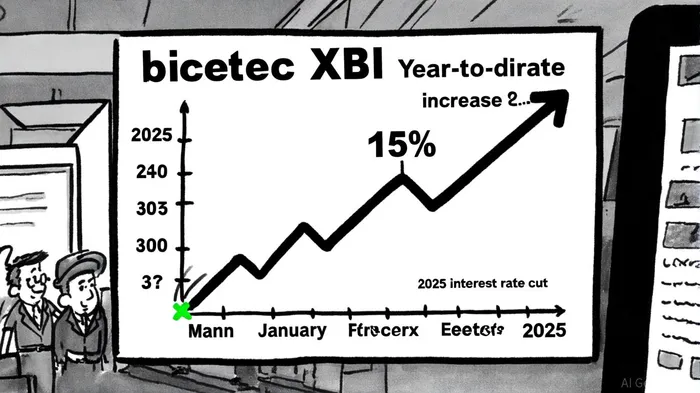
The biotech sector's recent rebound, marked by a 15% year-to-date gain in the XBI index[3], has created a fertile environment for capital raises like PepGen's. This optimism is fueled by macroeconomic tailwinds, including the Federal Reserve's initial interest rate cut and a post-election policy clarity[3]. However, the sector remains cautious. M&A activity in 2024, while down in volume compared to 2023, has seen large pharma companies amass $1.6 trillion in capital to fund future deals[3], suggesting a potential surge in consolidation once patent cliffs and growth pressures intensify.
PepGen's capital raise, occurring amid this backdrop, demonstrates a keen understanding of investor priorities. The company's emphasis on clear clinical progress—highlighted by its splicing correction data—addresses a key driver of biotech valuation: the ability to demonstrate tangible, dose-dependent efficacy[1]. This is particularly critical in an era where investors are increasingly skeptical of “pipeline theater” and demand concrete milestones[2].
Risks and the Road Ahead
Despite the positive momentum, challenges persist. The biotech sector remains vulnerable to macroeconomic headwinds, including inflation-driven cost inflation and regulatory uncertainties around drug pricing[2]. PepGen's reliance on a single therapeutic candidate also exposes it to the inherent risks of clinical-stage development. However, the company's disciplined use of capital—allocating funds to high-impact trials and maintaining flexibility via the underwriter option—mitigates some of these concerns[1].
Looking ahead, the success of the FREEDOM2-DM1 MAD study, expected to report 5 mg/kg cohort results in Q1 2026[1], will be pivotal. Positive data could catalyze partnerships with larger pharma players, leveraging the sector's pent-up M&A appetite. Meanwhile, the broader adoption of AI in R&D, which now accounts for 87% of alliance investments[2], may further enhance PepGen's efficiency in optimizing its DM1 program.
Conclusion
PepGen's $100 million raise is more than a funding event—it's a strategic maneuver to capitalize on a sector in transition. By aligning its capital allocation with both clinical urgency and investor expectations, the company has positioned itself to navigate a competitive landscape where scientific clarity and operational discipline are paramount. As the biotech sector inches toward a potential rebound, PepGen's story offers a case study in how to balance ambition with pragmatism.





Comentarios
Aún no hay comentarios