
Penumbra's CAVT Technology: A Disruptive Innovation in Pulmonary Embolism Care
Clinical Outcomes: A Paradigm Shift in Hemodynamic Recovery
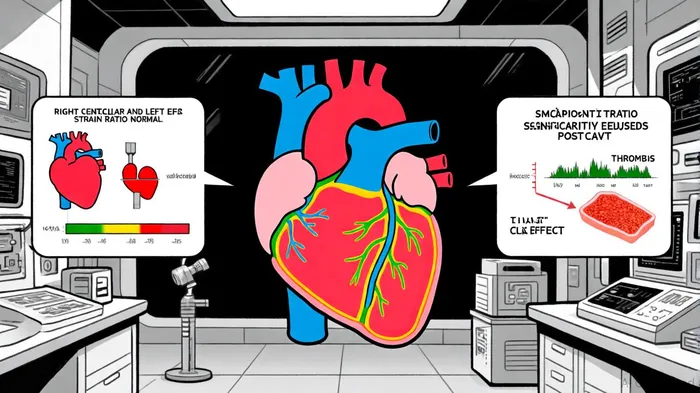
The STORM-PE trial, a randomized controlled trial (RCT) involving 100 patients across 22 international sites, demonstrated that CAVT significantly reduces right heart strain-a critical determinant of mortality in PE. Patients treated with CAVT experienced a , compared to 0.24 in the anticoagulation-only group (P < , as reported in the STORM-PE press release. Furthermore, , ; the press release also notes these comparative rates. These outcomes were achieved without compromising safety, . , according to the same press release.
The implications of these findings are profound. Right heart strain is a key driver of morbidity and mortality in PE, and CAVT's ability to rapidly alleviate this strain positions it as a superior alternative to conventional therapies. As noted by Dr. Robert Lookstein in a TCTMD article, "CAVT offers a mechanistic solution to a problem that has long been managed with suboptimal pharmacological approaches."
Market Implications: Cost Savings and Operational Efficiency
Beyond clinical efficacy, CAVT's economic value is equally compelling. Hospitals adopting CAVT could see by managing 10% more patients with advanced therapies, according to Penumbrainc data. , metrics highlighted in that report. For a 600-bed hospital, this translates to millions in annual savings, particularly in managing post-thrombotic syndrome (PTS), which costs an estimated , per the same analysis.
The technology also addresses unmet needs in lower extremity venous thrombus and acute limb ischemia (LE-ALI). The THRIVE Study report documented a with CAVT, alongside a compared to embolectomy, as described in the THRIVE Study report. These outcomes underscore CAVT's versatility and its potential to dominate multiple vascular disease segments.
Guideline Integration: A Pathway to Standard of Care
The integration of CAVT into clinical guidelines is accelerating. The 2025 European Society of Cardiology (ESC) guidelines have already acknowledged CAVT as a "high-efficacy intervention" for intermediate-high risk PE, citing the STORM-PE findings summarized in the STORM-PE press release. Similarly, the American College of Cardiology (ACC) is expected to incorporate CAVT into its 2026 updates, though the American Heart Association (AHA) has yet to formally endorse it, per the press release.
Expert consensus, however, is aligned. Dr. Rachel Rosovsky emphasized that "the STORM-PE trial provides the first randomized evidence supporting mechanical thrombectomy in PE, which will likely redefine treatment algorithms" (as noted in the TCTMD article). While limitations such as the trial's small sample size and reliance on surrogate endpoints remain, the robustness of the results has galvanized the medical community.
Investor Considerations: Adoption Timelines and Risks
For investors, the next 12–24 months will be pivotal. Penumbra's CAVT technology is poised for rapid adoption, particularly in high-acuity settings where rapid decongestion of the right ventricle is critical. However, challenges persist: operator training for the Lightning Flash™ system, reimbursement hurdles in cost-sensitive markets, and the need for long-term safety data.
The company's strategic focus on expanding its footprint in LE-ALI and post-acute care further diversifies its revenue streams. Analysts project that CAVT could capture within five years, driven by its superior outcomes and cost-effectiveness, according to a StockTitan analysis.
Conclusion: A Disruptive Force in Vascular Medicine
Penumbra's CAVT technology represents a disruptive innovation in pulmonary embolism care, combining clinical superiority with economic value. The STORM-PE trial has not only validated its efficacy but also catalyzed a reevaluation of treatment paradigms. As guidelines evolve and adoption accelerates, PenumbraPEN-- is well-positioned to redefine the standard of care-and deliver outsized returns for investors who recognize the inflection point.





Comentarios
Aún no hay comentarios