
Pentagon's $1B Rocket Motor Bet: A Tactical Play or a Structural Shift?
The Pentagon's move is a tactical masterstroke, and the market is already pricing it in. On Tuesday, the Defense Department signed a letter of intent to invest $1 billion in convertible preferred equity in L3Harris' Missile Solutions business. This is the first direct-to-supplier partnership of its kind, a novel model where the government becomes a strategic investor to de-risk critical capacity expansion. The immediate reaction was decisive: shares surged over 11% in pre-market trading, a clear signal that investors see this as a major positive catalyst.
The mechanics are straightforward. The Pentagon's capital will be earmarked to expand L3Harris' production capacity for solid rocket motors used in key systems like the PAC-3 Patriot and Tomahawk missiles. This upfront investment provides the stability and funding needed to modernize facilities and bolster industrial resilience. In return, the government secures a steady supply of these critical components while positioning itself to benefit from the eventual public offering.
The setup for the new entity is now defined. L3HarrisLHX-- will carve out its Missile Solutions unit into a separate company, with the Pentagon's convertible security automatically converting to common equity when the new public entity goes public later in 2026. This creates a high-conviction, event-driven play. The IPO itself is the next near-term catalyst, with the government's equity stake adding a layer of credibility and de-risking the investment thesis for public investors.
The Mechanics: De-Risking the IPO Path
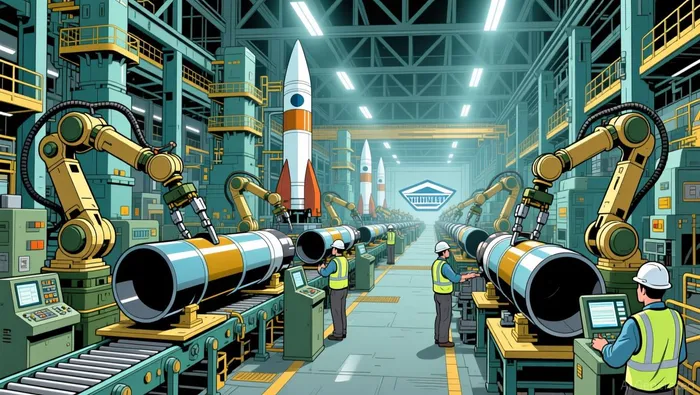
The deal's structure is designed to de-risk the entire path to the public markets. The Pentagon's $1 billion convertible security is the linchpin. It automatically converts to common equity when the new public company goes public, which is planned for the second half of 2026. This creates a clear, time-bound exit for the government, aligning its incentive with a successful IPO.
L3Harris retains full operational control through this setup. The company will retain majority ownership and control of the new entity after the spinoff. This allows L3Harris to monetize a portion of the missile business's value and unlock capital for reinvestment, while still managing the day-to-day operations and strategic direction. The controlling stake mitigates execution risk for the parent company, ensuring continuity.
For the Pentagon, the structure provides a potential path to a return on investment. The government's equity stake, which converts at the IPO, gives it a direct financial interest in the new company's success. This aligns the government's incentives with those of future public shareholders, creating a shared interest in a strong valuation. It's a novel model where a strategic investor becomes a long-term holder, potentially benefiting from the business's growth post-IPO.
Competitive Landscape and Conflicts
The deal creates a captive, high-demand market for the new public entity, a clear advantage that could disadvantage rivals. The Pentagon's $1 billion investment guarantees a steady supply of motors for critical systems like the Patriot and Tomahawk. This direct partnership, backed by potential multi-year procurement agreements, provides the new company with a built-in anchor customer and revenue visibility that pure-play competitors lack. In a market where securing long-term contracts is paramount, this gives L3Harris' missile spinoff a significant first-mover and de-risking edge.
Yet this structure also raises a point of scrutiny for the Pentagon's acquisition strategy. L3Harris will retain a controlling stake in the new entity after the spinoff. This concentration of ownership limits market competition, a dynamic that could face regulatory or political pushback. The government's equity position in a key supplier creates a potential conflict of interest, as noted in the announcement. While the intent is to build a resilient industrial base, the model risks entrenching a single supplier relationship, which may not align with the administration's stated goal of reinvigorating competition.
This move follows recent Trump Administration pressure on defense contractors to accelerate weapons production, intensifying competitive dynamics. The Pentagon has spent most of the past year urging weapons makers to dramatically increase missile production rates, a directive that has spurred new investments but often stalled without multiyear orders. L3Harris' novel partnership with the government provides the stability and upfront capital to justify a major capacity expansion, a step many rivals may struggle to match without similar direct state backing. The setup is a tactical play to win the immediate capacity race, but it does so by leveraging a government investment that reshapes the competitive playing field.
Valuation and Forward Catalysts
The thesis now hinges on a series of near-term events that will validate or challenge the setup. The primary catalyst is the successful completion of the IPO in the second half of 2026. This public offering will determine the valuation of the new missile solutions company and provide the ultimate test of market confidence in the business model. The government's convertible security, which automatically converts to common equity at the IPO, means the Pentagon will become a public shareholder alongside other investors. The IPO price and subsequent trading will signal whether the market sees the de-risked, government-backed expansion as a compelling growth story or a potentially overvalued asset.
Key risks remain on the path to that IPO. First, the deal is contingent on congressional approval, a potential source of delay or even derailment. Political scrutiny, particularly around the conflict of interest created by the Pentagon's equity stake in a major defense contractor, could slow the process. Second, execution challenges loom. The investment is earmarked to expand production capacity, but scaling solid rocket motor manufacturing is a complex industrial undertaking. Any delays or cost overruns in facility modernization would directly threaten the promised supply chain resilience and the new company's financial trajectory. Third, broader defense budget volatility poses a structural risk. While the government is a committed anchor customer, the long-term health of the new entity depends on sustained procurement, which can be subject to political and fiscal shifts.
The final, critical piece of the puzzle will be the terms of the multi-year procurement framework agreements negotiated with the Pentagon after the IPO. The partnership positions the department and L3Harris to negotiate these deals, but the specifics-contract values, duration, and volume commitments-will define the new company's revenue visibility and growth runway. Investors should watch for these agreements as a key forward indicator of demand certainty. In the meantime, the setup is clear: the IPO is the next major event, and the path to it is paved with both a powerful catalyst and tangible execution risks.





Comentarios
Aún no hay comentarios