
PennyMac's 2025 Restructuring: Strategic Shifts and Market Implications
Strategic Restructuring: A Closer Look
PennyMac's leadership reshuffling centers on three key appointments: Kevin Ryan as Chief Strategy Officer, Marshall Sebring as Chief Investment Officer, and Shiva Iyer as Chief Enterprise Risk Officer. According to a Yahoo Finance report, Ryan brings experience from Better and Morgan Stanley, where he oversaw restructuring initiatives and public listings. Sebring, with a background in mortgage-backed securities and risk management, is tasked with enhancing capital-allocation strategies and hedging programs. Iyer, a long-time Pennymac leader, will strengthen the company's risk governance framework, drawing on his prior roles at MUFG and Bank of America.
These changes follow the departure of William Chang, who served as Chief Capital Markets Officer for over a decade. Mark Elbaum, an industry veteran, assumed Chang's responsibilities on an interim basis before being formally appointed. The restructuring signals a deliberate shift toward optimizing business execution and aligning with future growth opportunities, as emphasized in Pennymac's official announcements.
Investor Confidence and Stock Performance
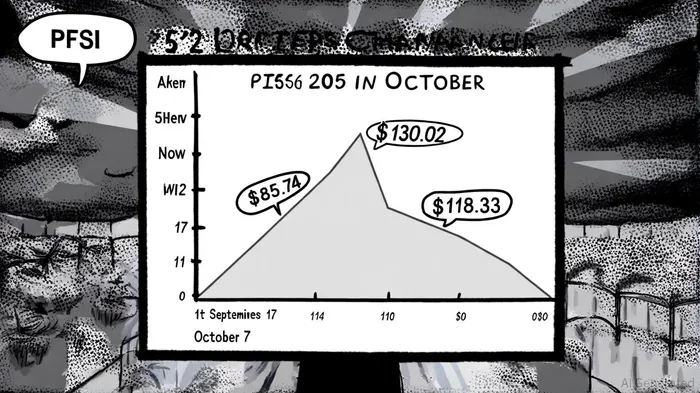
Despite the strategic rationale, PFSI's stock has exhibited significant volatility in 2025. On October 3, 2025, the stock closed at $123.15, reflecting an all-time high of $127.13 recorded on September 17, according to Macrotrends stock history. However, by October 7, the price had dropped to $118.33, a 3.91% decline in after-hours trading, an InvestorShangout article reported. Over the past 52 weeks, the stock has fluctuated between $130.02 and $85.74, highlighting the sector's inherent instability.
Analysts remain divided. For PennyMac Mortgage Investment Trust (PMT), the consensus rating is "Hold," with a projected 12-month price target of $14.20, according to the StockAnalysis forecast. Meanwhile, PFSI's financial metrics-such as a 68.7% net profit margin and 23.2% return on equity-suggest robust operational efficiency, per the Intratio forecast. Yet, the stock's post-restructuring performance has not fully aligned with these fundamentals, raising questions about market skepticism toward leadership transitions.
Strategic Implications and Long-Term Outlook
The leadership changes underscore PennyMac's commitment to addressing evolving market conditions. For instance, Sebring's expertise in mortgage-backed securities could enhance PMT's ability to manage interest-rate risks, a critical factor in a rising-rate environment. Similarly, Iyer's focus on risk governance may mitigate regulatory and operational vulnerabilities, particularly as the company expands its capital markets activities.
However, the departure of a long-serving executive like Chang introduces uncertainty. While Elbaum's interim role provided continuity, his permanent appointment may require time to demonstrate strategic cohesion. As noted by InvestorShangout, the broader restructuring aims to "optimize business execution," but the stock's mixed reaction suggests investors are awaiting tangible results.
Conclusion
PennyMac's 2025 organizational changes represent a calculated effort to strengthen its leadership and strategic frameworks. The appointments of Ryan, Sebring, and Iyer align with the company's goals of enhancing capital efficiency and risk management. Yet, the stock's volatility and cautious analyst ratings indicate that investor confidence remains conditional on the successful execution of these strategies. For long-term investors, the company's strong financial metrics and market position in the U.S. mortgage sector offer a compelling case, but short-term fluctuations may persist as the new leadership team establishes its track record.





Comentarios
Aún no hay comentarios