
PENN's Governance Gamble: Will ISS-Backed Change Pay Off?
The gaming industry is no stranger to high stakes, but PENN EntertainmentPENN-- (PENN) is now rolling the dice on a governance overhaul that could determine whether it turns its underperformance around—or doubles down on failure. With its June 17 annual meeting looming, investors face a critical choice: back the status quo or embrace a board shakeup endorsed by Institutional Shareholder Services (ISS) as a lifeline for value creation. Let's unpack why this vote matters and what's at stake for shareholders.
The Underperformance: PENN's Losing Hand
PENN's Q1 2025 results highlight a company caught between incremental progress and systemic stagnation. While revenues nudged up 4% to $1.67 billion, Adjusted EBITDA of $173 million and a 19.7% EBITDAR margin reveal a business still struggling to capitalize on its assets.
The Interactive segment, once a growth engine, remains mired in losses ($89 million in Q1), hamstrung by unfavorable sports betting outcomes and a costly expansion into new markets. Meanwhile, core retail operations face headwinds: weather disruptions, rising corporate overhead (up $8 million due to legal battles), and competition from new supply in key markets. The stock trades at a 10-year valuation trough of 9.2x EV/EBITDA—a stark contrast to its five-year average of 12.5x. This isn't just a hiccup; it's a pattern of mismanagement.
ISS's Blunt Diagnosis: A Board That's Out of Chips
ISS's scathing analysis of PENN's governance hits at the heart of the problem: a board that lacks the expertise and accountability to steer the company out of the doldrums. Key failures include:
1. Strategic Blunders: The $1.3 billion Score Media/Barstool Sports acquisition—once hailed as a digital coup—has become a money pit, compressing EBITDA margins by 15% and failing to boost free cash flow.
2. Executive Pay Disconnect: CEO Timothy Wilmott's 2023 pay package hit $14.5 million despite a 40% stock decline since 2020. ISS gave PENN's compensation practices a -100 score, its lowest possible rating, for aligning pay with poor performance.
3. Entrenchment Theater: Last-minute maneuvers to reduce board seats and block activist nominee William Clifford exposed a board more interested in self-preservation than shareholder value.
ISS's conclusion? A “clear case for board change” to inject expertise and accountability. Shareholders should take note: governance failures cost. 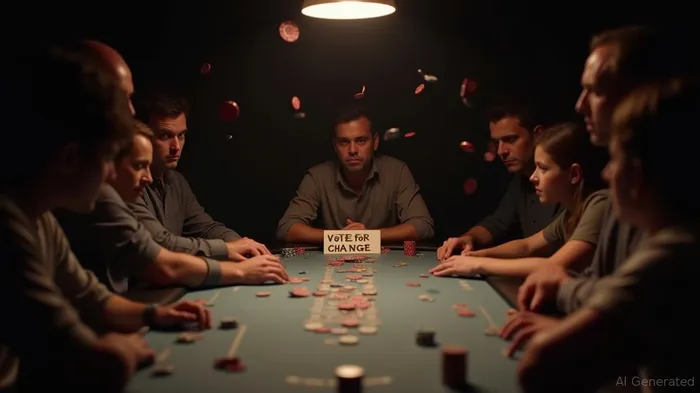
HG Vora's Nominees: The Ace Up Activism's Sleeve
The proxy battle hinges on three nominees proposed by activist investor HG Vora: Johnny Hartnett, Carlos Ruisanchez, and the rejected William Clifford. Here's why the first two matter—and why the board's rejection of Clifford exposes its blind spots:
1. Johnny Hartnett
- Qualifications: A gaming industry veteran with deep experience in digital and retail operations.
- Value Proposition: His expertise could help PENN finally execute its omni-channel strategy, integrating its Hollywood iCasino app and ESPN BET platforms into a cohesive, profitable ecosystem.
2. Carlos Ruisanchez
- Qualifications: Brings global gaming experience, including online and offline markets.
- Value Proposition: His insights could modernize PENN's technology stack, which has lagged behind peers in user experience and data-driven marketing.
3. William Clifford
Rejected by PENN's board (despite ISS's endorsement), Clifford's dismissal highlights the board's short-sightedness. As PENN's former CFO, he understands its financials intimately—but the board cited his lack of digital expertise and past opposition to critical IT modernization projects. While valid concerns, his exclusion risks leaving a critical skills gap in financial accountability.
Why Voting FOR Change is a Winning Bet
The math is simple: without a board refresh, PENN risks becoming a “value destroyer” indefinitely. ISS's endorsement of Hartnett and Ruisanchez signals to investors that their expertise is precisely what's needed to:
- Fix the Interactive Segment: Turn the $290 million revenue machine into profitability by addressing sports betting volatility and optimizing marketing.
- Trim Costs: Reduce corporate overhead (currently $36 million annually) and wind down unprofitable ventures like Barstool.
- Reposition PENN: Focus on core strengths—retail casinos and regulated markets—while leveraging digital as a complement, not a distraction.
The upside? Unlocking the company's $5.9 billion enterprise value. Even a modest 10% improvement in margins could add $120 million to annual EBITDA—a 20% boost to the stock.
Final Roll: Bet on Governance or Stay Flatlined
The June 17 annual meeting is PENN's Hail Mary. Shareholders should:
1. Vote FOR Hartnett and Ruisanchez to inject fresh expertise.
2. Demand Accountability: Push the board to abandon costly distractions (e.g., Barstool) and focus on profitable markets like iCasino expansion in New Jersey and Ontario.
3. Watch Liquidity: PENN's $1.5 billion liquidity buffer provides a cushion, but leverage at 5.0x remains a risk.
PENN's governance crisis isn't just about boardroom drama—it's about whether the company can transform from a laggard into a leader. The dice are on the table. Will investors roll with change, or let the underperformance continue? The answer is clear: vote YES to ISS-backed nominees. The future of PENN's value—and your portfolio—depends on it.
Data shows PENN's struggle to stabilize margins amid strategic missteps.
Investment Takeaway: Vote FOR HG Vora's nominees. PENN's valuation is stuck in the mud, but a governance reset could spark a 20-30% upside. Act now—or risk being dealt out of the game.





Comentarios
Aún no hay comentarios