
The PENGU Token's Breakout Potential Amid Shifting Infrastructure and Economic Development in Webster, NY
Infrastructure as a Catalyst for Economic Growth
Webster's strategic redevelopment of its former Xerox campus is a case study in how infrastructure investment catalyzes industrial and residential value. According to a report by Bitget, the FAST NY grant is funding critical upgrades-including road realignments, expanded sewer systems, and modernized electrical grids-to make the site "shovel-ready" for advanced manufacturers and logistics firms by 2026. These improvements are already attracting private capital, such as the $650 million fairlife® dairy facility, which is projected to create 250 jobs by late 2025. The phased development plan ensures that the Northeast Area for Technology (NEAT) will be fully operational by 2026, positioning Webster as a magnet for semiconductor manufacturing, food processing, and cold-chain logistics firms.
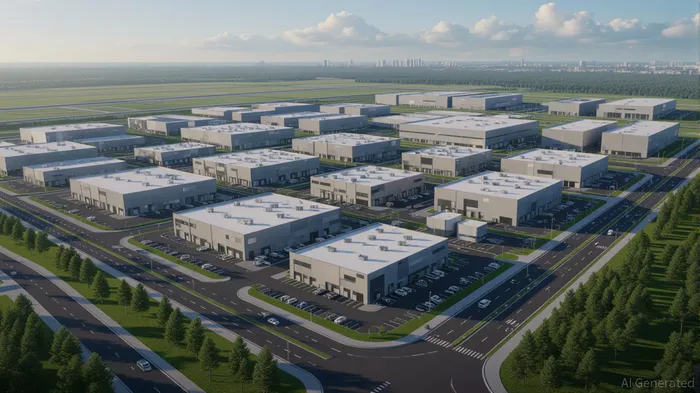
The infrastructure-driven transformation is not limited to industrial zones. Residential property values in Webster have surged by 10.1% annually, a direct consequence of the influx of well-paying jobs and the city's proximity to major transportation corridors like I-390 and the Rochester International Airport. This dual growth in commercial and residential real estate underscores a broader economic renaissance, creating a fertile ground for tokenized investment models.
PENGU Token and the Tokenization of Real Estate
While the PENGUPENGU-- token's economic model is not explicitly tied to Webster's developments, the token's high-risk, high-reward profile aligns with the city's real estate tokenization potential. Emerging trends in 2025 highlight how blockchain-based platforms are enabling fractional ownership of high-value properties, reducing barriers to entry for investors. In Webster, where infrastructure-linked real estate is appreciating rapidly, tokenization could allow PENGU holders to gain exposure to industrial and residential assets without the liquidity constraints of traditional real estate markets.
For instance, the NEAT project's $1 billion valuation and the fairlife® dairy facility's $650 million investment represent assets that could be tokenized to reflect their growing operational performance. As stated by industry analysts, smart contracts integrated with AI-driven platforms are making real estate investments more liquid and transparent. If PENGU's economic model incorporates such tokenization frameworks, its value could appreciate in tandem with the rising demand for Webster's industrial and residential properties.
Strategic Location and Long-Term Value Appreciation
Webster's geographic advantages further amplify its appeal. The city's proximity to major transportation routes and its role as a logistics hub for e-commerce companies position it to benefit from long-term supply chain shifts. This strategic positioning is likely to drive sustained demand for industrial space, with nearly one million square feet of developable area expected to be available by 2025. For token holders, this translates to a stable, appreciating asset base that could underpin PENGU's utility and market value.
Conclusion
The convergence of Webster's infrastructure upgrades, industrial revitalization, and real estate growth presents a compelling case for the PENGU token's breakout potential. By leveraging tokenization platforms that mirror the city's economic momentum, the token could capitalize on the 10.1% annual property value increases and the influx of high-paying jobs. As Webster's NEAT project nears full operational status by 2026, the alignment between physical and digital asset appreciation may redefine the PENGU token's role in decentralized investment ecosystems.







Comentarios
Aún no hay comentarios