
Penfolds' Asian Ambition: Can Luxury Wine Dominance Outpace China's Cross-Border Headwinds?
The removal of China's punitive tariffs on Australian wine in March 2024 marked a pivotal moment for Penfolds, the iconic luxury wine brand owned by Treasury Wine Estates (TWE). With Asia now contributing nearly 70% of Penfolds' global sales, the brand's resurgence in China has become a linchpin of TWE's growth narrative. Yet, as cross-border e-commerce undercut pricing power and inventory trends reveal shifting demand dynamics, investors must ask: Is Penfolds' Asia dominance sustainable, or are the headwinds too strong to justify current valuations?
The Revenue Surge: A Tariff-Driven Rebound, Not a Luxury Revolution
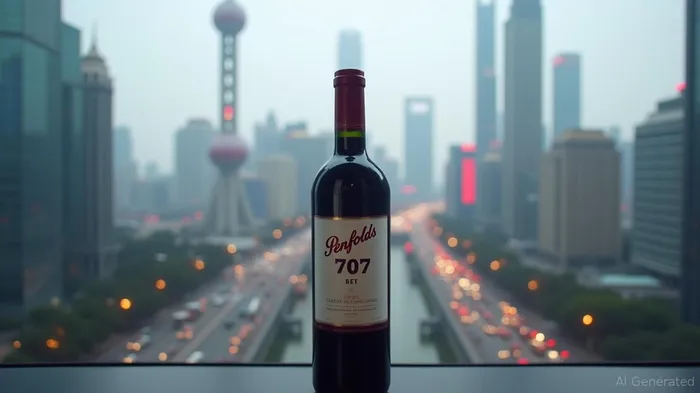
Penfolds' Asia revenue surged by 50.4% year-on-year in H1 2025, fueled by the end of China's three-year tariff ban. The tariffs, which peaked at 218.4%, had slashed Australian wine exports to China by 99% by early 2023. Post-removal, volumes rebounded: Chinese imports of Australian wine (≤2L containers) jumped to 9.4 million liters in July 2024, a 559-fold increase from 2023 levels.
However, this rebound was uneven. While Penfolds' premium “Bin & Icons” series saw strong demand during peak seasons like the mid-autumn festival, broader economic headwinds in China—slower consumer spending on luxury goods and a 6.7% drop in grape production value—have tempered optimism. TWE's revised FY2025 EBIT guidance to AUD 780 million (down from earlier projections) underscores lingering uncertainties.
The Cross-Border Threat: E-Commerce Undermines Pricing Power
The rise of duty-free cross-border e-commerce in China has introduced a critical vulnerability. Platforms like JDJD--.com now sell Penfolds Bin 407 at RMB 600, undercutting traditional distributors like Dijon Wine Cellar, which must price the same bottle at RMB 700+ due to higher compliance costs. This price gap has driven a 6% year-on-year growth in Penfolds' e-commerce revenue but also created margin pressure for authorized sellers.
The risk? Parallel imports could erode Penfolds' premium positioning. Unlike in pre-tariff days, when tariffs insulated brands, the new reality pits Penfolds against its own products sold cheaper online—a classic “race to the bottom” scenario.
Inventory Depletion: A Glass Half Full, or Half Empty?
Penfolds' inventory depletion rates in H1 2025 looked healthy: distributors reported just 20% of stock remaining post-peak seasons, suggesting strong demand. But post-Lunar New Year data paints a murkier picture. Retailers now hold 10-15% more unsold stock of Bin 389 and Bin 407 compared to pre-tariff levels, signaling a slowdown in restocking.
The disconnect? While affluent consumers still chase Penfolds' prestige, middle-class buyers—critical to sustaining growth—are more price-sensitive. TWE's shift to blended brands like One by Penfolds (a lower-cost alternative) may mitigate this, but execution remains unproven.
TWE's Strategic Crossroads: Restructure or Retreat?
TWE is doubling down on Asia, but its strategy faces scrutiny. The company:
1. Pivoted to e-commerce: Allocating 20% of Asia sales to online channels, despite margin compression.
2. Expanded product tiers: Launching One by Penfolds to target price-sensitive buyers.
3. Trimmed non-core brands: Cutting 10% of its portfolio to focus resources on Penfolds.
Yet, TWE's guidance remains cautious. The revised AUD 780 million EBIT forecast reflects weaker-than-expected sales in non-Penfolds brands and China's broader economic slowdown. Investors must ask: Is TWETWI-- over-relying on Penfolds' Asian dominance, or building a sustainable moat?
Investment Thesis: Buy the Dip, or Avoid the Trap?
Penfolds' Asia growth is real, but the risks are structural.
Bull Case (Hold/Buy):
- Penfolds retains unrivaled brand equity in China's luxury wine market.
- Cross-border e-commerce could expand total addressable market, not just steal share.
- TWE's cost cuts and e-commerce focus may stabilize margins.
Bear Case (Sell):
- Parallel imports will erode pricing power, squeezing margins.
- China's economic slowdown and wine oversupply could prolong demand softness.
- Overexposure to Asia leaves TWE vulnerable to geopolitical or regulatory shifts.
Final Take: A High-Risk, High-Reward Gamble
Penfolds' Asia dominance is undeniable, but the path to sustained growth hinges on two variables:
1. Can TWE defend pricing power against e-commerce disruptors?
2. Will China's luxury market rebound sufficiently post-pandemic?
For investors, TWE's shares—currently trading at a 15% discount to pre-tariff highs—offer an entry point, but only for those willing to bet on Penfolds' brand resilience. Monitor these key indicators:
- Inventory depletion rates during Q4 2025 (peak holiday season).
- Cross-border e-commerce sales growth versus traditional channels.
- TWE's Q4 EBIT guidance for FY2025.
In the end, Penfolds' story is a reminder that in luxury markets, brand prestige alone isn't enough—it must be fortified by pricing discipline and adaptability. The glass is half full, but cracks are already visible.
Risk Disclosure: Past performance does not guarantee future results. Investments in TWE carry risks, including but not limited to currency fluctuations, regulatory changes, and consumer demand shifts.







Comentarios
Aún no hay comentarios