
Pembina Pipeline's Strategic Position in the AI Infrastructure Boom
The AI infrastructure boom is reshaping global energy demand, and Pembina Pipeline CorporationPBA-- (PBA) is positioning itself at the intersection of this transformation. By leveraging its midstream expertise, natural gas infrastructure, and strategic partnerships, Pembina is capitalizing on the surging energy needs of data centers while aligning with long-term sustainability goals. This dual focus on scalability and decarbonization creates a compelling case for long-term value creation.
Strategic Partnerships and Infrastructure Expansion
Pembina's collaboration with Meta Platforms and Kineticor to build a large AI data center northeast of Edmonton, Alberta, underscores its proactive approach to securing high-growth markets. The project, supported by Pembina's Alliance pipeline network, will supply natural gas-fired electricity to the facility, addressing the energy-intensive demands of AI operations, according to a GuruFocus report. This partnership is part of a broader initiative to develop the Greenlight Electricity Centre (GLEC), a 1,800-megawatt natural gas power station in Alberta's Industrial Heartland. GLEC's modular design-450-megawatt increments-ensures flexibility to meet evolving data center needs, with commercial operations expected by 2029, according to Pembina's Q2 2025 results.
Such projects align with Pembina's strategic pivot toward energy solutions tailored for the AI sector. By 2025, the company has allocated $1.3 billion in capital investments to support infrastructure growth, including the GLEC and other large-scale energy projects, per a DatacenterDynamics report. This scalability is critical, as data centers are projected to account for 3% of global electricity demand by 2025, per an ETFdb analysis.
Financial Strength and Risk Mitigation
Pembina's Q2 2025 results highlight its financial resilience: $417 million in earnings and $1,013 million in adjusted EBITDA, with an operating margin of 37.11% and a net margin of 23.16%, as reported by GuruFocus. These metrics reflect the company's ability to generate cash flow from its core midstream operations while funding high-impact projects. However, investors must remain cautious. Pembina's Altman Z-Score of 1.46 places it in the "distress zone," signaling potential financial vulnerabilities amid rising interest rates and regulatory uncertainties, according to the same GuruFocus coverage.
To mitigate risks, Pembina is diversifying its revenue streams. The GLEC project, for instance, is designed to secure long-term power purchase agreements (PPAs) with data center operators, providing stable cash flows. Additionally, the company's Cedar LNG project in British Columbia, with construction slated to begin in mid-2025, offers exposure to global LNG demand while insulating it from U.S. tariff threats, as noted in the DatacenterDynamics report.
Sustainability and Energy Transition
Pembina's energy transition roadmap includes ambitious decarbonization targets, such as reducing GHG emissions intensity by 30% by 2030 (relative to a 2019 baseline), according to Pembina's energy transition page. The GLEC project, while natural gas-based, is designed to integrate with the Alberta Carbon Grid, a carbon capture and storage (CCS) initiative that could further reduce emissions; this integration was described in coverage of the Pembina–Kineticor joint venture. This hybrid approach-combining near-term reliability with long-term sustainability-positions Pembina to navigate regulatory shifts and investor expectations.
However, the company acknowledges challenges. Regulatory delays and slow-moving incentive programs in Canada could hinder decarbonization progress, creating a competitive disadvantage compared to jurisdictions with clearer frameworks, per Pembina's energy transition disclosures. Pembina is advocating for policy clarity and competitive grants to accelerate its transition projects, including the Cedar LNG and Alberta Carbon Grid.
Regulatory Tailwinds and Geopolitical Leverage
The U.S. tariff threats have inadvertently created a tailwind for Pembina. As politicians and the public grow more receptive to Canadian energy infrastructure, Pembina's West Coast marine export facilities and Cedar LNG project gain strategic relevance. These assets not only diversify revenue streams but also align with North American energy security priorities, enhancing the company's geopolitical resilience, as outlined in Pembina's Q2 2025 results.
Conclusion
Pembina Pipeline's strategic alignment with the AI infrastructure boom and energy transition presents a unique value proposition. By combining scalable natural gas infrastructure with sustainability initiatives and regulatory agility, the company is poised to capture long-term growth in a high-demand sector. While financial risks and regulatory uncertainties persist, Pembina's proactive capital allocation and diversified project portfolio offer a robust foundation for value creation. Investors who recognize the interplay between AI-driven energy demand and decarbonization trends may find Pembina's stock an attractive bet for the next decade.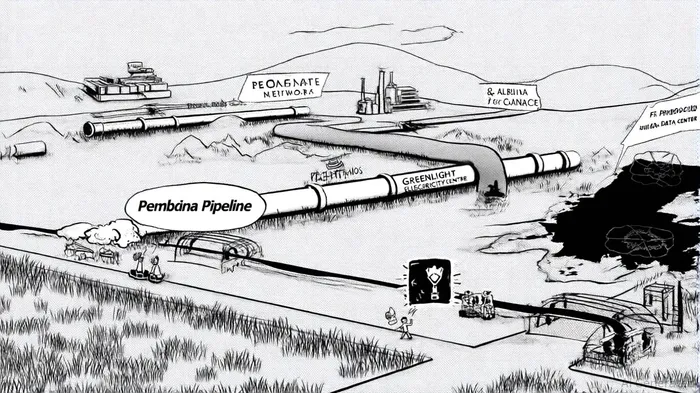





Comentarios
Aún no hay comentarios