
Pembina Pipeline's LPG Export Expansion: A Strategic Bet on Asia's Growing Energy Appetite
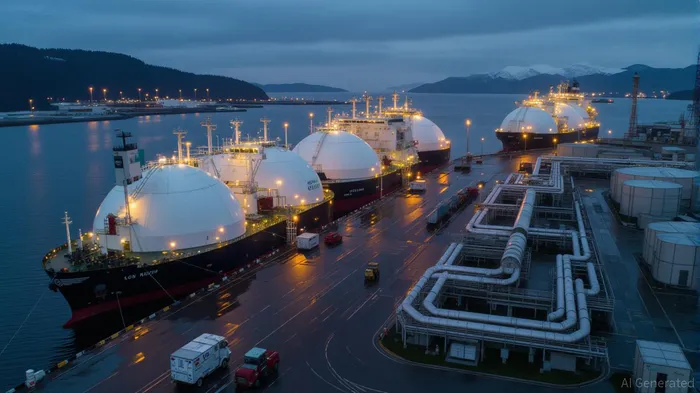
In an era where global energy markets are reshaping faster than ever, Pembina Pipeline CorporationPBA-- has positioned itself as a key player in the liquefied petroleum gas (LPG) export boom. By securing a long-term tolling agreement with AltaGas Ltd. in 2025, Pembina is not only diversifying its revenue streams but also aligning itself with the explosive demand for LPG in Asia—a region projected to dominate global energy consumption in the coming decade. This partnership, which grants Pembina 30,000 barrels per day (bpd) of LPG export capacity at AltaGas' Ridley Island Propane Export Terminal (RIPET) and the future Ridley Island Energy Export Facility (REEF), is a masterstroke in capitalizing on North America's export infrastructure expansion and Asia's insatiable appetite for cleaner energy.
Strategic Depth: From Terminal Capacity to Market Access
The agreement with AltaGas provides Pembina with 20,000 bpd of export capacity starting April 2026, with an additional 10,000 bpd added by April 2027. Combined with its existing 20,000 bpd capacity at the Prince Rupert Terminal, Pembina now controls 50,000 bpd of global LPG export access from Canada's West Coast. This is more than just a number—it's a gateway to premium markets in Asia, where LPG demand is surging.
Asia's LPG market, driven by rapid urbanization, industrialization, and government-led clean-energy transitions, is expected to grow at a compound annual growth rate (CAGR) of 3.1% through 2030, reaching $38.4 billion in revenue. Countries like India and China are particularly pivotal. India's Pradhan Mantri Ujjwala Yojana program, which has distributed over 80 million subsidized LPG cylinders, has cemented LPG as a household staple. Meanwhile, China's petrochemical sector—reliant on propane as feedstock for propane dehydrogenation (PDH) units—imported 29.6 million metric tons of propane in 2024 alone. Pembina's expanded capacity ensures it can meet this demand, leveraging its industry-leading propane marketing expertise to secure high-margin contracts.
Infrastructure Tailwinds: North America's LNG Surge Fuels LPG Ambitions
While the focus on liquefied natural gas (LNG) dominates energy headlines, the infrastructure developments supporting LNG exports are equally beneficial for LPG. North America's LNG export capacity is set to more than double between 2024 and 2028, with the U.S. alone adding 9.7 billion cubic feet per day (Bcf/d) of export capacity. Canada's LNG Canada project, expected to start operations in 2025, and Mexico's Fast Altamira FLNG units are further proof of the region's commitment to expanding export infrastructure.
These developments are not isolated to LNG. The same pipeline networks, regasification terminals, and maritime logistics that support LNG exports can be repurposed or expanded for LPG. Pembina's partnership with AltaGas, which operates critical infrastructure on the West Coast, ensures it can piggyback on this momentum. The Ridley Island facilities, strategically located near shipping lanes to Asia, are a logistical advantage that competitors lack.
Navigating Risks: Geopolitics and Market Volatility
No energy investment is without risks. The U.S.-China trade tensions, for instance, have introduced volatility into LPG supply chains. In 2025, China's proposed 125% tariff on U.S. propane imports—though suspended—highlighted the fragility of supply routes. However, Pembina's long-term tolling agreement with AltaGas provides stability. By locking in capacity through 2027 and beyond, Pembina insulates itself from short-term price swings while still benefiting from the structural demand in Asia.
Moreover, the partnership's tolling model—where Pembina pays a fee for terminal use—reduces capital expenditure risk. Unlike building new terminals, this approach allows Pembina to scale operations without overcommitting to fixed costs. This flexibility is crucial in a market where geopolitical shifts and regulatory changes can disrupt trade flows.
Investment Implications: A High-Conviction Play on Energy Transition
For investors, Pembina's LPG expansion represents a high-conviction play on two megatrends: the global shift to cleaner energy and the reindustrialization of Asia. LPG, with its lower carbon footprint compared to coal and oil, is a critical component of energy transition strategies in countries like India and China. Pembina's ability to connect North American propane supplies to these markets positions it as a midstream beneficiary of decarbonization efforts.
Financially, the company is well-positioned. With a debt-to-EBITDA ratio of 3.2x and a dividend yield of 3.5%, Pembina offers a balance of growth and income. The partnership with AltaGas is expected to add $150–200 million annually to its cash flow, further strengthening its balance sheet and providing flexibility for shareholder returns.
Conclusion: A Strategic Bet on the Future of Energy
Pembina Pipeline's expansion into LPG exports is more than a tactical move—it's a strategic repositioning for a world where energy demand is increasingly concentrated in Asia. By leveraging its partnership with AltaGas and North America's export infrastructure boom, Pembina is securing a prime seat at the table of global energy markets. For investors, this represents a compelling opportunity to capitalize on long-term demand trends while mitigating short-term volatility through a diversified, tolling-based model.
As the energy transition accelerates and Asia's middle class grows, companies like Pembina that bridge North American resources to global markets will thrive. The question isn't whether LPG demand will rise—it's how quickly investors will act to secure their stake in this transformation.





Comentarios
Aún no hay comentarios