
Peloton's Stagnant Recovery and Long-Term Viability: Navigating Strategic Challenges in a Competitive Fitness Landscape
Peloton Interactive (PTON) has long been a symbol of the at-home fitness revolution, but its post-pandemic recovery has been anything but smooth. Despite recent financial improvements, the company's path to long-term sustainability remains clouded by structural challenges and an evolving competitive landscape. This analysis examines Peloton's strategic repositioning efforts, the efficacy of its cost-cutting measures, and the risks posed by market dynamics, all while questioning whether its business model can adapt to a world where consumer priorities and technological innovation are rapidly shifting.
Mixed Financial Performance: Progress, But Not a Cure
Peloton's Q3 2025 results reflect a company in transition. Revenue of $624 million slightly exceeded forecasts, driven by a 51% gross margin (up 780 basis points year-over-year) and a $95 million free cash flow surplus, according to Peloton's Q3 2025 results. Adjusted EBITDA of $89 million marked a $84 million improvement YoY, fueled by a 23% reduction in operating expenses, per the earnings call highlights. These metrics suggest that CEO Peter Stern's cost-cutting initiatives-such as a 37% drop in sales and marketing spend-are paying off. However, the underlying business remains fragile. Subscription revenue, which accounts for 67% of total revenue, fell 4% YoY to $419 million, while hardware sales plummeted 27% to $205 million, according to a PTON Q3 2025 analysis.
The decline in hardware sales is particularly concerning. Peloton's reliance on high-margin equipment to drive subscriptions has been a cornerstone of its model, but macroeconomic pressures and shifting consumer spending habits are eroding this foundation. As one analyst noted, "Peloton's treadmill and bike sales are discretionary purchases in a world where discretionary income is shrinking," according to an Investing.com analysis.
Strategic Repositioning: A Multi-Pronged Approach
Peloton's response to these challenges has been a broad repositioning strategy centered on three pillars: commercial expansion, international growth, and AI-driven personalization.
Commercial Fitness and Precor Integration
The 2021 acquisition of Precor-a leader in commercial gym equipment-was a bold move to diversify revenue streams. By 2025, PelotonPTON-- had fully integrated Precor into its operations, creating a Unified Commercial Business Unit (CBU) to leverage Precor's 80,000 global facilities and Peloton's digital ecosystem, according to a Pelobuddy report. This CBU returned to growth in 2025, with partnerships in hotels, campuses, and multifamily housing, per the Precor acquisition press release. However, the commercial segment remains a small portion of Peloton's overall revenue, and scaling it will require overcoming logistical hurdles, such as manufacturing bottlenecks and competition from established gym equipment providers.International Expansion and Retail Partnerships
Peloton is aggressively expanding in markets like the UK, Canada, and Germany, while testing new retail channels, including micro-stores and third-party partnerships with Lululemon and Costco, according to Forbes. These efforts aim to reduce reliance on direct-to-consumer sales and tap into broader demographics. Yet, international markets present unique challenges, including regulatory hurdles, cultural preferences for in-person fitness, and the need for localized content. As of Q3 2025, international revenue still accounts for less than 15% of total sales, as shown in the Peloton SWOT.AI and Wellness Diversification
Peloton's pivot to AI-driven personalization-via features like Peloton Coach and Pace Target-represents a critical bet on differentiation. The company is also expanding into mental health, sleep, and nutrition, positioning itself as a "wellness platform" rather than just a fitness brand, according to a National CIO Review article. While these initiatives align with industry trends toward holistic health, they also require significant R&D investment and risk diluting Peloton's core identity.
Challenges to Long-Term Viability
Despite these strategic moves, Peloton faces existential questions about its business model.
Pricing and Accessibility: Peloton's premium pricing remains a barrier. A $2,500 treadmill and $1,500 bike are out of reach for many, even as the company introduces lower-cost options like the Peloton Repowered resale program, per Peloton's ESG page. Competitors like Apple and Amazon, with their vast resources and ecosystem advantages, are entering the connected fitness space, threatening to commoditize Peloton's offerings, as noted in the Peloton SWOT analysis.
Subscriber Retention and Churn: While Peloton's churn rate of 1.2% is impressive, its subscription growth has slowed. The post-pandemic "at-home fitness boom" has normalized home workouts, reducing the urgency for consumers to invest in Peloton's ecosystem, as described in a Latterly SWOT analysis. Maintaining engagement in a saturated market will require continuous innovation-a costly proposition.
Hardware Dependency: Peloton's shift to a subscription model is laudable, but its hardware-centric approach remains a vulnerability. Supply chain disruptions, rising component costs, and the environmental impact of manufacturing all pose risks. The company's ESG commitments, including Peloton Repowered, are steps in the right direction but may not offset long-term hardware liabilities.
The Road Ahead: Can Peloton Adapt?
Peloton's survival hinges on its ability to decouple growth from hardware sales and scale its subscription and commercial segments. The recent $100 million cost-cutting plan-targeting a 6% workforce reduction and renegotiated contracts-provides short-term breathing room, as previously reported by Forbes. However, cost discipline alone cannot solve structural issues.
The company's AI and wellness initiatives offer a glimpse of a sustainable future, but success will depend on execution. For example, Peloton Coach must deliver tangible value to justify premium pricing, and the commercial CBU must prove its scalability. Meanwhile, international expansion requires patience; markets like Germany and Australia may take years to mature.
Conclusion: A Work in Progress
Peloton's Q3 2025 results demonstrate that the company is no longer hemorrhaging cash and has made strides in cost optimization. However, its recovery remains "stagnant" in the sense that it has yet to reestablish consistent growth across all segments. The integration of Precor, AI-driven personalization, and international expansion are promising, but they must be balanced with affordability, innovation, and operational efficiency.
For investors, Peloton represents a high-risk, high-reward proposition. The company's ability to pivot from a hardware-dependent model to a diversified, subscription-led platform will determine its long-term viability. Until then, the fitness giant remains a cautionary tale of how even the most disruptive brands must continuously reinvent themselves to survive. 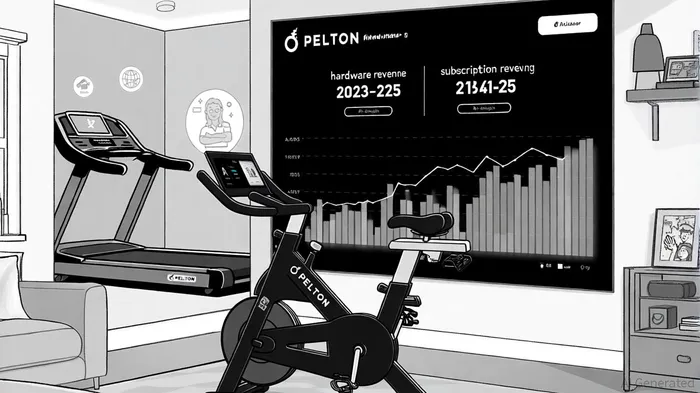







Comentarios
Aún no hay comentarios