
PEG's Strategic Position in the U.S. Nuclear Energy Revival
The U.S. nuclear energy sector is undergoing a transformative renaissance, driven by federal policy shifts, decarbonization imperatives, and the urgent need for energy security. At the forefront of this revival is Public Service Enterprise Group (PSEG) Nuclear LLC, a utility operator whose strategic alignment with national goals positions it as a critical player in the clean energy transition. With over 40% of New Jersey's electricity and 85% of its carbon-free power generated by its nuclear fleet, according to PSEG Nuclear LLC, PSEG's operations not only underpin regional grid stability but also exemplify how utilities can leverage policy tailwinds to secure long-term value.
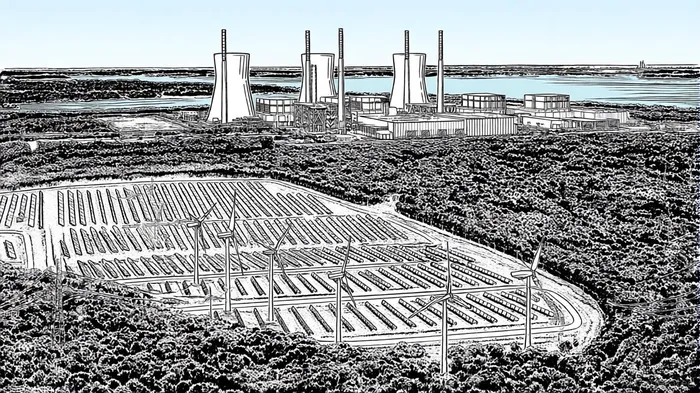
Policy-Driven Momentum: The Trump Administration's Nuclear EOs
The 2025 Nuclear Executive Orders (Nuclear EOs) have set an ambitious target of 400 gigawatts (GW) of U.S. nuclear capacity by 2050, with intermediate milestones such as 10 new reactors by 2030. These directives emphasize supply chain resilience, advanced reactor deployment, and international partnerships-areas where PSEG's existing infrastructure and strategic investments are already converging. For instance, the U.S. Department of Energy's DOE pilot program to strengthen domestic nuclear fuel supply chains aligns with PSEG's focus on extending reactor lifespans and optimizing operations. By securing its Salem and Hope Creek plants through license extensions and refueling cycle modernization, as noted in a Utility Dive report, PSEG is directly contributing to the nation's goal of reducing reliance on foreign uranium sources and enhancing energy independence.
Decarbonization and the Inflation Reduction Act (IRA)
The Inflation Reduction Act (IRA) has introduced a pivotal financial catalyst for nuclear operators. PSEG is capitalizing on the IRA's production tax credits ($25/MWh for the first 10 years of operation) and investment tax credits (30% for new zero-carbon plants) to fund capacity upgrades at Salem, fuel cycle extensions at Hope Creek, and potential license extensions, as noted in the Utility Dive report. These incentives not only stabilize PSEG's nuclear fleet but also extend the operational viability of its assets up to 80 years, ensuring sustained carbon-free generation in a regulatory environment increasingly hostile to fossil fuels.
PSEG's broader decarbonization strategy includes a $21–$24 billion investment plan through 2029, targeting solar energy, grid modernization, and offshore wind projects like the 1,100 MW Ocean Wind venture, according to a PSEG news release. This diversified approach mitigates risks associated with single-technology exposure while aligning with New Jersey's 2035 clean energy mandate, which the PSEG news release highlights. By integrating nuclear with renewables, PSEG is creating a hybrid energy model that balances reliability and scalability-a critical differentiator in a market prioritizing both decarbonization and grid resilience.
Supply Chain and Advanced Reactor Synergies
While PSEG has not yet announced direct partnerships in advanced reactor development, its participation in broader industry trends positions it to benefit from the DOE's Advanced Reactor Demonstration Program (ARDP), which allocates $160 million to accelerate next-gen technologies. Additionally, PSEG's engagement with data center customers-seeking stable, low-carbon power from its nuclear plants-is covered by Utility Dive, and highlights its adaptability to emerging demand sectors. As the U.S. seeks to deploy small modular reactors (SMRs) and secure HALEU fuel supplies, a CSIS analysis notes that leveraging international partnerships will be key; PSEG's existing infrastructure and operational expertise could serve as a foundation for future advanced reactor integrations.
Valuation and Long-Term Outlook
PSEG's strategic positioning is reflected in its financial performance. In Q2 2025, its nuclear fleet generated 7.5 terawatt-hours, with capacity secured in the PJM 2026/2027 auction at $329 per megawatt-day, per an Investing.com report. Coupled with a $3.8 billion regulated investment program noted in an OilPrice report, these metrics underscore its ability to deliver stable cash flows amid volatile energy markets. For investors, PSEG represents a rare combination of policy alignment, decarbonization leadership, and operational scale-a trifecta that is increasingly rare in the post-IRA utility landscape.
Conclusion
As the U.S. pivots toward a low-carbon future, utilities like PSEG that combine existing nuclear assets with forward-looking decarbonization strategies will dominate the energy transition narrative. With federal policy, tax incentives, and market demand converging, PSEG's ability to modernize its fleet, diversify its energy mix, and secure long-term contracts positions it as a compelling investment for those seeking exposure to the nuclear renaissance. In an era where energy security and climate goals are inextricably linked, PSEG's strategic depth offers a blueprint for sustainable utility value creation.







Comentarios
Aún no hay comentarios