
The Peanut Paradox: USAID Cuts Threaten Georgia's Agricultural Exports and Global Health
The U.S. peanut industry, centered in Georgia, faces a stark dilemma: its crops are both a cornerstone of regional agriculture and a critical ingredient in lifesaving humanitarian aid. Yet the Trump administration's draconian cuts to USAID—reducing its budget by 84% since 2023—are now putting this dual mission at risk. For investors, the fallout creates a paradox: opportunities in U.S. agricultural exports could clash with existential risks for global humanitarian supply chains. Let's unpack the stakes.
The Georgia Peanut Industry at a Crossroads
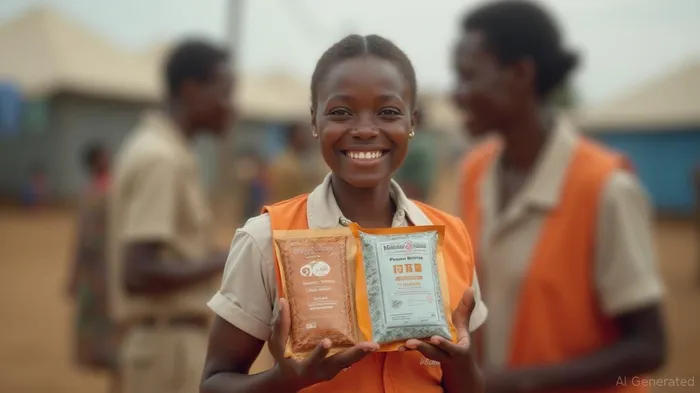
Georgia produces 778,000 acres of peanuts annually, generating a $2.2 billion industry. At the heart of this is Mana Nutrition, a nonprofit in Fitzgerald, Georgia, which converts peanuts into Ready-to-Use Therapeutic Food (RUTF)—a nutrient-dense paste used to treat severe malnutrition in children. USAIDUSAI-- historically funded 90% of Mana's $100 million annual budget, but recent cuts have left it scrambling.
As of June 2025, USAID owes Mana $20–25 million in unpaid invoices, with contracts repeatedly paused, canceled, and reinstated—a “yo-yo” effect that destabilizes production. This isn't just a humanitarian crisis; it's an economic threat to Georgia's farmers, who rely on Mana as a major buyer.
Investment Risk #1: Dependency on Government Funding
Mana's model hinges on USAID contracts. If funding remains volatile, its 130 local jobs and ties to Georgia's peanut growers could unravel. Investors in agricultural ETFs like ARCA (agriculture and food products) or firms with exposure to peanut suppliers (e.g., SMG, which services food aid logistics) face revenue uncertainty.
Humanitarian Supply Chains Under Siege
The cuts' ripple effects are global. Mana's RUTF treats 2 million children annually in regions like the Sahel and Sudan. USAID's dismantling has already led to $6.2 billion in global health cuts, risking a surge in child mortality. The “America First” policy may save federal dollars, but it erodes U.S. soft power and ethical investment appeal.
Investment Opportunity #2: Diversifying into NGOs and Partnerships
While USAID falters, NGOs like UNICEF and Save the Children are stepping in—but they lack the scale to replace federal funding. Companies with flexible supply chains, like logistics giants CHRW or FDX, could profit by filling gaps in humanitarian distribution. Meanwhile, NGOs themselves (though not publicly traded) offer ESG-aligned investment opportunities through impact funds.
The Political Wildcard: Can Funding Be Restored?
Federal courts have temporarily blocked some cuts, and Senator Jon Ossoff has pushed to reinstate USAID's nutrition programs. Yet Elon Musk's Department of Government Efficiency (DOGE) remains intent on slashing aid. Investors should monitor political risk indicators, including:
- Congressional hearings on USAID's role in food security
- Litigation outcomes over unpaid invoices and contract cancellations
- Alternative funding announcements from philanthropies like Chris Hohn's Children's Investment Fund Foundation
The Bottom Line: Play Defense, Then Offense
For now, avoid overexposure to USAID-dependent firms. Mana Nutrition's operations are critical but too fragile without stable funding. Instead:
1. Short-term hedging: Invest in agricultural commodities (e.g., soybeans, wheat) that may see price dips as USAID's purchasing power declines.
2. Long-term opportunities: Back logistics firms and NGOs capable of adapting to fragmented aid markets.
3. ESG angle: Screen out companies profiting from policies that harm global health, while supporting ESG funds prioritizing food security.
The peanut paradox underscores a broader truth: U.S. agricultural might and humanitarian leadership are intertwined. Investors who navigate this intersection wisely could capitalize on volatility—or suffer from ignoring it.
Data sources: U.S. Department of Agriculture, USAID budget reports, Mana Nutrition financial statements.







Comentarios
Aún no hay comentarios