
The PCE Report and the Fed's Inflation Path: Implications for Equity and Bond Markets
The 2023 PCE Baseline: A Stalled Hike and Lingering Uncertainty
In September 2023, the headline PCE price index rose 3.4% year-over-year, unchanged from August, while core PCE edged up 3.7%, down from 4.3% the prior month. This data, though showing a slight moderation in core inflation, left the Fed with a dilemma: inflation remained above its 2% target, yet labor market resilience and slowing growth hinted at a potential pivot. The Federal Open Market Committee (FOMC) held rates steady at 5.25%-5.5% in September 2023, signaling one additional 25-basis-point hike by year-end before a gradual shift to rate cuts in 2024. The Summary of Economic Projections (SEP) at the time projected the fed funds rate to fall to 5.1% in 2024 and 3.9% in 2025, reflecting a cautious optimism about inflation's trajectory.
2025 PCE: A Cooler Inflation Path and Policy Flexibility
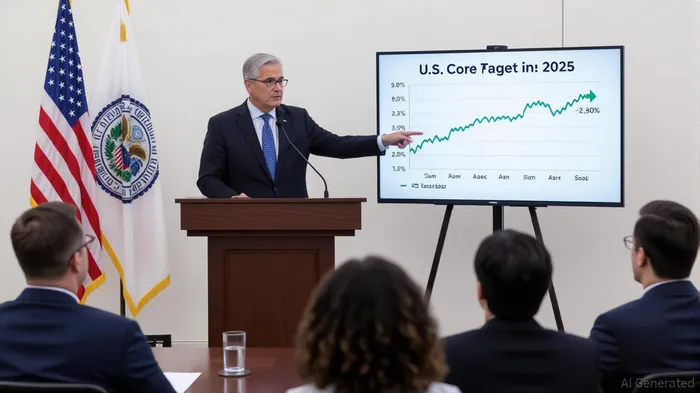
By September 2025, the core PCE price index had cooled to 2.8% year-over-year, down from 2.9% in August, nearing the Fed's long-term target. This moderation, while modest, tilted the scales toward accommodative policy. The FOMC minutes from the September 2025 meeting revealed that nearly all participants expected a 25-basis-point rate cut at the December meeting, with half anticipating an additional cut in October. Market pricing reflected this shift: traders priced in an 86% probability of a December cut, with expectations of 2-3 more reductions in 2026.
The Fed's internal debate, however, remained contentious. Five of the 12 FOMC voting members publicly opposed a December cut in 2025, citing lingering inflation risks, while fourFORM-- supported the move to address labor market softness. Fed Chair Jerome Powell's acknowledgment that a cut was "not guaranteed" underscored the central bank's balancing act between inflation control and economic stability.
Market Reactions: Equities, Bonds, and Volatility Dynamics
The September 2025 PCE data and associated rate-cut expectations catalyzed significant market movements. The S&P 500 surged 3.65% in September 2025, driven by outperformance in technology and communication services sectors, as investors anticipated a Fed pivot. Treasury yields responded inversely, with the 10-year U.S. yield dropping eight basis points, flattening the yield curve and signaling expectations of prolonged low inflation.
Volatility metrics also reflected a more tranquil market environment. The VIX Index, a gauge of equity market fear, fell below its 200-day moving average of 19.2, indicating subdued near-term uncertainty. Defensive positioning gained traction, with fund flows favoring fixed income and municipal bonds. The Bloomberg Short/Intermediate Municipal Bond Index returned 0.96% in September 2025, while corporate bond issuance hit $226 billion, supported by tightening credit spreads.
Strategic Implications for Investors
The Fed's evolving inflation path and rate-cut trajectory are reshaping asset allocation strategies. Defensive equities and high-quality bonds have gained favor as central bank easing reduces the cost of capital. Meanwhile, the flattening yield curve and low volatility metrics suggest a market primed for risk-on activity, albeit with caution. Investors must remain attuned to the Fed's dual mandate: while inflation has cooled, labor market pressures and geopolitical risks could delay further cuts.
For now, the data points to a Fed that is increasingly willing to act preemptively to avert a hard landing. As the December 2025 meeting approaches, the interplay between inflation data and policy responses will remain the linchpin of market direction.







Comentarios
Aún no hay comentarios