
PayPal's Payment Links: A Game Changer for Digital Commerce and Merchant Adoption
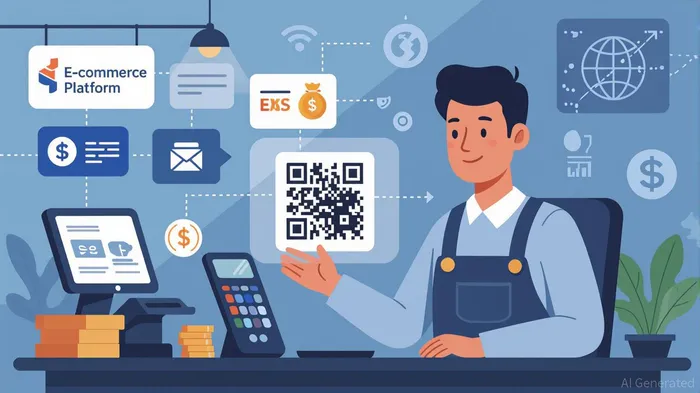
In the rapidly evolving digital commerce landscape, PayPalPYPL-- (PYPL) has long positioned itself as a bridge between consumers and merchants, simplifying transactions while expanding its ecosystem. Its latest innovation—Payment Links—represents a strategic leap forward, offering a frictionless way for businesses to generate instant payment URLs for goods and services. While granular data on Payment Links' adoption rates and revenue contribution remains scarce, the broader context of PayPal's ecosystem expansion, product integrations, and financial tools provides a compelling case for its transformative potential.
Strengthening the Ecosystem: From Payments to Financial Services
PayPal's Payment Links are more than a convenience feature; they are a linchpin in the company's strategy to embed itself deeper into the daily financial lives of both consumers and merchants. By allowing businesses to share customizable payment links via email, social media, or messaging apps, PayPal reduces barriers to adoption for small and medium-sized enterprises (SMEs) that lack sophisticated e-commerce infrastructure. This democratization of digital payments aligns with PayPal's broader push to integrate financial services into its platform.
For instance, PayPal has expanded its offerings to include the PayPal Debit Card, Pay in 4 installments, and the PayPal Cashback Mastercard, all of which incentivize users to transact and retain balances within the ecosystem[1]. These tools not only enhance user engagement but also create recurring revenue streams through interchange fees and subscription models. Meanwhile, the introduction of a high-yield savings account with competitive APY rates allows users to store cashback earnings or business proceeds directly on the platform, further locking in customer loyalty[1].
Merchant-Centric Integrations and Enterprise Solutions
PayPal's value proposition extends beyond individual users. For merchants, Payment Links integrate seamlessly with popular e-commerce platforms and accounting software, streamlining operations and reducing the need for third-party intermediaries[2]. This is particularly critical for SMEs, which often lack the resources to invest in custom payment gateways. By lowering technical and financial barriers, PayPal accelerates merchant adoption, which in turn drives transaction volume and network effects.
At the enterprise level, PayPal offers end-to-end solutions that include advanced risk management, fraud detection, and global payment processing. These capabilities position PayPal as a one-stop shop for businesses seeking to scale internationally, a market segment expected to grow as cross-border e-commerce expands. While specific case studies on Payment Links' impact on enterprise clients remain unpublished, the company's focus on tailored commerce tools underscores its commitment to capturing a larger share of the B2B payment market[2].
Revenue Levers and Long-Term Growth
Though direct financial metrics for Payment Links are unavailable, PayPal's overall financial performance hints at the feature's potential. In recent quarters, the company has reported steady growth in total payment volume (TPV) and active accounts, driven by its expanding product suite. For example, the integration of financial services—such as the Cashback MastercardMA-- and savings accounts—has contributed to higher user retention and cross-selling opportunities. These services generate revenue through interchange fees, interest income, and subscription models, diversifying PayPal's income beyond transaction fees.
Moreover, Payment Links' simplicity could catalyze adoption in underpenetrated markets, such as service-based businesses (e.g., freelancers, local vendors) and peer-to-peer transactions. By enabling instant, shareable payments, PayPal taps into a latent demand for flexibility, which could translate into higher transaction frequency and deeper user engagement.
The Investment Case: Network Effects and Strategic Depth
PayPal's ecosystem is a flywheel: the more users and merchants it attracts, the more valuable its platform becomes. Payment Links accelerate this dynamic by lowering entry barriers for businesses and enhancing the utility of PayPal's financial tools for consumers. While the absence of granular data on Payment Links' performance introduces some uncertainty, the company's track record of innovation—coupled with its robust infrastructure and global reach—suggests a strong foundation for long-term growth.
Investors should also consider PayPal's ability to adapt to regulatory and technological shifts. Its recent forays into blockchain and digital assets, though not directly tied to Payment Links, demonstrate a willingness to evolve in response to market demands. This agility is critical in an industry where first-mover advantages are often short-lived.
Conclusion
PayPal's Payment Links may lack the flashy allure of some fintech innovations, but their simplicity and strategic alignment with the company's ecosystem make them a powerful catalyst for growth. By empowering merchants, enriching user experiences, and diversifying revenue streams, PayPal is not just adapting to the digital commerce revolution—it is shaping it. For investors, this positions the company as a compelling long-term bet, provided it continues to execute on its vision of a seamless, integrated financial ecosystem.





Comentarios
Aún no hay comentarios