
PayPal's Hidden Gems: Why the $88 Target Isn't the Ceiling – Here's Why to Buy Now!
The stock market is a place where fear and greed dance like no other, and right now, PayPalPYPL-- (PYPL) is the underdog that Wall Street is undervaluing. Let me break this down: RBC Capital just reaffirmed its $88 price target – a 22% upside from today's price – yet the stock is stuck at $72.25. Why? Because the bears are fixated on insider selling and a handful of downgrades. But here's the truth: PayPal's growth engines are firing on all cylinders, and the skeptics are missing the bigger picture.
The Case for PayPal's Undervaluation
Let's start with the basics. RBC's $88 price target isn't a guess – it's based on three unstoppable growth drivers: Venmo's monetization, checkout efficiency gains, and international expansion. The stock is currently trading at just 16.2x forward earnings, a discount compared to its peers. Meanwhile, the average analyst target is $80.61, but that's not accounting for the $88.63 GuruFocus one-year estimate – a 22.6% upside.
Here's the kicker: RBC isn't alone in seeing value. MizuhoMFG-- just reaffirmed a Buy rating, and while Truist's “Sell” headline grabs attention, it's drowned out by the consensus “Moderate Buy.” This stock is being punished for short-term noise, not fundamentals.
Venmo: The Monetization Powerhouse
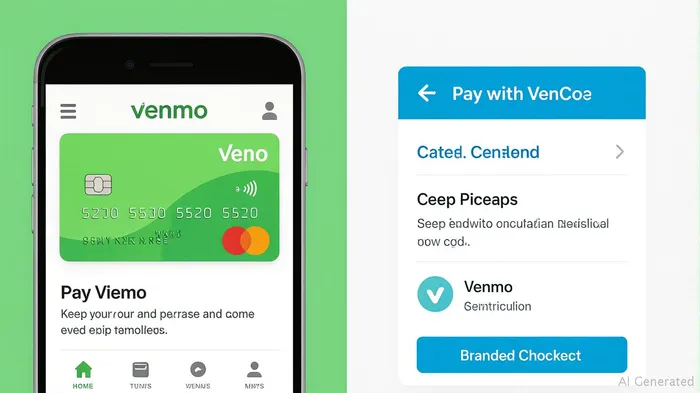
Venmo isn't just a money-transfer app anymore. It's now driving 15% of PayPal's revenue through its new card programs and the “Pay with Venmo” feature. Think about this: Venmo's cardholders spend 4x more than non-cardholders. That's cold, hard cash flowing straight to PayPal's bottom line.
Daniel Perlin of RBC isn't shy about calling Venmo the “growth engine of the next decade.” Why? Because 60% of Venmo's users are under 35 – a demographic primed to spend more as they mature. And with Venmo's checkout integration now driving 12% of PayPal's total payment volume, this isn't a side hustle. This is the future.
Checkout Improvements: The Margin Machine
PayPal's branded checkout product isn't just about convenience – it's about profitability. The company's “price-to-value” strategy is boosting transaction margins by steering buyers toward high-margin payment methods. How's that working? In Q1, payment volume rose 11%, while gross profit margins expanded 150 basis points year-over-year.
But here's the secret sauce: By simplifying checkout for merchants, PayPal is locking in long-term contracts with big brands like Taco Bell and college sports leagues. These deals aren't just about today's revenue – they're about predictable growth for years to come.
International Expansion: The Untapped Frontier
PayPal's U.S. dominance is clear, but its international opportunities are vast. RBC estimates that international markets could add $2.5 billion in annual revenue by 2026 through partnerships and stablecoin expansions like PYUSD on the Stellar blockchain.
Let me ask you: Why would a company with $80 billion in annual payment volume settle for 16x earnings? This isn't a mature tech relic – it's a global fintech titan with untapped markets.
Addressing the Skeptics: Why Insider Selling Doesn't Scare Me
Yes, some insiders are selling. Suzan Kereere's recent sale of $6 million in shares made headlines, but here's the truth: Insiders sell for all sorts of reasons – mortgages, college funds, or just diversifying their portfolios.
Meanwhile, the real test is institutional buying. Institutional ownership is at 68%, and while that's high, the recent dips have been met with buying, not panic. And let's not forget: Truist's “Sell” rating is based on near-term macro fears, not a denial of PayPal's long-term potential.
The Bottom Line: Buy the Dip, Ignore the Noise
PayPal is a stock that's being sold for pennies on the dollar because investors are too short-sighted to see the three clear catalysts RBC has identified. The $88 price target isn't a ceiling – it's a floor.
Here's the plan:
1. Buy now at $72.25 for the long haul.
2. Average in if it dips below $70 – that's a steal.
3. Ignore the noise about insider sales and macro fears.
This isn't a gamble. It's a bet on the most undervalued fintech leader in the game.
The market's missing it – but you don't have to.





Comentarios
Aún no hay comentarios