
PayPal and Google's Strategic Alliance: A Catalyst for Dominance in Digital Payments
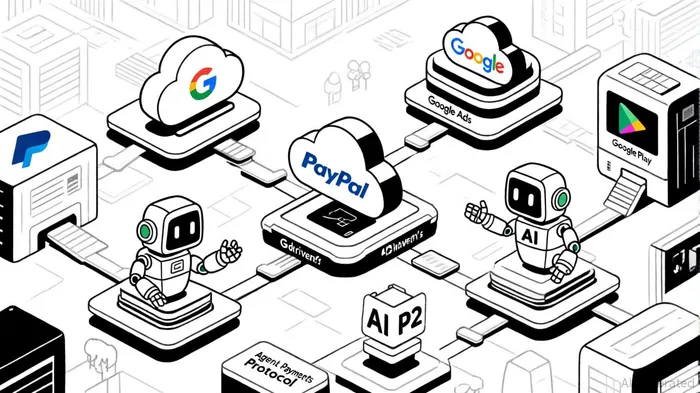
The partnership between PayPalPYPL-- and GoogleGOOGL--, announced in September 2025, marks a pivotal moment in the evolution of digital commerce. By embedding PayPal's payment infrastructure into Google's vast ecosystem and leveraging AI-driven innovations, the collaboration positions PayPal to accelerate its dominance in the fintech sector. This analysis examines how the partnership enhances merchant reach, drives consumer adoption, and reshapes competitive dynamics in the digital payments landscape.
Enhanced Merchant Reach: Expanding PayPal's Ecosystem
PayPal's integration into Google's platforms—Google Cloud, Google Ads, and Google Play—creates a seamless infrastructure for merchants to process transactions. PayPal Enterprise Payments will serve as a primary card processor for these services, significantly expanding PayPal's role in global commerce [1]. This deep integration allows merchants to access PayPal's trusted payment solutions while benefiting from Google's AI capabilities, such as advanced fraud detection and real-time analytics [2].
Data from Aitechtonic indicates that PayPal already commands a 45.52% market share in digital payments, far outpacing competitors like Stripe (17.15%) and ShopifySHOP-- Pay Installments (15.68%) [6]. The partnership is expected to amplify this advantage by leveraging Google's 2.8 billion monthly active users, providing PayPal with unprecedented access to a global merchant base. For instance, small businesses using Google Ads can now offer PayPal's branded checkout options, reducing friction in the purchasing process and increasing conversion rates [5].
Consumer Adoption Trends: AI-Driven Personalization and Trust
The collaboration's focus on agentic commerce—where AI-powered agents assist users in shopping tasks—aligns with growing consumer demand for personalized and secure experiences. Google's Agent Payments Protocol (AP2), a secure framework for agent-led transactions, ensures that these innovations maintain user trust [4]. By integrating AP2 into its platforms, PayPal can offer real-time, delegated transactions that streamline complex shopping journeys, such as product comparisons and automated purchases [3].
Consumer adoption is further bolstered by PayPal's migration to Google Cloud, which enhances transaction speed and security. According to a report by Marketchameleon, this infrastructure shift enables PayPal to modernize its systems and develop next-generation financial products, such as AI-powered cash flow forecasting tools for small businesses [5]. These advancements position PayPal as a leader in the AI-driven commerce revolution, where 82% of small businesses view AI as essential for competitiveness [5].
Competitive Positioning: Redefining the Fintech Landscape
The partnership strengthens PayPal's competitive edge against emerging fintech players and tech giants. By embedding its solutions into Google's ecosystem, PayPal gains access to a vast network of developers and enterprises, reinforcing its role as a critical infrastructure provider. For example, PayPal's Hyperwallet and Payouts solutions are now integrated into Google Play and Google Ads, enabling cross-border transactions with minimal friction [1].
Moreover, the collaboration's emphasis on open standards, such as AP2, positions PayPal as a key player in shaping the future of agentic commerce. As stated by a fintech analyst in Fintech Magazine, this move reflects broader industry efforts to establish secure frameworks for AI-powered transactions, with companies like AppleAAPL-- and AmazonAMZN-- also developing their own protocols [2]. PayPal's early adoption of such standards ensures it remains at the forefront of innovation, even as competitors like Apple Pay and Google Pay expand their offerings.
Conclusion: A Strategic Win for PayPal
PayPal's partnership with Google is a masterstroke in its quest to dominate the digital payments ecosystem. By combining PayPal's global payment infrastructure with Google's AI expertise, the collaboration addresses critical pain points for merchants and consumers alike. Enhanced merchant reach through Google's platforms, AI-driven personalization for users, and leadership in agentic commerce standards collectively position PayPal to outpace competitors. As the fintech sector evolves, this strategic alliance ensures PayPal remains a cornerstone of the digital economy.







Comentarios
Aún no hay comentarios