
PayPal's AML Compliance Risks and the Valuation Implications for Fintechs in a Regulated Era
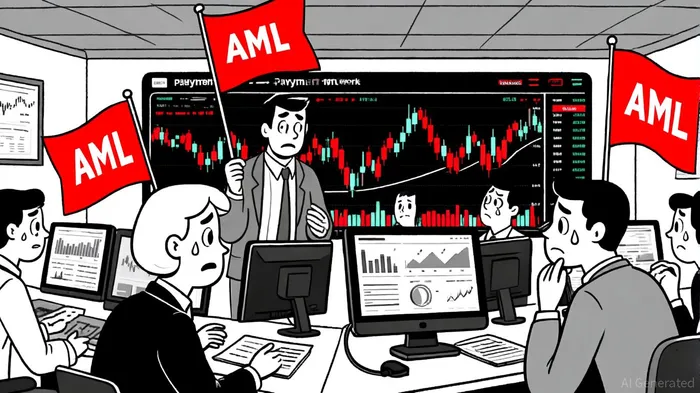
In the rapidly evolving landscape of cross-border payments, fintechs like PayPalPYPL-- face a dual challenge: navigating stringent anti-money laundering (AML) regulations while maintaining investor confidence. As global AML enforcement intensifies, the financial and reputational stakes for non-compliance have never been higher. For PayPal, a leader in digital payments, these pressures are reshaping its valuation dynamics and strategic priorities.
The AML Compliance Quagmire
PayPal's regulatory exposure has been amplified by its role in cross-border transactions, a sector increasingly scrutinized for money laundering risks. In 2023–2025, the U.S. House Select Committee on U.S.-China Competition probed PayPal for potential ties to Chinese entities involved in fentanyl trafficking and sanctions evasion[2]. Simultaneously, in India, PayPal faced a $2.5 million penalty from the Financial Intelligence Unit (FIU) for failing to register as a reporting entity under the Prevention of Money Laundering Act (PMLA), a dispute that culminated in a 2023 compliance overhaul[3]. These incidents underscore the global complexity of AML compliance, where divergent regulatory frameworks and geopolitical tensions collide.
The financial toll of non-compliance is stark. In 2025, global AML fines reached $6 billion, with fintechs accounting for a significant share. For instance, Block Inc. (parent of Cash App) was fined $40 million by New York's DFS for AML deficiencies in BitcoinBTC-- monitoring[5]. PayPal, though not explicitly cited for similar penalties, has faced internal challenges, including workforce reductions in AML teams and backlogs in suspicious activity reporting[3]. Such operational strains highlight the tension between cost optimization and compliance rigor—a critical factor for investor sentiment.
Valuation Implications: Fines, Sentiment, and Strategic Shifts
The impact of AML risks on fintech valuations is multifaceted. Direct costs include fines and legal fees, while indirect costs—such as reputational damage and operational inefficiencies—erode investor confidence. As of mid-2025, PayPal's stock traded at $68 per share, down 21.65% year-to-date, reflecting volatility linked to regulatory uncertainties[1]. Analysts project a potential 23.75% upside to $83.56, but this optimism is tempered by concerns over compliance costs and competitive pressures from platforms like Apple Pay and Stripe[1].
Intrinsic valuation models further complicate the picture. PayPal is currently undervalued by 32%, with an intrinsic value of $99.08 per share, yet its path to reaching this level depends on resolving AML challenges[4]. The company's strategic investments in AI-driven fraud prevention and the “PayPal World” cross-border platform are seen as mitigants, but their success hinges on regulatory alignment. For example, the EU's AML Authority (AMLA) and FATF's updated Travel Rule demand real-time transaction monitoring and enhanced due diligence—capabilities that require significant capital allocation[2].
The Regulatory Tightrope: Compliance as a Competitive Advantage
Regulators are no longer content with reactive measures. The Financial Action Task Force (FATF) and regional bodies like AMLA are pushing for proactive, technology-driven solutions. By 2025, AML compliance has shifted from a cost center to a strategic imperative. Fintechs that adopt AI-native transaction monitoring and blockchain analytics—tools PayPal is increasingly deploying—are better positioned to meet these demands[2]. However, the cost of such upgrades could strain margins, particularly for firms like PayPal, which must balance innovation with profitability.
The stakes are further elevated by the rise of virtualCYBER-- assets. FATF's 2025 guidelines mandate stringent oversight of crypto transactions, a domain where PayPal's stablecoin PYUSD and partnerships with blockchain analytics firms will be tested[3]. Failure to adapt could result in exclusion from high-risk markets, directly impacting revenue growth. Conversely, successful navigation of these challenges could enhance market trust, as evidenced by PayPal's 72nd percentile investor sentiment score on financial forums[6].
Conclusion: A Balancing Act for Fintechs
PayPal's journey through the AML compliance labyrinth exemplifies the broader fintech industry's struggle to reconcile innovation with regulation. While its stock valuation remains anchored to long-term growth potential, the path forward is fraught with short-term risks. Investors must weigh the company's strategic investments in RegTech against the operational and reputational costs of non-compliance. For fintechs, the lesson is clear: AML compliance is no longer a regulatory checkbox but a cornerstone of valuation resilience in an increasingly scrutinized global economy.







Comentarios
Aún no hay comentarios