
Party City Files for Bankruptcy a 2nd Time: Retail Déjà Vu
Generado por agente de IAEli Grant
sábado, 21 de diciembre de 2024, 2:46 am ET2 min de lectura
SPR--
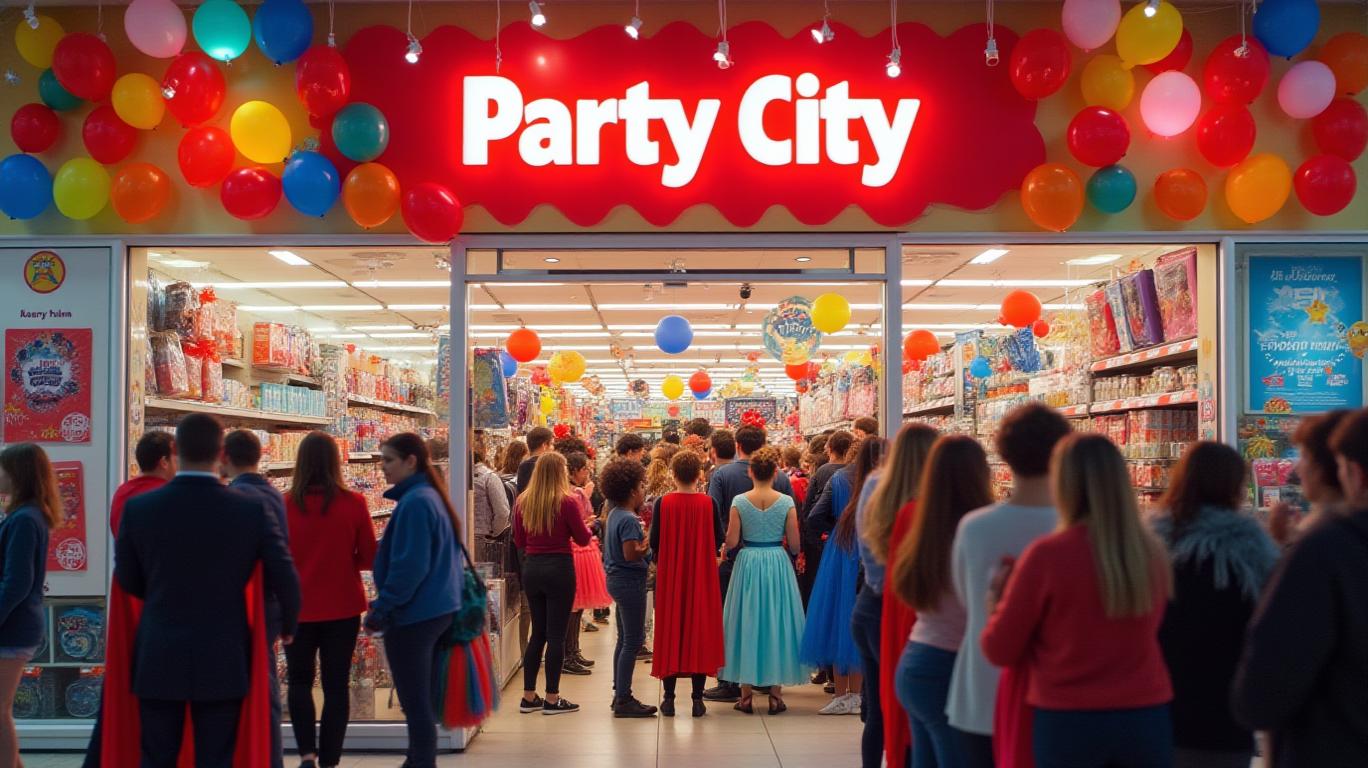
Party City, the largest party goods and Halloween specialty retail chain in the United States, has filed for bankruptcy protection for the second time in less than two years. The company, which operates over 800 stores across the country, announced the move on Tuesday, January 18, 2023, citing competition, rising costs, and a helium shortage as contributing factors to its financial struggles.
Party City's first bankruptcy filing in January 2023 was aimed at addressing a debt load of over $1.8 billion and underperforming stores. The restructuring agreement reduced debt by nearly $1 billion, renegotiated lease terms, and closed 60 stores. However, the remaining debt of over $800 million continued to strain liquidity, leading to the second bankruptcy filing in 2024.
The changing retail landscape has significantly contributed to Party City's financial struggles. Competition from big-box stores like Target, which expanded their party supplies and special events merchandise, and online retailers, who offered a wider variety of products, eroded Party City's market share. Neil Saunders, an analyst at GlobalData Retail, noted that Target's strategy was "squarely aimed at the family demographic which traditionally shopped Party City." Additionally, the emergence of Spirit Halloween, a pop-up store model, further cut into Party City's sales during the crucial Halloween season.
Party City's strategic decisions, such as store conversions and pop-up stores, aimed to boost sales and adapt to changing consumer behavior. However, these moves failed to offset the company's financial struggles. Between 2017 and 2021, sales dropped 8% to $2.2 billion, and the company projected flat sales in 2022. Despite efforts to evolve Halloween City pop-up stores and improve online shopping, Party City's debt load remained high, leading to its second bankruptcy.
The rise of e-commerce and omnichannel retailing has also impacted Party City's business model. The company's inability to adapt to the shift in consumer behavior towards online shopping and integrated retail experiences has contributed to its financial struggles. Despite attempts to improve its online shopping experience and convert stores to next-generation prototypes, Party City has failed to keep pace with competitors like Target and Spirit Halloween, which have expanded their party supplies offerings and embraced omnichannel strategies.
Changing consumer preferences have significantly impacted Party City's recent struggles. The shift towards experiential and personalized events has led consumers to seek unique, customized party supplies, rather than mass-produced items. This trend has been exacerbated by the rise of social media, where users share their creative party ideas, driving demand for more specialized products. Party City's reliance on a limited product range and seasonal sales has failed to adapt to this evolving consumer behavior, contributing to its financial difficulties.
Increased competition and market saturation in the party goods and Halloween specialty retail sector have further affected Party City's performance. The company faced intense rivalry from big-box chains and online retailers, which offered a wider variety of merchandise, targeting the same family demographic that traditionally shopped at Party City. Additionally, the emergence of Spirit Halloween, a pop-up store model, cut into Party City's sales during the crucial Halloween season. These factors, coupled with rising costs during the pandemic and a helium shortage that hurt its balloon business, contributed to a 8% drop in sales between 2017 and 2021, with projected flat sales in 2022.
Party City's second bankruptcy filing serves as a stark reminder of the challenges facing traditional retailers in today's competitive and rapidly evolving market. As consumers continue to shift their spending habits and seek unique, personalized experiences, retailers must adapt their business models to remain relevant and profitable. Party City's struggles highlight the importance of innovation, flexibility, and a keen understanding of consumer preferences in the face of intense competition and changing market dynamics.
Word count: 600
TGT--
Party City, the largest party goods and Halloween specialty retail chain in the United States, has filed for bankruptcy protection for the second time in less than two years. The company, which operates over 800 stores across the country, announced the move on Tuesday, January 18, 2023, citing competition, rising costs, and a helium shortage as contributing factors to its financial struggles.
Party City's first bankruptcy filing in January 2023 was aimed at addressing a debt load of over $1.8 billion and underperforming stores. The restructuring agreement reduced debt by nearly $1 billion, renegotiated lease terms, and closed 60 stores. However, the remaining debt of over $800 million continued to strain liquidity, leading to the second bankruptcy filing in 2024.
The changing retail landscape has significantly contributed to Party City's financial struggles. Competition from big-box stores like Target, which expanded their party supplies and special events merchandise, and online retailers, who offered a wider variety of products, eroded Party City's market share. Neil Saunders, an analyst at GlobalData Retail, noted that Target's strategy was "squarely aimed at the family demographic which traditionally shopped Party City." Additionally, the emergence of Spirit Halloween, a pop-up store model, further cut into Party City's sales during the crucial Halloween season.
Party City's strategic decisions, such as store conversions and pop-up stores, aimed to boost sales and adapt to changing consumer behavior. However, these moves failed to offset the company's financial struggles. Between 2017 and 2021, sales dropped 8% to $2.2 billion, and the company projected flat sales in 2022. Despite efforts to evolve Halloween City pop-up stores and improve online shopping, Party City's debt load remained high, leading to its second bankruptcy.
The rise of e-commerce and omnichannel retailing has also impacted Party City's business model. The company's inability to adapt to the shift in consumer behavior towards online shopping and integrated retail experiences has contributed to its financial struggles. Despite attempts to improve its online shopping experience and convert stores to next-generation prototypes, Party City has failed to keep pace with competitors like Target and Spirit Halloween, which have expanded their party supplies offerings and embraced omnichannel strategies.
Changing consumer preferences have significantly impacted Party City's recent struggles. The shift towards experiential and personalized events has led consumers to seek unique, customized party supplies, rather than mass-produced items. This trend has been exacerbated by the rise of social media, where users share their creative party ideas, driving demand for more specialized products. Party City's reliance on a limited product range and seasonal sales has failed to adapt to this evolving consumer behavior, contributing to its financial difficulties.
Increased competition and market saturation in the party goods and Halloween specialty retail sector have further affected Party City's performance. The company faced intense rivalry from big-box chains and online retailers, which offered a wider variety of merchandise, targeting the same family demographic that traditionally shopped at Party City. Additionally, the emergence of Spirit Halloween, a pop-up store model, cut into Party City's sales during the crucial Halloween season. These factors, coupled with rising costs during the pandemic and a helium shortage that hurt its balloon business, contributed to a 8% drop in sales between 2017 and 2021, with projected flat sales in 2022.
Party City's second bankruptcy filing serves as a stark reminder of the challenges facing traditional retailers in today's competitive and rapidly evolving market. As consumers continue to shift their spending habits and seek unique, personalized experiences, retailers must adapt their business models to remain relevant and profitable. Party City's struggles highlight the importance of innovation, flexibility, and a keen understanding of consumer preferences in the face of intense competition and changing market dynamics.
Word count: 600

Divulgación editorial y transparencia de la IA: Ainvest News utiliza tecnología avanzada de Modelos de Lenguaje Largo (LLM) para sintetizar y analizar datos de mercado en tiempo real. Para garantizar los más altos estándares de integridad, cada artículo se somete a un riguroso proceso de verificación con participación humana.
Mientras la IA asiste en el procesamiento de datos y la redacción inicial, un miembro editorial profesional de Ainvest revisa, verifica y aprueba de forma independiente todo el contenido para garantizar su precisión y cumplimiento con los estándares editoriales de Ainvest Fintech Inc. Esta supervisión humana está diseñada para mitigar las alucinaciones de la IA y garantizar el contexto financiero.
Advertencia sobre inversiones: Este contenido se proporciona únicamente con fines informativos y no constituye asesoramiento profesional de inversión, legal o financiero. Los mercados conllevan riesgos inherentes. Se recomienda a los usuarios que realicen una investigación independiente o consulten a un asesor financiero certificado antes de tomar cualquier decisión. Ainvest Fintech Inc. se exime de toda responsabilidad por las acciones tomadas con base en esta información. ¿Encontró un error? Reportar un problema


SOBRE NOSOTROS
Nuestra historiaAutores de noticiasBase de conocimientosPolítica de privacidadTérmino de usoDescargo de responsabilidad de corretaje de tercerosTérminos de uso de AIMEDivulgaciones de riesgos de AInvest AICarrerasCONTÁCTENOS
Email: support@ainvest.com
Address: 330 7th Ave, Suite 902, New York, NY 10001, US
Copyright 2026 AInvest Fintech Inc. All rights reserved.


Comentarios
Aún no hay comentarios