
Parts of US Treasury Market Show Concern About Fed Rate-Cutting Pause
Generado por agente de IATheodore Quinn
martes, 4 de marzo de 2025, 3:32 pm ET2 min de lectura
WTRG--
The Federal Reserve's decision to pause its rate-cutting cycle has sparked concern among some participants in the US Treasury market. While the Fed's move was widely anticipated, the market reaction has been mixed, with some segments expressing worry about the potential implications for economic growth and inflation.
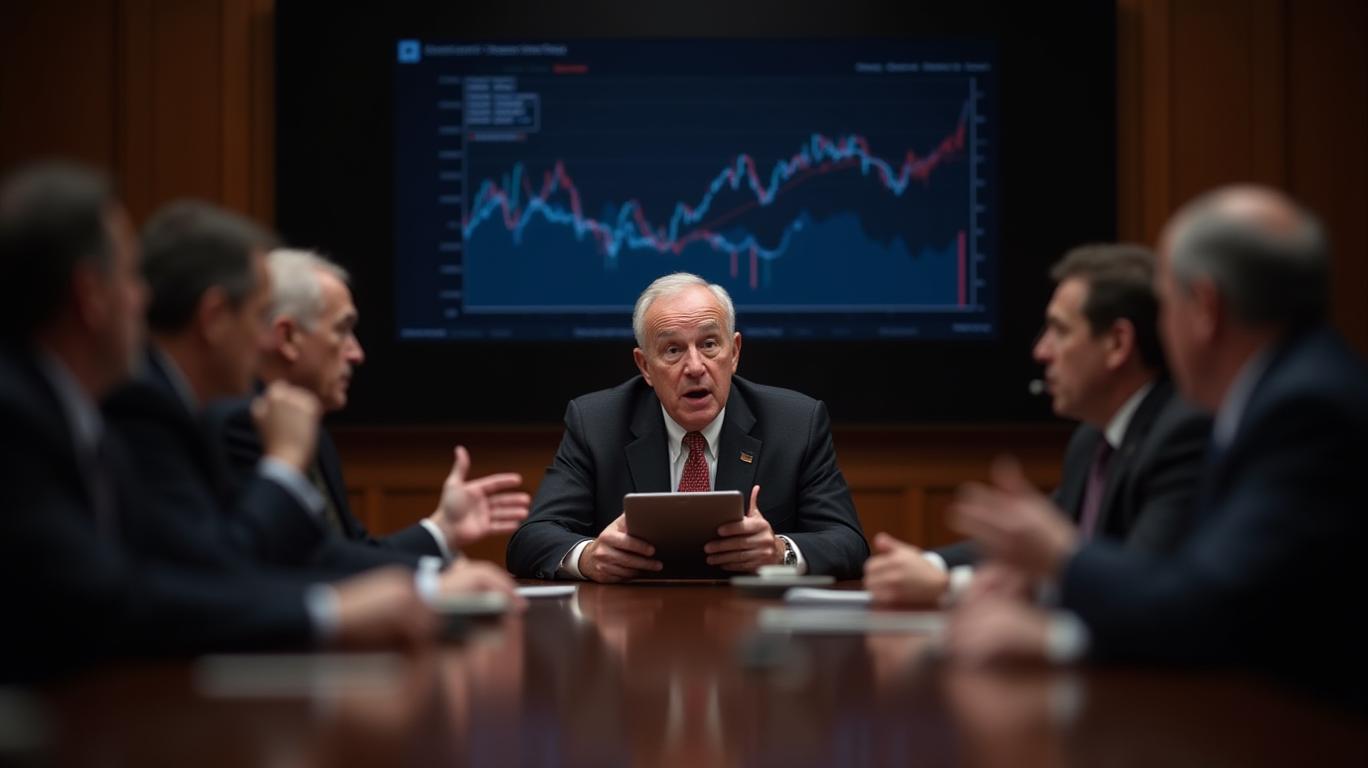
The yield curve, a graphical representation of interest rates on bonds with different maturities, has been a focus of concern. The yield curve has been flattening, with long-term interest rates falling more than short-term rates. This flattening can indicate that investors are less optimistic about future economic growth and inflation. A flattening yield curve can also increase the risk of a yield curve inversion, which is often seen as a leading indicator of a recession.
For investors in the US Treasury market, a flattening yield curve can have several implications. First, the potential returns on long-term Treasury bonds may decrease, as investors are willing to accept lower yields. This can make long-term bonds less attractive to investors. Second, a flattening yield curve can increase the risk of a yield curve inversion, which can be a leading indicator of a recession. Finally, if interest rates rise in the future, the price of existing Treasury bonds will fall, leading to capital losses for investors.
The primary concerns driving the market's reaction to the Fed's decision are primarily related to inflation, economic uncertainty, and the potential impact of President Trump's economic policies. The Fed has been closely monitoring inflation, which has been stubbornly above the central bank's 2% target. In the coming months, the Fed will continue to assess incoming data to determine if inflation is indeed on a sustained downward trajectory. If inflation remains elevated or resumes its upward trend, the Fed may need to reconsider its pause on rate cuts.
The Fed is also grappling with economic uncertainty, particularly surrounding President Trump's trade and immigration policies. The Fed's statement acknowledged this uncertainty, stating that it would "carefully assess incoming data, the evolving outlook, and the balance of risks." As more details about Trump's policies emerge, the Fed will need to evaluate their potential impact on the economy and inflation. If these policies prove to be inflationary, the Fed may need to adjust its monetary policy accordingly.
The recent developments in the US Treasury market, characterized by episodes of market dysfunction and concerns about resilience, have brought into focus the need for strengthening market resilience. One potential avenue for achieving this is the adoption of all-to-all trading, which would allow any market participant to trade directly with any other market participant. This concept could be particularly helpful during times of stress when the capacity of traditional intermediaries may be tested.
Historically, the US Treasury market has experienced several episodes of market dysfunction, including the "flash crash" in October 2014 and the "Treasury market liquidity crisis" in March 2020. These episodes have highlighted the importance of market resilience and the need for measures to address potential vulnerabilities.
In response to these concerns, government agencies have outlined potential reforms, including the proposal by the Securities and Exchange Commission (SEC) to increase the scope of central clearing of Treasury securities. This proposal has two main components: broadening the set of Treasury transactions that are required to be centrally cleared and requiring the segregation of collateral associated with customers' centrally cleared Treasury transactions.
The benefits of these proposed measures include enhanced risk management, increased transparency, and improved market resilience. However, it is essential to consider the potential costs and challenges associated with these reforms, such as the need for additional resources and the potential impact on market participants.
In conclusion, the recent developments in the US Treasury market, along with historical trends and past episodes of market concern, underscore the importance of strengthening market resilience. The adoption of all-to-all trading and the implementation of the SEC's proposed reforms could help address potential vulnerabilities and improve market functioning. However, it is crucial to carefully evaluate the benefits and costs of these measures to ensure their effectiveness and feasibility.
The Federal Reserve's decision to pause its rate-cutting cycle has sparked concern among some participants in the US Treasury market. While the Fed's move was widely anticipated, the market reaction has been mixed, with some segments expressing worry about the potential implications for economic growth and inflation.
The yield curve, a graphical representation of interest rates on bonds with different maturities, has been a focus of concern. The yield curve has been flattening, with long-term interest rates falling more than short-term rates. This flattening can indicate that investors are less optimistic about future economic growth and inflation. A flattening yield curve can also increase the risk of a yield curve inversion, which is often seen as a leading indicator of a recession.
For investors in the US Treasury market, a flattening yield curve can have several implications. First, the potential returns on long-term Treasury bonds may decrease, as investors are willing to accept lower yields. This can make long-term bonds less attractive to investors. Second, a flattening yield curve can increase the risk of a yield curve inversion, which can be a leading indicator of a recession. Finally, if interest rates rise in the future, the price of existing Treasury bonds will fall, leading to capital losses for investors.
The primary concerns driving the market's reaction to the Fed's decision are primarily related to inflation, economic uncertainty, and the potential impact of President Trump's economic policies. The Fed has been closely monitoring inflation, which has been stubbornly above the central bank's 2% target. In the coming months, the Fed will continue to assess incoming data to determine if inflation is indeed on a sustained downward trajectory. If inflation remains elevated or resumes its upward trend, the Fed may need to reconsider its pause on rate cuts.
The Fed is also grappling with economic uncertainty, particularly surrounding President Trump's trade and immigration policies. The Fed's statement acknowledged this uncertainty, stating that it would "carefully assess incoming data, the evolving outlook, and the balance of risks." As more details about Trump's policies emerge, the Fed will need to evaluate their potential impact on the economy and inflation. If these policies prove to be inflationary, the Fed may need to adjust its monetary policy accordingly.
The recent developments in the US Treasury market, characterized by episodes of market dysfunction and concerns about resilience, have brought into focus the need for strengthening market resilience. One potential avenue for achieving this is the adoption of all-to-all trading, which would allow any market participant to trade directly with any other market participant. This concept could be particularly helpful during times of stress when the capacity of traditional intermediaries may be tested.
Historically, the US Treasury market has experienced several episodes of market dysfunction, including the "flash crash" in October 2014 and the "Treasury market liquidity crisis" in March 2020. These episodes have highlighted the importance of market resilience and the need for measures to address potential vulnerabilities.
In response to these concerns, government agencies have outlined potential reforms, including the proposal by the Securities and Exchange Commission (SEC) to increase the scope of central clearing of Treasury securities. This proposal has two main components: broadening the set of Treasury transactions that are required to be centrally cleared and requiring the segregation of collateral associated with customers' centrally cleared Treasury transactions.
The benefits of these proposed measures include enhanced risk management, increased transparency, and improved market resilience. However, it is essential to consider the potential costs and challenges associated with these reforms, such as the need for additional resources and the potential impact on market participants.
In conclusion, the recent developments in the US Treasury market, along with historical trends and past episodes of market concern, underscore the importance of strengthening market resilience. The adoption of all-to-all trading and the implementation of the SEC's proposed reforms could help address potential vulnerabilities and improve market functioning. However, it is crucial to carefully evaluate the benefits and costs of these measures to ensure their effectiveness and feasibility.

Divulgación editorial y transparencia de la IA: Ainvest News utiliza tecnología avanzada de Modelos de Lenguaje Largo (LLM) para sintetizar y analizar datos de mercado en tiempo real. Para garantizar los más altos estándares de integridad, cada artículo se somete a un riguroso proceso de verificación con participación humana.
Mientras la IA asiste en el procesamiento de datos y la redacción inicial, un miembro editorial profesional de Ainvest revisa, verifica y aprueba de forma independiente todo el contenido para garantizar su precisión y cumplimiento con los estándares editoriales de Ainvest Fintech Inc. Esta supervisión humana está diseñada para mitigar las alucinaciones de la IA y garantizar el contexto financiero.
Advertencia sobre inversiones: Este contenido se proporciona únicamente con fines informativos y no constituye asesoramiento profesional de inversión, legal o financiero. Los mercados conllevan riesgos inherentes. Se recomienda a los usuarios que realicen una investigación independiente o consulten a un asesor financiero certificado antes de tomar cualquier decisión. Ainvest Fintech Inc. se exime de toda responsabilidad por las acciones tomadas con base en esta información. ¿Encontró un error? Reportar un problema


SOBRE NOSOTROS
Nuestra historiaAutores de noticiasBase de conocimientosPolítica de privacidadTérmino de usoDescargo de responsabilidad de corretaje de tercerosTérminos de uso de AIMEDivulgaciones de riesgos de AInvest AICarrerasCONTÁCTENOS
Email: support@ainvest.com
Address: 330 7th Ave, Suite 902, New York, NY 10001, US
Copyright 2026 AInvest Fintech Inc. All rights reserved.


Comentarios
Aún no hay comentarios