
Park-Ohio's Q3 Earnings Miss: A Test of Industrial Supply Chain Resilience
Earnings Miss: Interest Costs and Structural Shifts
Park-Ohio's non-GAAP earnings per share (EPS) of $0.65 fell short of expectations by $0.18, primarily due to elevated interest expenses from recent refinancing activities, the Seeking Alpha report noted. The company's Q3 EBITDA margin of 8.6% and free cash flow of $7 million highlight the pressure of debt servicing in a high-interest-rate environment, according to a Nasdaq press release. However, these figures must be contextualized within the company's strategic pivot. Park-Ohio has prioritized balance sheet strengthening through refinancing, a move that, while temporarily diluting earnings, positions it to capitalize on a $185 million backlog-a 28% increase from year-end 2024-driven by robust demand in defense, infrastructure, and electrification markets, according to a Finimize article.
Industry-Wide Resilience: Diversification and Technological Adaptation
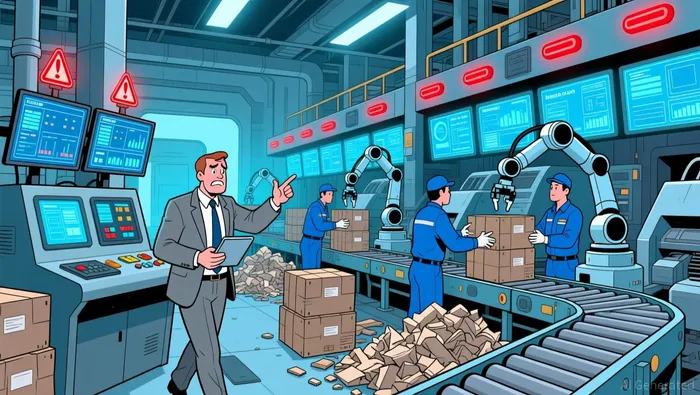
Park-Ohio's challenges mirror broader industrial sector trends. As noted in a Morningstar report, companies are increasingly leveraging AI for demand forecasting and inventory optimization to navigate economic volatility. Park-Ohio's focus on backlog management and disciplined cost control in its Supply Technologies segment-where adjusted margins improved to 9.9%-aligns with this trend, as the Nasdaq release shows. Similarly, its emphasis on regional supply chain diversification and redundancy mirrors the "China Plus One" strategy adopted by peers to mitigate geopolitical risks, as seen in the Axon Q3 slides.
Yet, macroeconomic factors such as tariffs and rising material costs continue to strain margins. For instance, a Reuters report on High Liner Foods' 29.3% EBITDA decline due to tariffs illustrates the fragility of industrial margins in a protectionist climate. Park-Ohio's ability to absorb interest costs while maintaining a 4.6% year-over-year revenue decline suggests a cautious optimism: its full-year guidance of $1.6–$1.62 billion in revenue and $10–$20 million in free cash flow hinges on the normalization of working capital and the conversion of its $185 million backlog into cash flow, per the Nasdaq release.
Strategic Positioning: Balancing Short-Term Pressures with Long-Term Tailwinds
Park-Ohio's strategic alignment with structural growth drivers-such as manufacturing reshoring and infrastructure spending-positions it to outperform in the medium term. The company's 28% backlog growth, fueled by defense and electrification sectors, reflects broader industry tailwinds. For example, Cencora's $1 billion investment in U.S. cold-chain infrastructure to meet specialty pharmaceutical demand, reported in a Seeking Alpha piece, mirrors Park-Ohio's focus on capitalizing on niche markets.
However, the company's stock valuation-trading at six times expected earnings-raises questions about investor sentiment. A lone analyst's "hold" rating, as noted by Finimize, underscores skepticism about its ability to translate backlog into consistent earnings. This skepticism is not unfounded: Park-Ohio's interest expenses, while manageable now, could escalate if refinancing costs rise further. Yet, its proactive approach to supply chain resilience-through diversified sourcing and technology adoption-suggests a commitment to long-term operational sustainability.
Implications for Investors
For investors, Park-Ohio's Q3 earnings miss serves as a cautionary tale and an opportunity. The company's short-term struggles with interest costs and revenue shortfalls highlight the risks of operating in a high-debt, capital-intensive sector. However, its strategic focus on backlog conversion, margin discipline, and alignment with structural growth drivers-such as electrification and infrastructure-offers a compelling long-term narrative.
The key question is whether Park-Ohio can maintain its operational improvements while navigating macroeconomic turbulence. Its full-year free cash flow guidance of $10–$20 million, contingent on fourth-quarter working capital normalization, will be a critical test of its resilience. If successful, the company could emerge as a case study in how industrial firms balance near-term volatility with long-term value creation.





Comentarios
Aún no hay comentarios