
Paris Wheat Futures: Navigating the Perfect Storm of Euro Strength and Global Supply Gluts
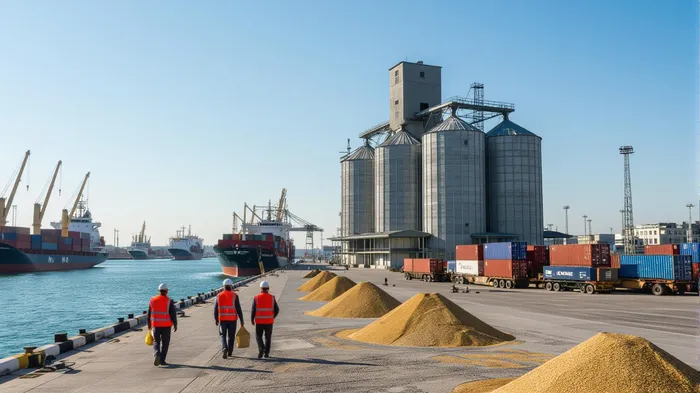
The Paris Wheat Futures market is in the throes of a bearish perfect storm, driven by a confluence of currency dynamics, geopolitical shifts, and structural oversupply. For investors, this crisis in competitiveness presents both a cautionary tale and a rare opportunity to exploit mispricings in a currency-driven commodity market.
The Euro's Double-Edged Sword
The euro's strength against the U.S. dollar—reaching $1.12 in early 2025—has rendered EU wheat uncompetitive in global markets. While a strong euro typically benefits European exporters, in this case, it has become a liability. At €195 per ton, EU soft wheat translates to $216.30 in dollar terms, a 13% premium over Black Sea wheat priced at $244 per ton. This pricing disadvantage has accelerated the shift of importers like Egypt and Turkey toward cheaper alternatives from Russia and the U.S.
The euro's strength is itself a product of divergent monetary policies. The European Central Bank (ECB) has maintained a hawkish stance to combat inflation, while the Federal Reserve's gradual easing has weakened the dollar. This divergence has created fertile ground for currency-driven arbitrage, where traders short Paris Wheat Futures while hedging with EUR/USD or RUB/EUR positions to profit from both wheat price declines and potential euro depreciation.
Structural Oversupply and Geopolitical Realignment
EU wheat production in the 2024/25 season is forecast at 131 million tons—a 15% increase year-on-year—that has flooded both domestic and export markets. Yet export volumes have collapsed by 35%, as EU wheat struggles to compete with Black Sea and U.S. alternatives. Russia and Ukraine, despite geopolitical headwinds, have seized market share with prices up to $15 per ton lower than EU offerings.
The EU's 1 million-ton annual cap on Ukrainian wheat imports has further exacerbated this issue, redirecting Ukrainian exports to the Middle East and North Africa (MENA). Meanwhile, Algeria's delayed tenders due to political instability have compounded the EU's woes, eroding its already shrinking market share.
Technical Indicators Confirm the Bear Case
The December 2025 Paris Wheat Futures contract (FR0000000207) has broken below the €200 per ton psychological barrier, with the relative strength index (RSI) plunging below 30—a clear oversold signal. The next critical support level at €190 per ton, if breached, could trigger a cascade of short-covering and hedge fund liquidation, accelerating the downtrend.
Speculative positioning has also tilted sharply bearish, with net short positions rising 20% in the past month. While this raises the risk of a short squeeze, the fundamental drivers—oversupply, currency headwinds, and geopolitical realignment—suggest a prolonged bearish trajectory.
Strategic Bearish Positioning and Arbitrage Strategies
For investors, the case for bearish exposure is compelling. Short positions in Paris Wheat Futures, combined with bearish ETFs like the Teucrium Wheat Fund (NWZ), offer direct exposure to the market's decline. Arbitrage opportunities, however, are more nuanced. Traders can hedge currency risk by pairing wheat shorts with long positions in USD/EUR or RUB/EUR futures, capitalizing on both commodity and forex mispricings.
A disciplined approach to risk management is essential. While the bear case is robust, unexpected droughts in the EU or Black Sea, a Russian export ban, or a sharper-than-anticipated euro depreciation could disrupt the trajectory. Investors should monitor the OECD-FAO Agricultural Outlook for demand shifts and maintain tight stop-loss levels.
Conclusion: A Market in Transition
The Paris Wheat Futures market is a microcosm of the broader forces reshaping global commodity trade: currency volatility, geopolitical realignment, and structural oversupply. For those with the patience and discipline to navigate these headwinds, the current environment offers a unique opportunity to profit from mispricings in a market where fundamentals and technicals align.
In this new era of commodity markets, the key to profitability lies not in chasing trends but in identifying the cracks in the system—and betting against them with precision.







Comentarios
Aún no hay comentarios