
The Paradox of Prosperity: Tesla's Triumph and the Peril of Cutting Clean Energy Support
Elon Musk’s rise as a disruptor of industries—from electric vehicles to space exploration—has been fueled in part by the very government programs he now seeks to dismantle. The recent report that his administration is shuttering the U.S. Department of Energy’s Loan Programs Office (LPO), which provided TeslaTSLA-- with a pivotal $465 million loan in 2010, underscores a troubling contradiction. This move risks undermining the U.S. clean energy sector, even as Tesla faces its own financial headwinds. Investors must now weigh the short-term savings of austerity against long-term consequences for innovation and global competitiveness.
The LPO’s Role in Tesla’s Rise
The LPO, part of the DOE’s Advanced Technology Vehicles Manufacturing program, was designed to fund high-risk, high-reward projects that private capital often avoids. Tesla’s 2010 loan, secured during the Obama administration, enabled the company to stabilize its Fremont factory and launch the Model S. By repaying the debt nine years early—a feat celebrated as a success story—the loan became a symbol of government support for green innovation. 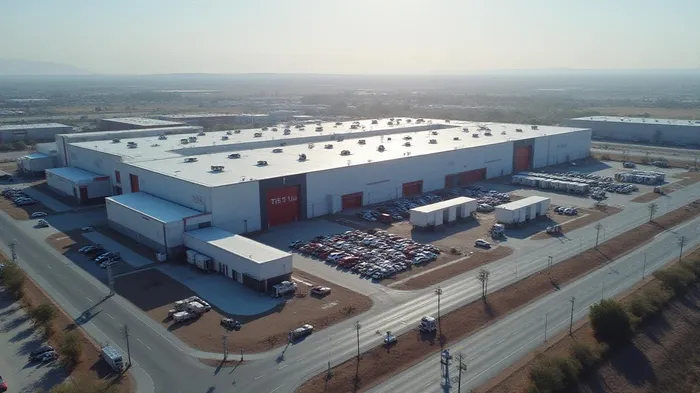
Yet today, Musk’s leadership within the Department of Government Efficiency (DOGE) has turned the screws on the LPO. Over half its staff has resigned, and projects like battery plants and EV supply chains have been scrapped, leaving $15 billion in DOE-backed infrastructure plans in limbo. The mantra of “keep cutting ’til the screaming starts” reflects a strategy prioritizing austerity over strategic investment.
The Cost of Cutting Too Deep
The immediate consequences are stark. Battery startups Kore Power and Freyr Battery abandoned plans for U.S. factories, while Aspen Aerogels halted a thermal barrier plant. PG&E warns of “substantial uncertainty” for its $15 billion grid modernization project. These cancellations raise a critical question: Can private markets alone fill the gap for projects requiring patient, risk-tolerant capital?
Even Tesla’s own financials hint at vulnerability. Despite its early success, the company’s net income fell by 71% in early 2025 amid slowing demand and rising competition. The irony is inescapable: Musk’s companies have received $38 billion in government support since 2003—including $6.3 billion in 2024 alone—yet his policies now threaten the infrastructure that enabled such growth.
A Systemic Risk to U.S. Innovation
The LPO’s demise has broader implications. The office not only supported EVs but also funded nuclear energy, sustainable aviation fuel, and grid modernization—sectors critical to achieving climate goals and tech dominance. A letter from industry leaders warns that dismantling the LPO risks ceding leadership to China and Europe, where governments actively back clean energy.
Consider the numbers: The LPO generated a 2.3% return on investment for taxpayers through loan repayments, outperforming many private funds. By contrast, slashing the office’s capacity could stall bipartisan priorities like nuclear innovation for AI data centers. One DOE insider notes that even uncontroversial projects now face delays due to administrative chaos.
Investment Implications
For investors, the calculus is twofold:
1. Sector Risks: The EV and clean energy sectors may face higher capital costs as the LPO’s risk-sharing model disappears. Firms like Rivian and Lucid, which relied on DOE loans, could see funding hurdles rise.
2. Policy Uncertainty: Musk’s approach highlights the volatility of government support for innovation. Investors in green tech must now factor in regulatory risk alongside market demand.
Meanwhile, Tesla’s own struggles—its stock down 28% since early 2024—suggest that even industry titans cannot insulate themselves from systemic shifts.
Conclusion: A Pyrrhic Victory?
The LPO’s shutdown represents a gamble with America’s clean energy future. By prioritizing short-term savings over sustained investment, Musk’s policies risk undermining the very ecosystem that propelled his success. The data is clear: the LPO delivered returns while enabling breakthroughs. Its dismantling could accelerate a “race to the bottom” in global innovation—leaving investors holding assets in a sector starved of patient capital.
For now, the paradox remains: Tesla’s $465 million loan catalyzed a $1 trillion company, but its repayment may have been the first step toward closing the door behind it. In an era where climate action and technological leadership are existential stakes, such self-defeating policies could prove far costlier than any savings.





Comentarios
Aún no hay comentarios