
Is PAR Technology's Recent Upgrade a Catalyst for a Sustainable Bull Run?
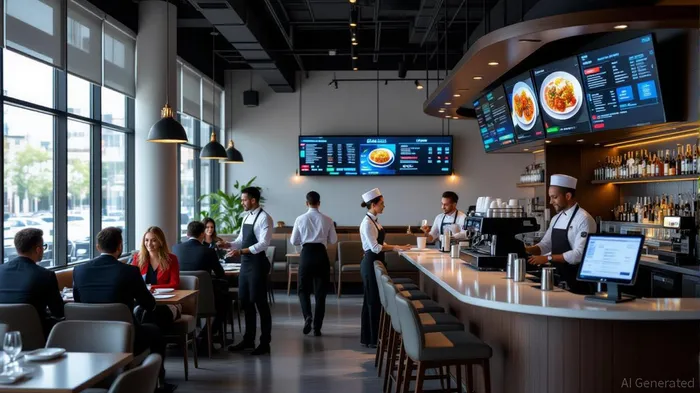
The restaurant technology sector is undergoing a seismic shift as operators prioritize unified, enterprise-grade solutions to navigate inflationary pressures and evolving consumer demands. At the center of this transformation is PAR Technology (PAR), a company recently upgraded to “Buy” by BTIG with a $65 price target. This move, coupled with a 25% stock price correction, has sparked debate: Is this the inflection pointIPCX-- for a sustainable bull run, or a fleeting rebound? To answer, we must dissect PAR's valutive repositioning, growth catalysts, and the broader sector dynamics shaping its trajectory.
Valutive Repositioning: From Niche to Enterprise Powerhouse
PAR's repositioning from a mid-market player to a global enterprise leader is no accident. The company's recent acquisitions—Stuzo and TASK—have expanded its footprint into convenience retail and international markets, creating a $100 million sales pipeline with a 60% historical win rate. This pipeline, combined with three unaccounted “megadeals” targeting top-tier restaurant chains, positions PARPAR-- to capitalize on a sector where enterprise solutions now command a premium.
BTIG's valuation of 9 times 2027 gross profit reflects confidence in this shift. While PAR remains unprofitable today, its focus on high-margin subscription services (60% growth in Q2 2025) and AI-driven tools like Coach AI suggests a path to durable revenue streams. The firm's comparison to Toast, which dominates the small business segment, is telling: PAR is carving out a niche where it can command higher pricing by solving complex, enterprise-level challenges.
Growth Catalysts: Pipeline, Megadeals, and AI Integration
PAR's $100 million pipeline is a double-edged sword. At 60% conversion, it could generate $60 million in contracts within a year, but the true catalyst lies in the three megadeals. If even one of these is secured—say, a global rollout with a Tier 1 chain—PAR's growth could accelerate to 20% annually. This is not speculative; the company's recent wins in the convenience retail sector (e.g., four high-value enterprise deals) demonstrate its ability to scale.
Strategic product development further amplifies this potential. The launch of Skip, a self-checkout solution for retail, and AI-driven tools embedded in its Operator Cloud platform, are creating “white space” revenue opportunities. These innovations are critical in a sector where digital transformation is no longer optional but existential.
Earnings Momentum and Risks: A Tale of Two Metrics
PAR's Q2 2025 earnings highlighted both promise and peril. Revenue surged 44% to $112.4 million, driven by 60% growth in subscription services and a 34% increase in hardware sales. Gross margins improved to 59%, reflecting better cost management and a favorable product mix. Yet, the company reported a $21 million net loss, underscoring the risks of heavy reinvestment in AI and product development.
The stock's 13.84% pre-market decline post-earnings, despite beating expectations, raises questions about investor sentiment. A beta of 1.7 indicates heightened volatility, and the 20.15% year-to-date drop suggests market skepticism about near-term profitability. Macro risks—such as QSR slowdowns and delayed POS rollouts—could further pressure short-term results.
Sector Positioning: A Long-Term Play in a High-Growth Market
The restaurant tech sector is poised for sustained growth as operators seek unified platforms to manage labor, supply chains, and customer engagement. PAR's focus on enterprise solutions aligns with this trend, particularly as global chains prioritize scalability and data-driven decision-making. Analysts project 20% organic ARR growth for 2025, with AI integration and multi-product deals driving long-term value.
However, competition is intensifying. Companies like Lightspeed and Toast are expanding into enterprise segments, while legacy players like Oracle MICROS remain relevant in niche markets. PAR's ability to differentiate through AI and global reach will determine its success.
Investment Thesis: Balancing Catalysts and Risks
PAR's 25% pullback offers an attractive entry point for investors willing to stomach near-term volatility. The BTIG upgrade, robust pipeline, and strategic acquisitions create a compelling case for long-term growth, particularly if megadeals materialize. However, risks—macroeconomic headwinds, delayed rollouts, and competitive pressures—cannot be ignored.
For a balanced approach, consider a dollar-cost averaging strategy to mitigate volatility while capitalizing on the 34.9% discount from its 52-week high. Investors should also monitor key metrics:
- ARR growth in Operator Cloud and Engagement Cloud.
- Profitability milestones (FY2025 EPS forecast of $0.11).
- Megadeal progress in late 2025 and 2026.
Conclusion: A Calculated Bet on Enterprise Innovation
PAR Technology's recent upgrade is more than a stock market event—it's a signal of its repositioning as a leader in enterprise restaurant tech. While the path to profitability is uncertain, the company's pipeline, AI-driven innovation, and strategic acquisitions justify a bullish outlook for those with a 3–5 year horizon. For investors, the key is to balance optimism with caution, leveraging the current discount while staying attuned to sector dynamics. In a world where digital transformation is non-negotiable, PAR's ability to deliver scalable, intelligent solutions could very well define the next chapter of its growth story.





Comentarios
Aún no hay comentarios