
Papa John's India Gambit: Strategic Positioning in the Booming Vegetarian Pizza Sector
Papa John's re-entry into the Indian market in October 2025 marks a bold strategic pivot for the pizza chain, one that hinges on its ability to capitalize on the country's fast-growing vegetarian food sector. With a 650-store expansion plan by 2035, the company is betting on a market that, despite its challenges, offers immense long-term potential. This move follows a disastrous first foray into India in 2017, when Papa John's struggled to compete with established players like Domino'sDPZ-- and Pizza Hut, as described in the Pizza Wars article (linked earlier).
The Vegetarian Pizza Opportunity
India's vegetarian pizza segment is a goldmine for fast-food innovators. According to a TechSciResearch report, the vegetarian pizza market is projected to grow at a compound annual growth rate (CAGR) of 9.46% from 2026 to 2031, reaching USD 9.33 billion by 2031. This growth is driven by India's unique dietary preferences: over 30% of the population identifies as vegetarian, and even non-vegetarians often prefer meat-free meals in social or health-conscious settings, according to the MarketResearchFuture report. Papa John's is positioning itself to capture this demand by offering a menu where vegetarian options dominate. The company has already teased toppings like paneer tikka, tandoori vegetables, and vegan cheese, which align with Indian palates while maintaining its brand identity, according to MarketResearchFuture.
The broader India pizza market is also expanding rapidly. MarketResearchFuture estimates the total market will grow from USD 8.5 billion in 2024 to USD 20 billion by 2035, with a CAGR of 8.09%. This growth is fueled by urbanization, rising disposable incomes, and the proliferation of online food delivery. For Papa John's, the vegetarian segment is not just a niche-it's a gateway to a market that values customization and health-conscious eating, as noted by TechSciResearch.
Strategic Localization: A Lesson from Past Failures
Papa John's previous exit from India in 2017 was a stark reminder of the perils of underestimating local tastes. At the time, the company relied heavily on its U.S.-style menu, which failed to resonate with Indian consumers accustomed to spicier, more diverse flavors, as discussed in the Pizza Wars article. This time, the company is taking a more nuanced approach. For example, its Bengaluru flagship store will feature a menu where vegetarian offerings account for over 70% of options, according to MarketResearchFuture. This shift reflects a deeper understanding of India's culinary landscape and a willingness to adapt-a critical factor in a market where local brands like La Pinoz and Mojo Pizza have thrived by offering hyper-localized flavors.
Moreover, Papa John's is leveraging India's growing demand for healthier food. The company's menu includes gluten-free crusts and plant-based ingredients, aligning with a trend that is reshaping the fast-food industry globally, as highlighted by MarketResearchFuture. As health-conscious consumers increasingly prioritize transparency and nutrition, Papa John's vegetarian focus could give it an edge over competitors still reliant on heavy meat-centric offerings.
Navigating a Competitive Landscape
The Indian pizza market is fiercely competitive, with Domino's dominating the space with over 1,900 outlets as of 2023, according to the Pizza Wars article. The chain's success stems from its localized menu (e.g., "Domino's Veg Extravaganza") and a robust delivery network that caters to India's love for convenience. Pizza Hut, another major player, has also adapted by offering delivery-friendly meals and partnering with aggregators like Zomato and Swiggy. For Papa John's to succeed, it must not only match these competitors' agility but also carve out a unique identity.
The company's focus on vegetarianism is a smart counterstrategy. While Domino's and Pizza Hut have dabbled in vegetarian options, they remain heavily weighted toward non-vegetarian offerings. Papa John's, by contrast, is positioning itself as a vegetarian-first brand-a move that could resonate with India's 300 million vegetarians and the 500 million non-vegetarians who still consume meat-free meals regularly, per MarketResearchFuture. This approach also aligns with India's cultural and religious traditions, where vegetarianism is often tied to festivals, dietary restrictions, and health beliefs.
Risks and Realities
Despite the optimism, Papa John's India expansion is not without risks. The fast-food sector is currently grappling with weakened consumer spending due to inflation and economic uncertainty, as reported by Invezz. Additionally, the company's aggressive 650-store plan will require significant capital investment and operational expertise in a market known for its logistical complexities, a point raised by Invezz.
However, Papa John's has experience in India's challenging environment. Its previous exit was not due to a lack of potential but rather a failure to execute. This time, the company is partnering with local franchisees and investing in supply chain infrastructure to mitigate risks, according to Invezz. Moreover, the India pizza market remains under-penetrated: even with Domino's 1,900 outlets, the country has only about 3,500 pizza restaurants, compared to the U.S.'s 50,000, per the Pizza Wars article. This suggests there is ample room for growth, provided Papa John's can execute its strategy effectively.
Conclusion: A High-Stakes Bet with Long-Term Payoff
Papa John's India expansion is a high-stakes bet, but one that is strategically sound. By anchoring its strategy to the vegetarian food sector-a market segment that is both culturally relevant and financially lucrative-the company is addressing a key gap in the Indian pizza landscape. While challenges like competition and economic headwinds persist, the long-term growth trajectory of the market, coupled with Papa John's localized approach, makes this a compelling opportunity for investors. If the company can replicate its U.S. success in India, it could emerge as a major player in one of the world's fastest-growing fast-food markets.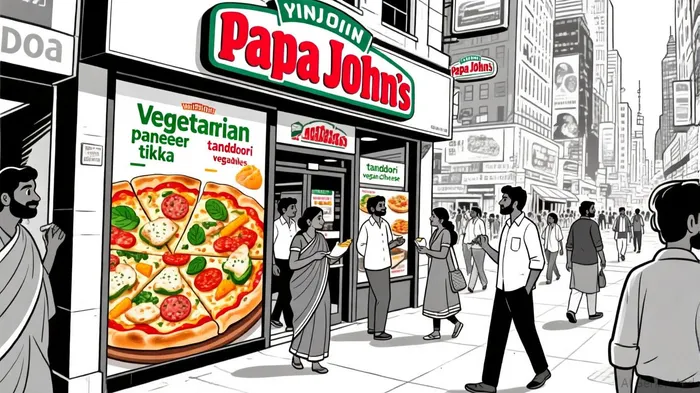





Comentarios
Aún no hay comentarios