
Panasonic's Next-Gen EV Battery Strategy: Reshaping the Supply Chain and Lithium-Ion Innovation
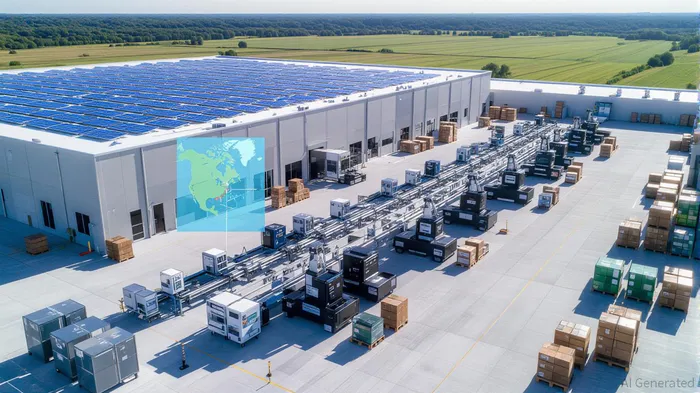
Panasonic's strategic pivot in next-generation electric vehicle (EV) battery development is redefining the global supply chain landscape and accelerating lithium-ion innovation. With a $4 billion investment in a Kansas-based battery factory—the world's largest facility—Panasonic is positioning itself at the forefront of a $250 billion EV battery market projected to grow by 25% annually through 2025[2]. This facility, set to begin production in 2025, will manufacture 2170 cylindrical lithium-ion batteries, a design optimized for energy density and safety, while operating on 100% renewable energy by 2035[3]. These moves align with Panasonic's broader GREEN IMPACT initiative, which aims to reduce 93 million tonnes of CO₂ emissions by 2031[3].
Technological Breakthroughs: Solid-State and Silicon Anodes
Panasonic's innovation pipeline extends beyond lithium-ion, with a focus on solid-state batteries and silicon-based anodes. According to a Bloomberg report, the company plans to debut a sample batch of solid-state batteries by March 2027, targeting industrial robots and high-temperature environments[2]. These batteries eliminate liquid electrolytes, offering superior safety, longer lifespans, and energy densities up to 1,000Wh/L by 2031[1]. Complementing this, Panasonic's joint venture with Group14 Technologies to produce silicon-carbon anodes—critical for enhancing lithium-ion performance—positions the firm to capitalize on U.S. federal incentives under the Inflation Reduction Act[2].
A key enabler of this transition is Panasonic's partnership with Sila Nanotechnologies, which supplies Titan Silicon™, a nano-composite anode material. This collaboration is expected to boost energy density by 25% compared to conventional lithium-ion cells, directly addressing consumer demands for longer EV ranges[1]. Meanwhile, the company's procurement of natural graphite from Canada's Nouveau MondeNMG-- Graphite underscores its commitment to decarbonizing material sourcing[3].
Supply Chain Localization: Mitigating Risks and Reshoring Production
Panasonic's strategy to eliminate China-sourced materials from its U.S. battery production by 2025 reflects a broader industry shift toward localized supply chains[4]. As Reuters highlights, this move is driven by geopolitical risks, including potential Trump-era tariffs on Chinese imports, which could inflate production costs by 15–20%[4]. To achieve this, Panasonic is forging partnerships with U.S. suppliers and supporting Japanese and Korean firms in establishing North American operations. For instance, its collaboration with recycling firm Redwood Materials ensures the recovery of lithium, nickel, and cobalt from used batteries, closing the loop on critical materials[3].
The Kansas plant, coupled with existing facilities in Nevada, is expected to create 10,000 high-skilled jobs and bolster North America's position as a global EV manufacturing hub[2]. This localization strategy not only reduces carbon footprints but also insulates Panasonic from supply chain disruptions, a critical factor as global EV demand growth slows outside China[1].
Investment Implications: A Leader in a Fragmented Market
Panasonic's dual focus on technological innovation and supply chain resilience positions it as a key player in a rapidly evolving market. While competitors like Tianci Materials and Qingdao Weilan advance electrolyte materials[3], Panasonic's partnerships with U.S. startups and its first-mover advantage in solid-state batteries give it a competitive edge. The company's net-zero ambitions and alignment with the Inflation Reduction Act's domestic production incentives further enhance its long-term viability[2].
However, challenges remain. The high costs of scaling solid-state technology and the need for $4 billion in upfront capital investments could strain short-term profitability. Additionally, the company's recent restructuring—including a 10,000-job cut—signals a recalibration of priorities amid slower-than-expected global EV adoption[1].
Conclusion
Panasonic's next-gen battery strategy—anchored by solid-state innovation, silicon anodes, and localized supply chains—addresses both the technical and geopolitical challenges facing the EV industry. By leveraging U.S. federal incentives, strategic partnerships, and a net-zero vision, the company is well-positioned to dominate a market where sustainability and resilience are paramount. For investors, Panasonic represents a compelling bet on the future of mobility, provided it can navigate near-term execution risks and maintain its technological lead.







Comentarios
Aún no hay comentarios