
Pan American Silver's Strategic Shift: Capital Allocation Discipline and Shareholder Value
In the ever-evolving landscape of precious metals, capital allocation decisions often serve as the linchpin for long-term shareholder value creation. While Pan American SilverPAAS-- has not officially canceled an equity offering in 2025-contrary to some speculative narratives-the company's strategic focus has shifted decisively toward high-impact acquisitions and operational efficiency. This shift, though not framed as a "cancellation," reflects a disciplined approach to capital deployment that prioritizes organic growth and cost optimization over dilutive financing.
Strategic Reallocation: From Equity to Acquisition
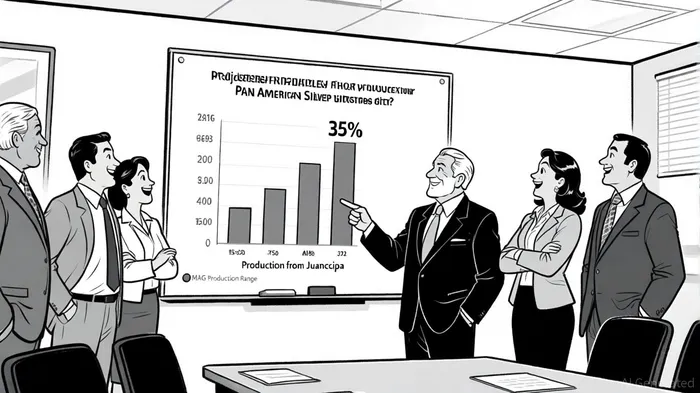
Pan American Silver's $2.1 billion acquisition of MAG Silver Corp., announced in May 2025, underscores its commitment to strategic capital allocation. By acquiring a 44% stake in the Juanicipio mine-a high-grade, low-cost silver asset operated by Fresnillo plc-the company is poised to boost annualized silver production by approximately 35% and reduce all-in sustaining costs by 15–20% [4]. This move, rather than issuing equity to fund less impactful projects, aligns with a broader industry trend of consolidating high-margin assets to fortify competitive advantages.
According to a report by Nasdaq, the acquisition is expected to close in the second half of 2025, with prorated production gains already factored into the company's revised output guidance of 23.2–24.7 million ounces of silver for the year [3]. This represents a significant upward revision from the initial 20–21 million ounces, illustrating how targeted capital deployment can recalibrate growth trajectories without relying on external financing.
Capital Discipline in Action
The absence of an equity offering in 2025-despite the company's robust cash flow and $1.2 billion in operating cash flow generated in the first half of 2025 [3]-highlights Pan American Silver's aversion to dilution. Instead of issuing shares to fund incremental projects, the company has opted to leverage its balance sheet strength to acquire synergistic assets. This approach mirrors the capital allocation strategies of industry peers like Fresnillo and First Majestic Silver, which have historically prioritized asset consolidation over equity raises.
Data from Pan American's second-quarter 2025 results further reinforces this discipline. The company reported adjusted EBITDA of $325 million, with cash costs declining to $1.85 per ounce, outperforming its own guidance [3]. These metrics suggest that the company's existing operations are generating sufficient liquidity to fund strategic initiatives, reducing the need for external capital.
Shareholder Value Implications
For investors, the MAG acquisition and the company's capital allocation choices signal a clear focus on value creation. By avoiding equity issuance-a move that could have diluted earnings per share-Pan American Silver is preserving shareholder equity while enhancing production capacity. The projected 35% production boost from Juanicipio, coupled with lower all-in sustaining costs, positions the company to outperform peers in a sector where margin compression is a persistent risk.
Moreover, the acquisition aligns with the company's long-term strategy of becoming the Americas' largest silver producer. As stated by Pan American Silver in its official announcement, the deal "strengthens our portfolio and provides a platform for sustained growth" [4]. This strategic clarity, paired with disciplined capital management, should resonate with investors seeking resilience in volatile commodity markets.
Conclusion
While the narrative of a "canceled equity offering" may be a misinterpretation of Pan American Silver's 2025 activities, the company's actions speak volumes about its capital allocation philosophy. By prioritizing high-impact acquisitions over dilutive financing, Pan American Silver is not only enhancing its production profile but also reinforcing its commitment to shareholder value. As the silver market navigates macroeconomic uncertainties, such disciplined strategies will likely separate industry leaders from laggards.





Comentarios
Aún no hay comentarios