
Pan-African Payment Systems: A Geopolitical Hedge and Cost-Efficiency Play
Africa's financial infrastructure is undergoing a quiet revolution. As the continent seeks to reduce its reliance on the U.S. dollar and streamline cross-border transactions, systems like the Pan-African Payment and Settlement System (PAPSS) and the Arab Regional Payment System (BUNA) are emerging as critical tools to lower costs, mitigate geopolitical risks, and capitalize on Africa's $4 trillion GDP growth potential. For investors, these initiatives represent a compelling opportunity to bet on financial sovereignty and efficiency in one of the world's fastest-growing regions.
The Geopolitical Imperative: Ditching the Dollar Trap
The U.S. dollar's dominance in global trade has long been a double-edged sword for African economies. Countries such as Nigeria, Kenya, and South Africa face currency volatility, high transaction fees (0.5%–10%), and the risk of U.S. sanctions freezing their assets. The rise of non-dollar payment systems addresses this vulnerability head-on.
PAPSS, now operational in 15 countries with over 150 banks, enables direct transactions in local currencies—bypassing the dollar—and saves an estimated $5 billion annually in forex conversion costs. This shift is a geopolitical hedge: as the U.S. weaponizes the dollar against adversaries (e.g., Russia, Iran), African nations can insulate themselves by fostering intracontinental trade.
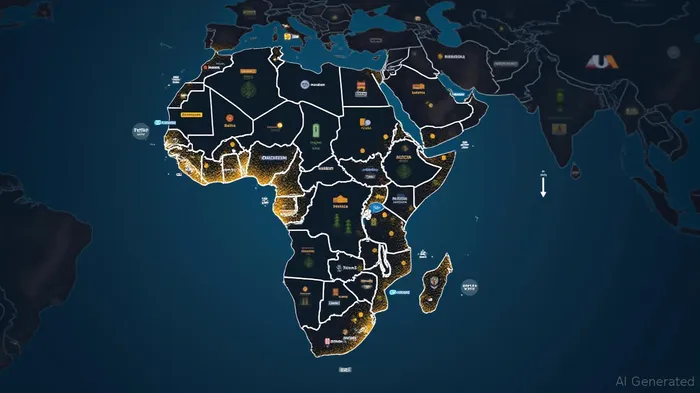
Cost Efficiency: A Numbers Game with Real Returns
The economic case is clear. Traditional cross-border payments via SWIFT can take days and cost up to 10% in fees, while PAPSS and BUNA offer near-real-time settlements at a fraction of the cost. For example:
- PAPSS's Nigeria-Kenya corridor: A $1 million B2B transaction now incurs fees of $2,150 (capped by Nigerian regulators) versus $100,000+ in legacy systems.
- BUNA's Egypt-UAE corridor: Real-time transfers in Egyptian pounds or dirhams save businesses 80% in intermediary currency costs.
This efficiency directly benefits sectors like manufacturing, agriculture, and e-commerce, which rely on fast, affordable cross-border flows. For investors, the winners will be payment processors, banks, and fintechs embedded in these systems.
Investment Opportunities: Where to Play
- Core Infrastructure Players
- PAPSS-Connected Banks: Institutions like Kenya's KCBKC-- Group and Rwanda's Bank of Kigali are early adopters. Their stock performance (e.g., KCB's 30% YTD rally in 2025) reflects investor optimism about revenue diversification.
Payment Switches: Ethio-Switch (Ethiopia) and Nigeria's NIP are gateways to PAPSS. Their scalability could attract partnerships with global giants like Visa ().
Regional Champions
- BUNA's Gulf Partners: Banks in UAE (e.g., Emirates NBD) and Egypt (Commercial International Bank) are key to BUNA's expansion. Their exposure to Arab-African trade provides a geopolitical tailwind.
AfCFTA-Linked Firms: Logistics companies (e.g., Kenya's Tsehai Logistics) and trade platforms (Jumia's B2B arm) benefit from smoother cross-border payments.
Digital Currency Plays
Nigeria's eNaira and Ghana's Ghana Cedi digital currency are pioneers in the $400 billion African digital payments market. Their success could mirror China's digital yuan playbook, rewarding early investors in blockchain infrastructure.
Risks and Mitigation
- Regulatory Fragmentation: 10 African countries remain on the FATF “grey list,” complicating cross-border flows. Investors should favor nations with strong compliance frameworks (e.g., Kenya, Senegal).
- Currency Volatility: Diversify into systems like PAPSS, which use a “basket” of currencies to stabilize transactions.
- Legacy Tech: Smaller banks still use ISO 8583 messaging, while PAPSS/BUNA require ISO 20022. Focus on institutions with modernized IT (e.g., MTN Mobile Money's API partnerships).
Conclusion: A Continent Rewriting the Rules
Africa's push for financial independence is not just about cutting costs—it's about rewriting the global economic playbook. For investors, the calculus is straightforward: back the infrastructure that reduces dollar risk, boosts intra-African trade, and captures the $2.5 trillion projected GDP growth by 2030.
The next phase is clear: allocate capital to banks, fintechs, and payment networks at the heart of PAPSS and BUNA. The continent's financial rebirth is underway—and the dollar's reign is no longer inevitable.







Comentarios
Aún no hay comentarios