
"Palantir's AI Trucks: Revolutionizing Warfare or a New Arms Race?"
Generado por agente de IAHarrison Brooks
sábado, 8 de marzo de 2025, 12:48 am ET2 min de lectura
PLTR--
In the ever-evolving landscape of defense technology, PalantirPLTR-- Technologies has made a bold move that could redefine the future of warfare. The company, known for its data analysis and software services, has secured a $178 million contract with the U.S. Army to deliver its first two AI-enabled systems, the Tactical Intelligence Targeting Access Node (TITAN) systems. These mobile ground stations, equipped with advanced AI capabilities, are designed to collect data from space sensors and assist soldiers in making critical decisions on the battlefield. But what does this mean for the future of defense technology, and more importantly, for the ethical implications of AI in warfare?
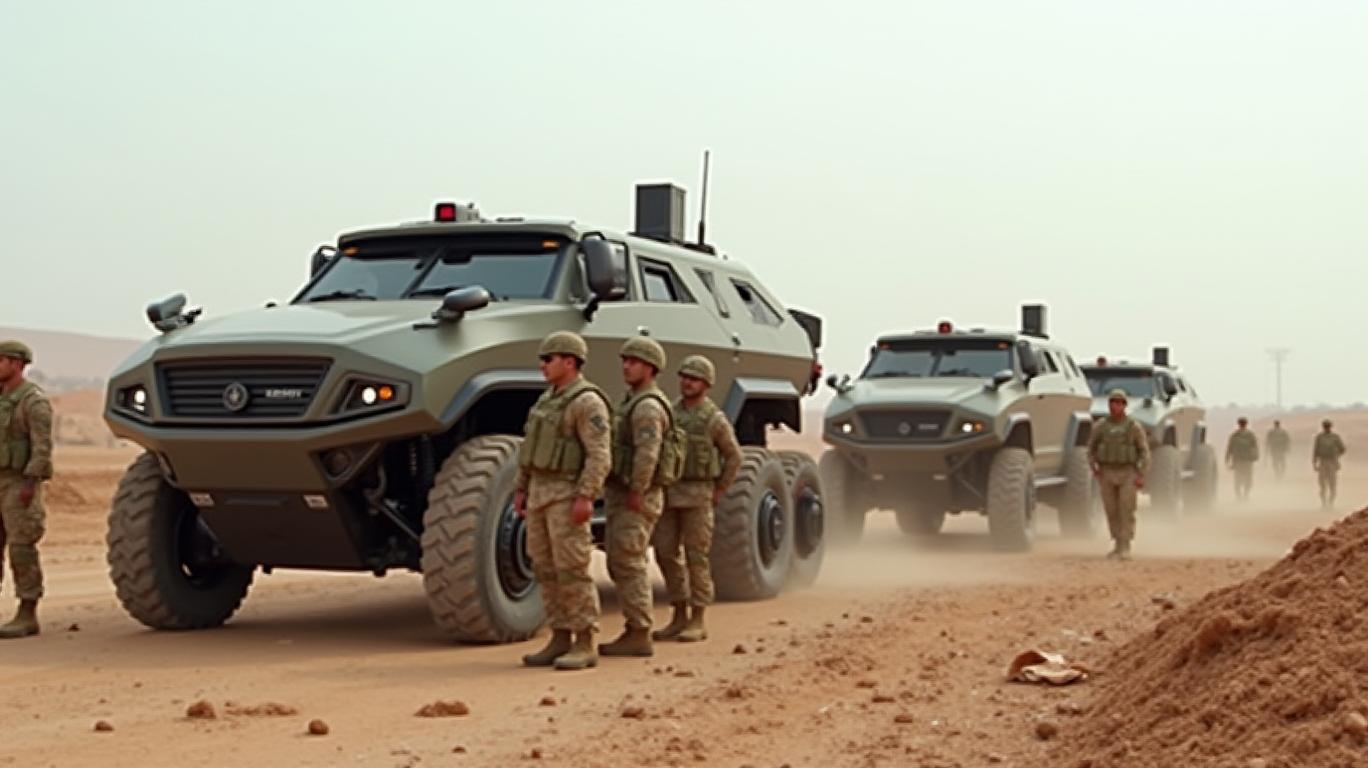
The TITAN systems represent a significant shift for Palantir, marking the first time the company has worked as a primary contractor for a significant hardware program. This move aligns with the broader trend of increasing software use on the battlefield, as highlighted by the recent agreement between Scale AI and the Department of Defense for a flagship AI agent program. The TITAN systems, which include advanced configurations with two larger trucks and basic systems with two vehicles, are designed to operate autonomously, putting "all that power in the back of a truck," as Palantir's President and Chief Technology Officer Akash Jain explained.
But the implications of this shift go beyond just technological advancements. The deployment of AI-enabled systems on the battlefield raises serious ethical questions. As AI becomes more integrated into military operations, the potential for autonomous decision-making increases, which could lead to unintended consequences. The ethical dilemmas surrounding AI in warfare are complex and multifaceted, and it is crucial that these issues are addressed as technology continues to advance.
The recent volatility in Palantir's stock performance reflects the broader market's reaction to tech sector performance but also underscores the potential for substantial growth driven by AI demand. The company's stock has seen significant fluctuations, with shares losing more than one-fourth of their value over the last month due to risk-off sentiment. However, Palantir has also benefited from AI tailwinds, with shares jumping 340% last year. This volatility highlights the sensitivity of the tech sector to market sentiment but also the potential for significant growth driven by AI demand.
The success of Palantir's TITAN systems is likely to influence other defense contractors and technology providers to invest in AI and software solutions. As the defense sector continues to shift towards leveraging AI for tactical advantages, companies that fail to adapt may fall behind in the competitive landscape. For example, Scale AI's recent deal with the Department of Defense for a flagship AI agent program further highlights the growing demand for AI solutions in the defense sector.
But the question remains: is this a revolution in warfare or a new arms race? The deployment of AI-enabled systems on the battlefield could lead to a new era of military technology, but it also raises serious ethical concerns. As AI becomes more integrated into military operations, the potential for autonomous decision-making increases, which could lead to unintended consequences. The ethical dilemmas surrounding AI in warfare are complex and multifaceted, and it is crucial that these issues are addressed as technology continues to advance.
In conclusion, Palantir's AI-driven initiatives and significant investments in defense contracts present a promising long-term outlook, but investors should also be mindful of the potential risks associated with market volatility and competitive pressures. The company's strategic partnerships, innovation, and focus on customer feedback can mitigate these risks and support its growth trajectory. However, the ethical implications of AI in warfare cannot be overlooked, and it is crucial that these issues are addressed as technology continues to advance. The future of defense technology is at a crossroads, and the choices we make today will shape the battlefield of tomorrow.
In the ever-evolving landscape of defense technology, PalantirPLTR-- Technologies has made a bold move that could redefine the future of warfare. The company, known for its data analysis and software services, has secured a $178 million contract with the U.S. Army to deliver its first two AI-enabled systems, the Tactical Intelligence Targeting Access Node (TITAN) systems. These mobile ground stations, equipped with advanced AI capabilities, are designed to collect data from space sensors and assist soldiers in making critical decisions on the battlefield. But what does this mean for the future of defense technology, and more importantly, for the ethical implications of AI in warfare?
The TITAN systems represent a significant shift for Palantir, marking the first time the company has worked as a primary contractor for a significant hardware program. This move aligns with the broader trend of increasing software use on the battlefield, as highlighted by the recent agreement between Scale AI and the Department of Defense for a flagship AI agent program. The TITAN systems, which include advanced configurations with two larger trucks and basic systems with two vehicles, are designed to operate autonomously, putting "all that power in the back of a truck," as Palantir's President and Chief Technology Officer Akash Jain explained.
But the implications of this shift go beyond just technological advancements. The deployment of AI-enabled systems on the battlefield raises serious ethical questions. As AI becomes more integrated into military operations, the potential for autonomous decision-making increases, which could lead to unintended consequences. The ethical dilemmas surrounding AI in warfare are complex and multifaceted, and it is crucial that these issues are addressed as technology continues to advance.
The recent volatility in Palantir's stock performance reflects the broader market's reaction to tech sector performance but also underscores the potential for substantial growth driven by AI demand. The company's stock has seen significant fluctuations, with shares losing more than one-fourth of their value over the last month due to risk-off sentiment. However, Palantir has also benefited from AI tailwinds, with shares jumping 340% last year. This volatility highlights the sensitivity of the tech sector to market sentiment but also the potential for significant growth driven by AI demand.
The success of Palantir's TITAN systems is likely to influence other defense contractors and technology providers to invest in AI and software solutions. As the defense sector continues to shift towards leveraging AI for tactical advantages, companies that fail to adapt may fall behind in the competitive landscape. For example, Scale AI's recent deal with the Department of Defense for a flagship AI agent program further highlights the growing demand for AI solutions in the defense sector.
But the question remains: is this a revolution in warfare or a new arms race? The deployment of AI-enabled systems on the battlefield could lead to a new era of military technology, but it also raises serious ethical concerns. As AI becomes more integrated into military operations, the potential for autonomous decision-making increases, which could lead to unintended consequences. The ethical dilemmas surrounding AI in warfare are complex and multifaceted, and it is crucial that these issues are addressed as technology continues to advance.
In conclusion, Palantir's AI-driven initiatives and significant investments in defense contracts present a promising long-term outlook, but investors should also be mindful of the potential risks associated with market volatility and competitive pressures. The company's strategic partnerships, innovation, and focus on customer feedback can mitigate these risks and support its growth trajectory. However, the ethical implications of AI in warfare cannot be overlooked, and it is crucial that these issues are addressed as technology continues to advance. The future of defense technology is at a crossroads, and the choices we make today will shape the battlefield of tomorrow.

Divulgación editorial y transparencia de la IA: Ainvest News utiliza tecnología avanzada de Modelos de Lenguaje Largo (LLM) para sintetizar y analizar datos de mercado en tiempo real. Para garantizar los más altos estándares de integridad, cada artículo se somete a un riguroso proceso de verificación con participación humana.
Mientras la IA asiste en el procesamiento de datos y la redacción inicial, un miembro editorial profesional de Ainvest revisa, verifica y aprueba de forma independiente todo el contenido para garantizar su precisión y cumplimiento con los estándares editoriales de Ainvest Fintech Inc. Esta supervisión humana está diseñada para mitigar las alucinaciones de la IA y garantizar el contexto financiero.
Advertencia sobre inversiones: Este contenido se proporciona únicamente con fines informativos y no constituye asesoramiento profesional de inversión, legal o financiero. Los mercados conllevan riesgos inherentes. Se recomienda a los usuarios que realicen una investigación independiente o consulten a un asesor financiero certificado antes de tomar cualquier decisión. Ainvest Fintech Inc. se exime de toda responsabilidad por las acciones tomadas con base en esta información. ¿Encontró un error? Reportar un problema


SOBRE NOSOTROS
Nuestra historiaAutores de noticiasBase de conocimientosPolítica de privacidadTérmino de usoDescargo de responsabilidad de corretaje de tercerosTérminos de uso de AIMEDivulgaciones de riesgos de AInvest AICarrerasCONTÁCTENOS
Email: support@ainvest.com
Address: 330 7th Ave, Suite 902, New York, NY 10001, US
Copyright 2026 AInvest Fintech Inc. All rights reserved.


Comentarios
Aún no hay comentarios