
Pakistan's Emerging Digital Finance Ecosystem and the Strategic Case for Early Involvement in Rupee-Backed Stablecoins
Regulatory Evolution: A Foundation for Trust and Growth
The State Bank of Pakistan (SBP) has moved swiftly to establish a legal framework for digital assets. The Virtual Assets Ordinance, enacted in July 2025, created the Pakistan Virtual Asset Regulatory Authority (PVARA), tasked with licensing and overseeing crypto activities, according to the LiveBitcoinNews report. This regulatory clarity addresses a critical gap: experts warn that delaying such measures could cost Pakistan up to $25 billion in economic growth, as noted in a Coinotag analysis. By institutionalizing oversight, Pakistan is not only mitigating risks like money laundering but also attracting institutional capital that demands transparency.
CBDC Development: A Catalyst for Financial Inclusion
The SBP's CBDC prototype, developed with support from the World Bank and IMF, is a cornerstone of this strategy. A pilot phase is slated to precede a full rollout, with the digital rupee aiming to reduce remittance costs by 30% and bring 100 million unbanked adults into the formal financial system, as Coinotag analysis notes. Remittances, which account for a significant portion of Pakistan's GDP, could see transformative efficiency gains, while the CBDC's programmable features open avenues for targeted social welfare disbursements.
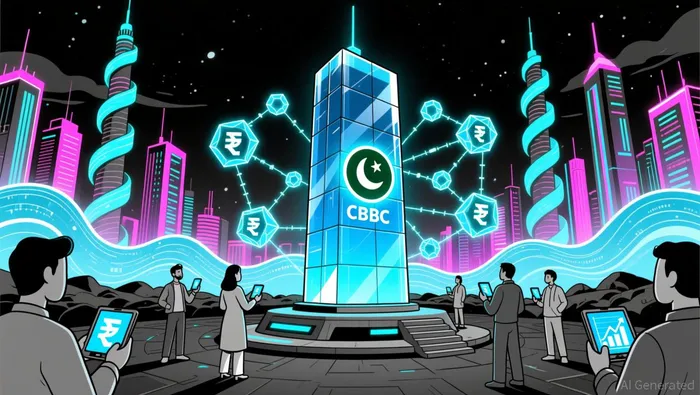
Stablecoin Ambitions: Bridging Stability and Adoption
Parallel to the CBDC, Pakistan is exploring a rupee-backed stablecoin to anchor crypto transactions and foster broader adoption. This stablecoin would serve as a bridge between traditional finance and decentralized ecosystems, enabling seamless cross-border payments and reducing volatility risks for retail users. Private players are also entering the fray: ZAR, a fintech startup, is piloting dollar-backed stablecoins to serve Pakistan's 240 million population, targeting the unbanked and underbanked, according to the LiveBitcoinNews report. These initiatives highlight a dual strategy-leveraging both public and private innovation to dominate the regional fintech landscape.
Systemic Impact: Beyond Financial Inclusion
The economic implications of Pakistan's digital finance push are profound. By cutting remittance costs, the CBDC could inject billions into the economy, while stablecoins may catalyze a new wave of DeFi applications tailored to local needs. For instance, micro-lending platforms built on blockchain could empower small businesses, and tokenized assets could unlock liquidity in real estate and agriculture. However, risks remain: regulatory missteps or low adoption rates could stall progress, and geopolitical tensions in the region may affect investor sentiment.
Investment Potential: A High-Reward Frontier
For investors, Pakistan's digital finance ecosystem offers a unique confluence of early-mover advantage and scalability. The $20–$25 billion economic opportunity tied to digital assets, as Coinotag analysis notes, is not just theoretical-it's being actively monetized through infrastructure projects, licensing fees, and cross-border payment corridors. Early involvement in rupee-backed stablecoins or CBDC-related ventures could yield outsized returns, particularly as Pakistan's strategic partnerships with global institutions signal long-term credibility.
Conclusion: A Strategic Inflection Point
Pakistan's digital finance journey is a masterclass in regulatory agility and systemic innovation. While challenges like adoption rates and geopolitical volatility persist, the country's proactive approach to digital assets positions it as a regional leader. For investors, the window to participate in this transformation is narrowing-making now the optimal time to evaluate opportunities in a market poised to redefine financial inclusion in the Global South.







Comentarios
Aún no hay comentarios