
Pakistan's $2B State Asset Tokenization and Its Implications for Emerging Market Crypto Growth
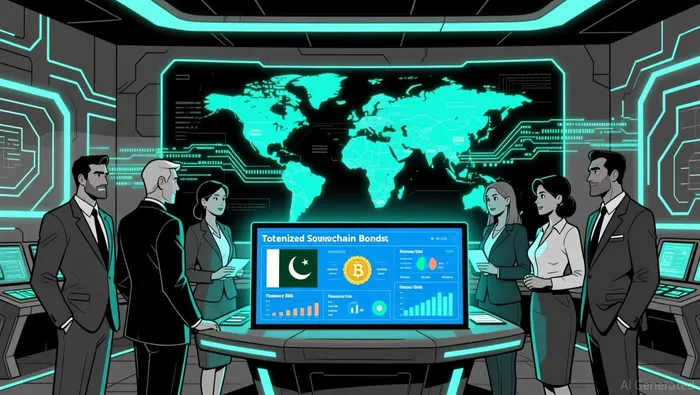
Pakistan's recent $2 billion state asset tokenization initiative, spearheaded by a memorandum of understanding (MoU) with Binance, marks a pivotal moment in the global adoption of blockchain-based financial instruments. By tokenizing sovereign bonds, treasury bills, and commodity reserves, Pakistan is not only modernizing its financial infrastructure but also positioning itself as a leader in emerging market crypto innovation. This move, coupled with the establishment of PVARA and a CBDC pilot, signals a strategic shift toward leveraging digital assets to enhance liquidity, attract foreign capital, and diversify economic growth channels.
Sovereign-Backed Tokenized Assets: A New Class of High-Yield Instruments
The tokenization of state assets introduces a novel asset class that combines the stability of sovereign-backed instruments with the liquidity and efficiency of blockchain technology. Traditional government bonds in Pakistan have historically offered yields ranging from 10.50% to 12.20% for 10-year maturities as of late 2025 according to data. However, tokenized assets could potentially outperform these yields by reducing transaction costs, enabling 24/7 trading, and attracting a broader investor base, including retail and institutional participants in global crypto markets as research shows.
For context, tokenized U.S. Treasuries have surged from under $100 million in 2023 to $7.4 billion by mid-2025, demonstrating the scalability of blockchain-based instruments. Pakistan's initiative, while in its early stages, aligns with this trend. By converting illiquid state assets into tradable tokens, the country could unlock new capital flows and create a more dynamic secondary market. This is particularly relevant for emerging markets, where traditional sovereign debt often faces liquidity constraints due to limited institutional participation.
Liquidity and Transparency: A Game Changer for Emerging Markets
One of the most compelling aspects of Pakistan's tokenization strategy is its potential to enhance liquidity. Traditional sovereign bonds are typically traded in fragmented, over-the-counter markets with limited transparency. In contrast, tokenized assets can be traded on blockchain platforms, enabling real-time settlements and reducing counterparty risks. For example, platforms like OndoONDO-- Finance and Maple FinanceSYRUP-- have already demonstrated the viability of tokenized treasuries and private credit, achieving net yields of 9–12% through automated smart contracts.
Emerging markets like the UAE and Saudi Arabia have also embraced real estate tokenization, allowing fractional ownership of high-value properties with entry barriers as low as $1,000. These case studies highlight how tokenization can democratize access to traditionally exclusive asset classes. Pakistan's focus on commodity reserves and energy assets-such as oil, gas, and metals-could similarly attract global investors seeking exposure to resource-rich economies while benefiting from the transparency and efficiency of blockchain according to market analysis.
Regulatory Framework and Global Integration
Pakistan's phased licensing process, overseen by PVARA, ensures that platforms like Binance and HTX adhere to anti-money laundering (AML) and counter-terrorist financing (CTF) standards. This regulatory clarity is critical for attracting institutional investors, who often shy away from unregulated crypto markets. The country's third-place ranking in global retail crypto activity-boasting 40 million users and $300 billion in annual trading volume-further underscores its potential.
The initiative also aligns with broader global trends, such as the EU's Markets in Crypto-Assets (MiCA) framework and the U.S. GENIUS Act, which are fostering institutional adoption of tokenized assets. By integrating its financial system with global blockchain standards, Pakistan could position itself as a bridge between traditional emerging market debt and the next-generation digital asset ecosystem.
Risks and Challenges
Despite its promise, the tokenization of state assets is not without risks. Regulatory uncertainty, cybersecurity vulnerabilities, and market volatility remain significant hurdles. For instance, while tokenized U.S. Treasuries have seen rapid growth, their yields are still subject to macroeconomic factors. Pakistan's economy, which has historically faced inflationary pressures and external debt challenges, must navigate these risks carefully.
Moreover, the success of the initiative hinges on the ability of platforms like Binance to scale operations in a highly regulated environment. The phased licensing process, while prudent, could delay market entry and limit initial liquidity. However, the government's commitment to a responsible innovation framework-emphasized by PVARA Chairman Bilal bin Saqib-suggests a balanced approach to mitigating these risks.
Conclusion: A Catalyst for Emerging Market Crypto Growth
Pakistan's $2 billion tokenization initiative represents more than a technological upgrade-it is a strategic repositioning in the global financial landscape. By creating a sovereign-backed, blockchain-enabled asset class, the country is addressing the twin challenges of liquidity and transparency that have long constrained emerging market investments. While direct yield comparisons with traditional bonds remain speculative at this stage, the broader trends in tokenized treasuries, real estate, and commodities suggest a strong case for long-term value creation.
For investors, this initiative offers a unique opportunity to participate in the evolution of digital finance while diversifying exposure to high-growth emerging markets. As Pakistan's tokenized assets mature, they could serve as a blueprint for other nations seeking to harness blockchain for economic development-a testament to the transformative power of innovation in the 21st-century financial system.







Comentarios
Aún no hay comentarios