
PagSeguro's Sustainability Amid Declining TPV and Rising Costs: Value Illusion or Operational Weakness?
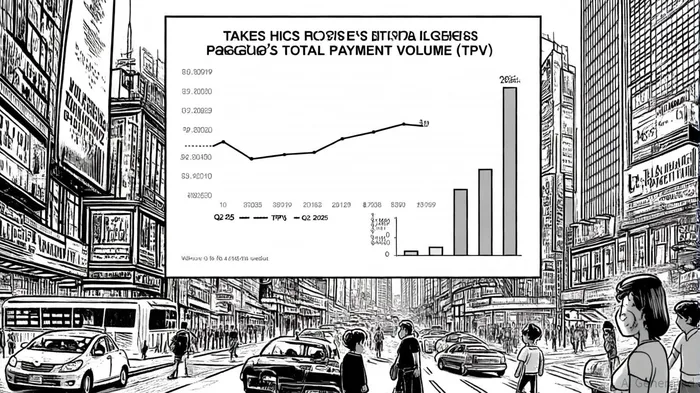
PagSeguro Digital Ltd (PAGS) has long been a bellwether for Brazil's fintech sector, but its recent performance has sparked debate over whether the stock is trapped in a value illusion or signaling deeper operational weaknesses. The company's Q2 2025 earnings reveal a complex picture: while Total Payment Volume (TPV) grew 4% year-over-year to BRL130 billion, the micro, small, and medium business (MSMB) segment—a core driver of its payments business—contracted 2% quarter-over-quarter. Simultaneously, financial costs surged 48% year-over-year, driven by Brazil's high SELIC rate, compressing gross margins by 1.5 percentage points[1]. This duality raises critical questions about the sustainability of PagSeguro's business model in a high-interest-rate environment.
TPV Trends: Structural Shifts or Temporary Headwinds?
PagSeguro's TPV growth has decelerated sharply in 2025. After a robust 28% year-over-year increase in Q4 2024 (reaching BRL146 billion), the company reported only 4% growth in Q2 2025[2]. This slowdown is attributed to macroeconomic factors, including high interest rates and a cooling Brazilian economy, which have dampened consumer confidence and discretionary spending[3]. However, the MSMB segment's 2% sequential decline suggests structural challenges. Unlike previous periods, where TPV growth was fueled by market share gains, PagSeguro now faces a more rationalized market, with competitors prioritizing profitability over expansion[4].
Management has acknowledged this shift, pivoting toward profitability and client retention rather than aggressive TPV growth[5]. While this strategy may stabilize margins in the short term, it risks underperformance if Brazil's economic recovery lags expectations. Analysts like Tito Labarta of Goldman SachsGS-- argue that the company's reliance on TPV growth—a hallmark of its early success—has become a liability in a matured market[6].
Cost Structure and Interest Rate Sensitivity
PagSeguro's cost structure has become increasingly vulnerable to Brazil's monetary policy. Financial costs, which rose 48% year-over-year in Q2 2025, now account for a significant portion of operating expenses[7]. The banking segment, which contributes 26% of total gross profit, is particularly exposed to interest rate fluctuations. While its 97% year-over-year gross profit growth is impressive, this segment's net interest margins are under pressure as funding costs rise[8].
The company's interest coverage ratio of 1.7 and a debt-to-equity ratio of 0.24 (as of June 2025) suggest it can manage its debt obligations[9]. However, the sharp increase in financial costs—driven by Brazil's SELIC rate of 13.75%—highlights a structural vulnerability. Unlike traditional fintechs, PagSeguro's banking operations now resemble those of a financial institution, with earnings sensitive to rate cycles[10]. This shift complicates its ability to maintain consistent margins, particularly if high rates persist beyond 2026.
Capital Allocation and Shareholder Returns
PagSeguro has responded to these challenges with a capital return strategy, distributing BRL1.9 billion to shareholders through dividends and buybacks in 2025[11]. This approach has bolstered investor confidence, with the company's Return on Average Equity (ROE) reaching 15.2% in Q2 2025[12]. However, critics argue that aggressive buybacks may mask underlying operational weaknesses. For instance, the company's operating cash flow turned positive at BRL3.45 billion in Q2 2025, but this followed a negative BRL3.42 billion outflow in 2024, driven by working capital demands and capital expenditures[13].
The sustainability of these returns depends on PagSeguro's ability to balance growth and profitability. While its banking segment offers a path to higher-margin revenue, the MSMB segment's stagnation and rising interest costs could strain this equilibrium.
ESG and Long-Term Resilience
PagSeguro's ESG initiatives, including carbon neutrality through forestry and biogas projects, underscore its commitment to sustainability[14]. These efforts, while commendable, are unlikely to offset financial headwinds in the near term. The company's ESG ratings—such as a low-risk score from MorningstarMORN-- Sustainalytics—may enhance its appeal to impact investors, but they do not address the core issue of TPV stagnation and margin compression[15].
Analyst Consensus: A Mixed Outlook
Analysts remain divided on whether PagSeguro's challenges are temporary or structural. Deutsche BankDB-- and others maintain a cautiously optimistic stance, citing the company's strategic pivot to banking and expectations of interest rate normalization by 2026[16]. Conversely, Goldman Sachs has lowered its price target, arguing that high rates and competitive pressures will persist[17]. The stock's valuation—trading at a TTM price-to-sales of 0.79x—reflects this uncertainty, with investors pricing in both macroeconomic risks and the potential for long-term growth[18].
Conclusion: Value Illusion or Operational Weakness?
PagSeguro's current struggles appear to straddle both temporary macroeconomic headwinds and structural operational challenges. The high-interest-rate environment is a clear short-term drag, but the MSMB segment's decline and rising financial costs suggest deeper vulnerabilities. While the company's capital return strategy and banking expansion offer a path to resilience, its ability to navigate Brazil's economic uncertainties will determine whether the stock is a value trap or a misunderstood opportunity. For now, investors must weigh the risks of a prolonged high-rate environment against the potential for a strategic rebalancing in 2026.





Comentarios
Aún no hay comentarios