
Packaging Corporation of America's Greif Deal: A Strategic Win for Shareholders
Packaging Corporation of America (NYSE: PKG) has struck a $1.8 billion all-cash deal to acquire Greif, Inc.'s (NYSE: GEF) containerboard business, a move that positions PCA as a leader in North American corrugated packaging. The transaction, expected to close by late 2025, delivers immediate financial benefits, including synergies worth $60 million within two years and a pro forma leverage ratio of just 1.7x—well within PCA's target range. This is a textbook example of strategic M&A that strengthens market position while maintaining financial discipline.
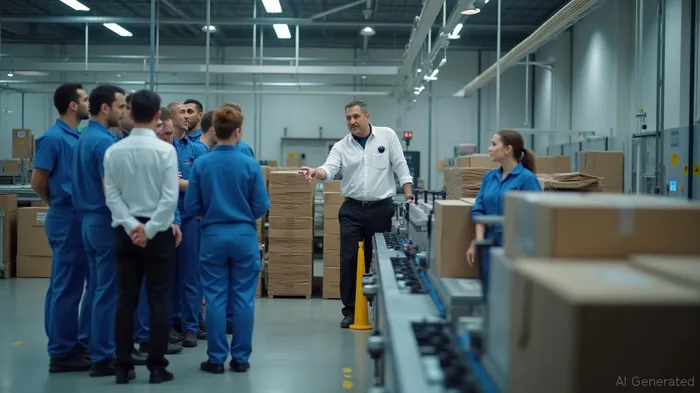
The Synergy Play: Operational Efficiency Meets Scale
PCA's ability to extract $60 million in synergies from the deal is its most compelling feature. The savings will come from three key areas:
1. Mill Grade Optimization: Combining PCA's existing mills with Greif's two containerboard facilities will allow PCA to produce higher-margin specialty grades more efficiently.
2. Transportation Cost Reduction: Vertical integration of the acquired plants into PCA's network of 86 corrugated facilities will cut logistics expenses.
3. Operational Streamlining: Eliminating redundancies in procurement, maintenance, and staffing across the combined operations.
Half of these synergies are projected to materialize in the first year post-closing, with the full $60 million realized by year two. Crucially, these benefits are not one-off gains but recurring improvements to margins.
Financial Accretion: Immediate and Sustained
The acquisition is immediately accretive to earnings, a rarity in today's high-cost environment. PCA's Q1 2025 diluted EPS of $2.26—up 38.7% year-over-year—already reflects strong pricing power and operational excellence. The Greif deal will amplify this trend:
- Pro Forma Leverage: The $1.8 billion purchase is financed through $1.5 billion in new debt and existing cash, pushing PCA's net debt/EBITDA to 1.7x. This is comfortably below the 2.5x threshold PCA management has set for “financial flexibility.”
- Dividend Sustainability: With a payout ratio of just 55% in Q1, PCA's $1.25 quarterly dividend remains rock-solid. Even after the deal, its balance sheet will support both dividends and reinvestment.
Risks, But PCA's Execution Mitigates Them
No deal is without risks. Key concerns include:
- Regulatory Delays: While PCA's third-ranked market position suggests antitrust scrutiny is low, delays could push the close into 2026.
- Margin Pressure: Rising energy and freight costs threaten profitability. However, PCA has already locked in long-term contracts to hedge these risks.
- Integration Challenges: Merging cultures and systems is never easy, but PCA's track record—evidenced by the on-time completion of its $140 million Glendale box plant—bodes well.
Why This Is a High-Conviction Buy
PCA's acquisition is a masterclass in value creation. The $60 million in synergies alone justify the purchase price: at an 8.5x EBITDA multiple, the deal is cheap before considering accretion. Greif's divestiture also leaves PCA with a 1.25 million-ton containerboard capacity, solidifying its vertical integration and shielding it from supply chain volatility.
Investors should monitor two catalysts:
1. Q2 2025 Earnings (July 24): Analysts project a sequential EPS jump to $2.41, potentially pushing PCA's stock toward a $210 price target.
2. Regulatory Approval: A green light here would remove uncertainty and allow synergies to flow.
Final Take
Packaging Corporation of America is executing a rare combination of growth and financial prudence. The Greif deal isn't just about size—it's about turning operational excellence into shareholder returns. With a fortress balance sheet, dividend safety, and a clear path to $60 million in synergies, PCA is a buy for investors seeking a defensive, income-generating industrial stock.
Risk Rating: Low-to-moderate, with upside outweighing regulatory/operational risks.
Price Target: $210 (based on 2026 EPS estimates incorporating synergies).





Comentarios
Aún no hay comentarios