
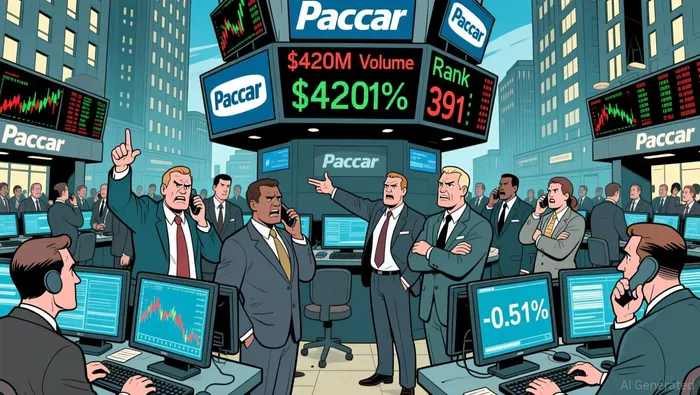
Paccar Shares Dip 0.51% as Institutional Buyers and Sellers Clash, Ranking 391st in $420M Dollar Volume
Market Snapshot
Paccar (PCAR) closed on November 24, 2025, . , . Despite the volume contraction, the company’s recent quarterly results showed resilience in revenue generation, albeit with mixed earnings performance.
Key Drivers
Institutional Investor Activity and Ownership Shifts
Recent filings highlight significant institutional buying activity in PACCARPCAR--. , . Vanguard Group and Wellington Management Group also bolstered their positions, . Geode Capital Management and Northern Trust Corp similarly increased stakes, reflecting institutional confidence in the company’s long-term prospects. Conversely, Legal & General Group and Mediolanum International Funds trimmed their positions, indicating divergent views on valuation or strategic direction.
Earnings Performance and Market Reaction
, . , reflecting sector-wide headwinds. Analysts noted the revenue decline as a drag on momentum, despite the company’s efforts to drive electrification and diversify its product portfolio. The mixed earnings result contributed to a neutral market reaction, .
Analyst Sentiment and Rating Revisions
The stock’s analyst coverage has been marked by a tug-of-war between optimism and caution. Wells Fargo upgraded its rating to “Positive” in November, , while downgraded to “Strong Sell” in October. Truist Financial and Wolfe Research revised their targets upward, citing long-term growth potential in the electrification and autonomous vehicle segments. However, Weiss Ratings and Wall Street Zen downgraded to “Hold” or “Sell,” reflecting concerns over near-term profitability and macroeconomic risks. .
Insider Transactions and Dividend Policy
CFO Brice J. . , and the sale was disclosed in an SEC filing. Meanwhile, PACCAR maintained its dividend, , . , balancing shareholder returns with reinvestment in growth initiatives.
Strategic Positioning and Sector Dynamics
PACCAR’s operations in truck manufacturing and financial services position it at the intersection of cyclical and structural trends. . However, . Analysts highlighted that institutional buying may signal confidence in the company’s ability to navigate these challenges, though near-term volatility remains a risk.
Conclusion
PACCAR’s stock performance reflects a complex interplay of institutional confidence, earnings volatility, and divergent analyst views. While institutional investors have added to their stakes, insider selling and mixed earnings results have tempered enthusiasm. The company’s strategic focus on electrification and its robust dividend policy offer a counterbalance to near-term uncertainties, but investors remain cautious ahead of further catalysts.





Comentarios
Aún no hay comentarios