
The Overlooked Risks of Central Bank Mismanagement and the Case for Inflation-Hedging Assets
Central banks have long been the linchpins of global economic stability, yet their policy decisions-when mismanaged-can sow the seeds of inflationary surges and asset mispricing. Historical case studies reveal a troubling pattern: financial crises recur with alarming regularity, often triggered by unsustainable debt, delayed policy responses, and asset bubbles. These episodes underscore a critical truth: central bank errors are not anomalies but systemic risks that demand rethinking by investors.
The Legacy of Policy Missteps
The 2020–2022 period exemplifies this risk. Central banks, including the U.S. Federal Reserve, initially underestimated inflationary pressures, maintaining ultra-soft monetary policies despite shifting macroeconomic conditions. This delayed response exacerbated inflation, driven by pandemic-induced supply chain disruptions and fiscal stimulus. Such missteps highlight a recurring theme: central banks often act too late, amplifying volatility and eroding investor confidence.
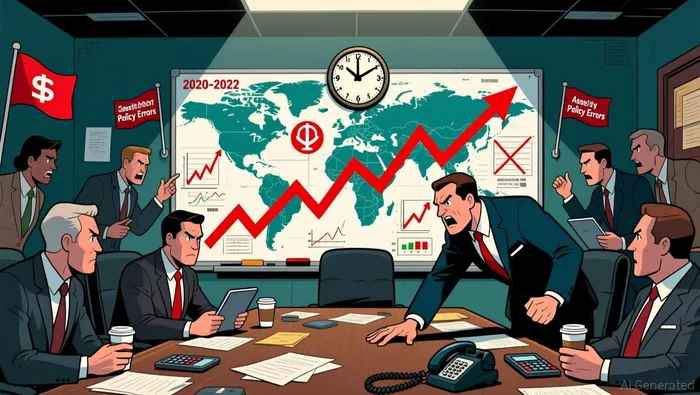
Historical data further illustrates the consequences. Financial crises, whether in emerging markets, or advanced economies, tend to be deeper and more prolonged when preceded by expansionary credit environments. For instance, the 1970s stagflation crisis, fueled by oil shocks, and accommodative monetary policies, forced investors to pivot toward inflation-protected assets like gold and Treasury Inflation-Protected Securities (TIPS). These lessons remain relevant today, as central banks grapple with balancing growth and price stability.
Central Bank Policy in 2023–2025: A Delicate Balancing Act
Recent years have seen a cautious approach to policy normalization. The European Central Bank (ECB) initiated rate cuts in 2024, while the Federal Reserve delayed easing due to persistent inflation concerns. This divergence reflects the complexity of navigating a post-pandemic world marked by resurgent inflation and uneven global growth. Emerging market central banks face additional hurdles, including weaker policy credibility and vulnerability to global financial shocks.
The evolving landscape has shifted investor expectations. Aggressive rate-cutting scenarios have given way to a "wait-and-see" approach, with markets bracing for potential tightening if inflation resists downward pressure. This uncertainty underscores the need for active portfolio management, as traditional correlations between asset classes-such as the historically negative relationship between stocks and bonds-have eroded.
Rethinking Inflation Hedging: Beyond Traditional Diversification
Investors are increasingly turning to alternative assets and income strategies to combat inflation. Real assets like real estate, infrastructure, and commodities have gained traction due to their ability to adjust to rising prices through rent increases, cost pass-throughs, or price appreciation. For example, energy equities have emerged as a favored hedge, given their sensitivity to inflationary trends.
Fixed income strategies have also evolved. Short-dated TIPS and equity income vehicles are now preferred over nominal bonds, which struggle to preserve real returns in high-inflation environments. Meanwhile, digital assets and gold are being embraced for their uncorrelated returns, particularly as stock-bond correlations turn positive. This shift reflects a broader rethinking of diversification, with investors prioritizing resilience over traditional risk-return trade-offs.
The Path Forward: Proactive Risk Management
The lessons from past crises and recent policy challenges are clear: central bank mismanagement remains a systemic risk. Investors must remain vigilant, continuously adjusting portfolios to account for inflationary pressures and policy uncertainties. Diversification into inflation-hedging assets is no longer optional but essential, particularly in an era where "this time is different" has proven to be a dangerous illusion.
As central banks navigate the delicate balance between growth and stability, investors must adopt a forward-looking mindset. By learning from historical missteps and leveraging alternative assets, they can mitigate the overlooked risks of monetary policy mismanagement and position themselves for long-term resilience.







Comentarios
Aún no hay comentarios