
Outperforming the S&P 500 in 2026: Sector Rotation and Valuation Arbitrage in Small-Cap and Tech-Driven ETFs
The S&P 500 has dominated investor portfolios for years, but as 2026 approaches, opportunities to outperform the benchmark are emerging through strategic sector rotation and valuation arbitrage. Small-cap and tech-driven ETFs, historically volatile yet high-growth assets, are now positioned to capitalize on shifting macroeconomic dynamics and undervalued fundamentals. This analysis explores how investors can leverage these strategies to tilt returns in their favor.
Sector Rotation: Small-Cap Stocks and Cyclical Dynamics
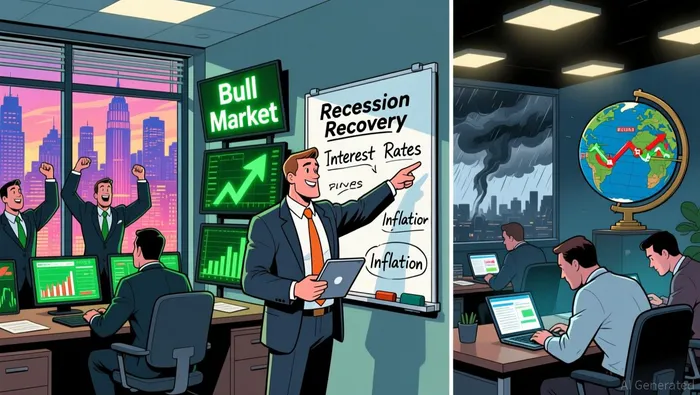
Small-cap equities have long been a barometer for economic cycles. According to a report by CME Group, small-cap value stocks have outperformed the S&P 500 over 30-year and 5-year periods, despite underperforming since 2021 amid rising interest rates and late stage economic growth. However, historical patterns suggest small-caps tend to thrive during recessions and early recoveries, a dynamic that could materialize in 2026 if the U.S. economy faces a downturn or soft landing.
Recent data underscores this potential. The Russell 2000, which tracks small-cap stocks, has outperformed the S&P 500 by 5 percentage points over the past six months (28% vs. 23%), driven by easing trade tensions and expectations of Federal Reserve rate cuts. While the S&P 500 has outperformed the Russell 2000 by 69% since March 2021, this gap may narrow as cyclical conditions shift. Investors rotating into small-cap ETFs like the iShares Russell 2000 ETFIWM-- (IWM) or Vanguard Small-Cap ETF (VB) could benefit from this reversion to mean performance.
Valuation Arbitrage: Exploiting Price Dislocations
Valuation metrics reveal stark divergences between the S&P 500 and small-cap/tech-driven ETFs. As of October 2025, the Russell 2000 trades at a P/E ratio of 34.32, significantly higher than the S&P 500's 25.58. However, the S&P 600 Small Cap Index-a subset of profitable small-cap firms-trades at a 15.9x trailing P/E, a 37% discount to the S&P 500's 24.17x. This suggests that while the broader small-cap market is overvalued, a subset of high-quality, earnings-driven small-cap stocks offers compelling value.
Tech-driven ETFs, meanwhile, present a different arbitrage opportunity. Over the past decade, semiconductor-focused funds like the VanEck Semiconductor ETF (SMH) and iShares Semiconductor ETF (SOXX) have delivered annualized returns of 28.18% and 25.54%, respectively, far outpacing the S&P 500's 14.37%. Despite recent volatility, these ETFs trade at forward P/E ratios of 25.95x (Russell 2000) and 33.25x (Nasdaq 100), indicating growth potential if earnings estimates materialize.
Tech-Driven ETFs: A Growth Play for 2026
The semiconductor and tech sectors remain critical to long-term outperformance. Data from ETF.com highlights that the SPDR S&P Semiconductor ETF (XSD) has returned 21.66% annually over the past decade, underscoring the sector's resilience. While valuations appear stretched compared to the S&P 500, the anticipation of AI-driven demand and global chip shortages could justify these multiples. Investors seeking exposure to tech innovation without overpaying for the Nasdaq 100 might consider sector-specific ETFs like SOXX or SMH, which offer concentrated access to high-growth sub-industries.
Strategic Recommendations for 2026
To outperform the S&P 500 in 2026, investors should adopt a dual strategy:
1. Sector Rotation: Allocate to small-cap ETFs (IWM, VB) as macroeconomic conditions shift toward a recession or early recovery phase.
2. Valuation Arbitrage: Target the S&P 600 Small Cap Index or tech-driven ETFs (SMH, SOXX) to exploit undervalued earnings and growth potential.
While the S&P 500 remains a safe haven in late-stage expansions, the interplay of cyclical dynamics and valuation dislocations creates a fertile ground for alternative strategies. By balancing exposure to small-cap cyclicality and tech-driven innovation, investors can position portfolios to outperform the benchmark in 2026.





Comentarios
Aún no hay comentarios