
The Outperformance of Clean Energy ETFs in a Shifting Market
The energy sector has emerged as a defining battleground for investors navigating the complex interplay of market timing and sector rotation in 2023–2025. Clean energyCETY-- ETFs, in particular, have outperformed traditional counterparts, driven by a confluence of policy tailwinds, technological innovation, and structural shifts in global electricity demand. Yet, this outperformance is not a monolithic story-it reflects nuanced dynamics that require careful analysis for strategic positioning.
The Clean Energy Surge: Policy, Innovation, and Global Demand
Clean energy ETFs have delivered exceptional returns, with the Fidelity Clean Energy ETFFRNW-- (FRNW) posting a 58.8% year-to-date gain as of October 2025. This momentum is underpinned by global investment in renewables, which hit a record $386 billion in the first half of 2025, led by offshore wind and small-scale solar projects. The European Union and China have been pivotal in sustaining this growth, even as U.S. investments dipped 36% due to policy uncertainty and the rollback of tax credits under the One Big Beautiful Bill Act (OBBBA).
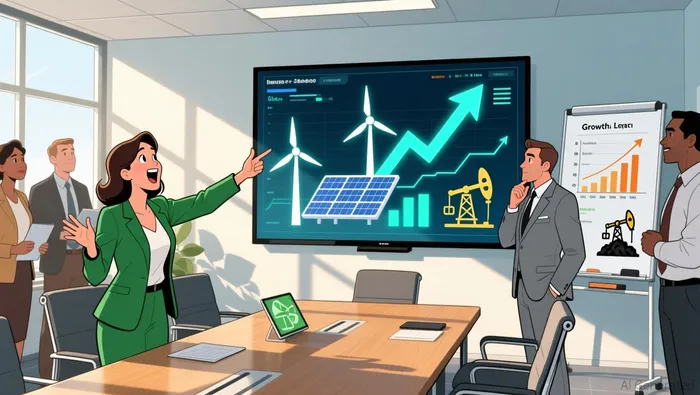 Thematic ETFs focused on hydrogen and solar energy, such as Global X Hydrogen ETFHYDR-- (HYDR) and Invesco Solar Energy ETF (RAYS), have further amplified the sector's appeal, returning 400.92% and 69%, respectively over the past year. These niche plays reflect investor appetite for innovation, particularly in technologies aligned with long-term decarbonization goals. Meanwhile, nuclear energy has gained traction as a reliable, low-carbon alternative, with small modular reactors attracting renewed interest.
Traditional Energy's Resurgence: Structural Demand and AI-Driven Growth
While clean energy ETFs have captured headlines, traditional energy has not been sidelined. The Vanguard Energy ETF (VDE) and Fidelity MSCI Energy Index ETF (FENY) gained 4.1% and 4.2% year to date in 2025, respectively. This resilience stems from structural demand for energy, particularly from AI and data centers, which are projected to double global electricity consumption by 2030. Integrated oil and gas majors, as well as electric utilities, have become critical to meeting this demand, supported by a 920 kb/d increase in global oil demand in Q3 2025.
However, traditional energy's role is evolving. As stated by industry analysts, the sector is no longer a standalone growth driver but a complementary force in the broader energy transition. Metals and mining, for instance, have outperformed within the energy complex, driven by surging demand for critical minerals like lithium and cobalt.
Sector Rotation: Balancing Short-Term Gains and Long-Term Risks
The interplay between clean and traditional energy ETFs highlights the importance of sector rotation. In Q4 2025, clean energy ETFs like iShares Global Clean Energy ETF (ICLN) and Invesco WilderHill Clean Energy ETF (PBW) surged 35.4% and 44.7%, respectively. This outperformance was fueled by macroeconomic factors, including a dovish Federal Reserve and a resilient U.S. economy. Conversely, traditional energy received a "Neutral" rating for Q4 2025, reflecting its role as a stabilizer rather than a growth engine.
Investors must also contend with policy-driven volatility. The U.S. clean energy market's 36% decline in renewable investments underscores the risks of regulatory shifts. In contrast, global markets offer more stability, with China and the EU continuing to prioritize renewables despite U.S. headwinds.
Strategic Implications for 2026
Looking ahead, the energy sector will remain a focal point for investors. Clean energy ETFs are poised to benefit from technological advancements and decarbonization mandates, while traditional energy will support the AI and data center boom. Diversification across both categories is essential to mitigate risks associated with policy changes, technological obsolescence, and market concentration.
Key signals to monitor include AI accelerator revenue and hyperscaler capital expenditures, which will shape demand for semiconductors and cloud computing. Additionally, the rollout of small modular reactors and hydrogen infrastructure could redefine clean energy's value proposition.
Conclusion
The outperformance of clean energy ETFs in 2023–2025 reflects a broader shift toward sustainability and innovation. However, this momentum is not immune to macroeconomic and policy risks. By adopting a balanced approach that incorporates both clean and traditional energy ETFs, investors can navigate sector rotation effectively and position themselves for long-term gains in a rapidly evolving market.







Comentarios
Aún no hay comentarios