
Outlook Therapeutics: A Strategic Hire Post-FDA Decision
The company's move to appoint Laura Cantrell as Vice President of Corporate Strategy and Business Development on January 6 is a clear tactical step taken after the fact. The critical decision on its lead drug, ONS-5010, has already been made. The FDA's Prescription Drug User Fee Act (PDUFA) goal date for a decision was December 31, 2025. With that deadline having passed, the agency's verdict is now in, making this hire a necessary preparation for whatever outcome follows.
The market has already priced in a high risk of failure. The stock's price action tells the story: it closed at $0.54 on January 5, down 17.8% for the day and a staggering 66.7% from its high in early December. This precipitous drop suggests investors have largely written off the approval thesis, leaving the company to focus on maximizing value regardless of the FDA's call.
In this context, the appointment is about positioning for the next phase. Whether the drug is approved or not, the company needs a seasoned executive to lead business development, strategic partnerships, and corporate initiatives. Ms. Cantrell's two decades of global biotech experience, including leading high-impact licensing and acquisition teams, provide the expertise needed to navigate the complex landscape ahead. The hire is a pragmatic move to prepare for the post-decision reality, ensuring the company is ready to execute on any opportunity that arises.
The Binary Pathways: FDA Outcome and Strategic Response
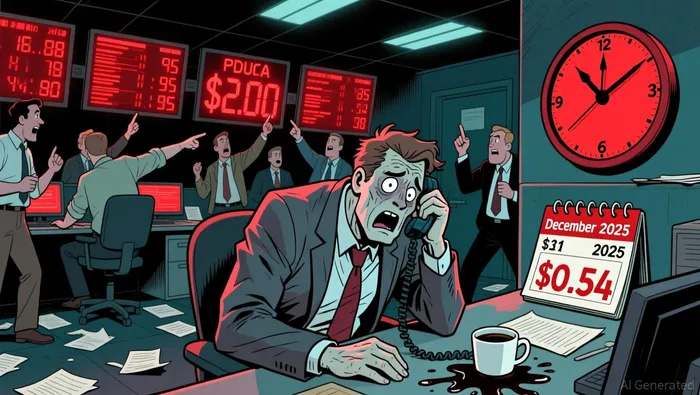
The path for Outlook Therapeutics' lead asset, ONS-5010, now runs on two distinct tracks, each demanding a tailored strategic response. The company faces a binary outcome from the U.S. FDA, with the commercial prize and the required next steps varying dramatically by scenario.
The immediate catalyst is the FDA's August 2025 Complete Response Letter (CRL), which halted the BLA review. The agency cited unresolved chemistry, manufacturing, and controls (CMC) issues, open pre-approval inspection observations, and a lack of "substantial evidence" to support approval. This is a significant hurdle, but the company has already taken the first step by requesting a Type A meeting to discuss a path forward. The company's resilience is evident in its continued clinical development, with the NORSE EIGHT trial results just presented last month, reinforcing the drug's efficacy profile.
The commercial opportunity if approved is substantial. If the FDA clears ONS-5010, Outlook would launch as the first FDA-approved ophthalmic formulation of bevacizumab for retinal diseases. This positions it to capture a significant share of the wet AMD market, a condition with a large, established patient base. The company is already preparing for this eventuality, having entered a strategic commercialization agreement with Cencora for U.S. distribution and logistics. The approval would validate the company's clinical and regulatory strategy, providing a clear path to commercialization and revenue.
Yet, the company is also preparing for the alternative path. The CRL's CMC and evidence concerns are serious, and a second rejection or a prolonged review could pressure the balance sheet. This is where the new leadership appointment becomes critical. Just last week, Outlook appointed Laura Cantrell as Vice President of Corporate Strategy and Business Development. Her role is explicitly to lead business development, licensing, and corporate strategy. In the event of a U.S. approval, she will be tasked with maximizing value through partnerships and global expansion. In the event of continued regulatory delay or rejection, her mandate shifts to identifying alternative value-creation opportunities-whether through licensing the asset to a larger player, pursuing regulatory pathways in other markets, or exploring strategic partnerships to fund further development. Her two decades of experience in high-impact licensing and acquisitions, including work on bevacizumab assets, makes her uniquely positioned to navigate either outcome.
The bottom line is that Outlook is now in a tactical phase. The FDA's decision will be a major catalyst, but the company's new VP of Business Development ensures it is prepared for both the upside and the downside. The strategy is no longer just about getting the drug approved; it's about maximizing shareholder value regardless of the U.S. approval path.
The Trading Setup: Catalysts and Risk/Reward
The primary catalyst for Outlook TherapeuticsOTLK-- is now in the past. The FDA's decision on its ONS-5010 BLA was due by the PDUFA goal date of December 31, 2025. With that date having passed, the market has already digested the outcome. The stock's trading pattern since then reveals the setup: a sharp decline from over $2 in early December to a low of $0.50, before finding a floor near $0.54 as of January 5th. This move suggests the market had already priced in a high probability of failure.
A negative decision would have triggered another sharp decline, but the stock's low price indicates much of that downside was already discounted. The volatility in late December, with the stock swinging from a high of $1.83 to a low of $1.52 on the day the PDUFA date passed, shows the market was pricing in the binary outcome. The subsequent drop to $0.54 suggests the failure was confirmed, and the market has largely moved on from that specific event.
A positive decision would have been a major catalyst, but the stock's current price of around $0.54 suggests much of the potential upside may already be priced in. The stock's trajectory shows it has already fallen far from its pre-announcement highs. Any approval would likely be met with a relief rally, but the magnitude of that move is likely to be muted given the stock's depressed valuation. The real risk now is not a repeat of the pre-decision volatility, but the company's ability to execute a commercial launch from this low base. The setup is one of a known outcome, with the focus shifting from the FDA decision to the commercial and financial implications of that decision.





Comentarios
Aún no hay comentarios